
Mastering Communication: Styles That Shape Your Relationships




Beyond Love Languages: How Communication Styles and Learning Styles Make or Break Your Relationship
This content is shared for storytelling, educational, and entertainment purposes only and is not a substitute for professional counseling or therapy.
To hear our podcast conversation in real time related to this blog post, listen to the full episode below. Make sure you tune into the show. You’ll get all the raw, unfiltered moments and deeper insights.
Podcast Blog post: Advice Time Series: Communication
Everyone knows about love languages. You have probably taken the quiz, shared your results with your partner, and had a conversation about whether you prefer words of affirmation over quality time. That knowledge is valuable — but here is what most relationship conversations leave out: knowing how your partner wants to receive love does not tell you how they process information, how they express frustration, or how they actually hear what you are saying to them.
And that disconnect? That is where a lot of relationships silently begin to fall apart.
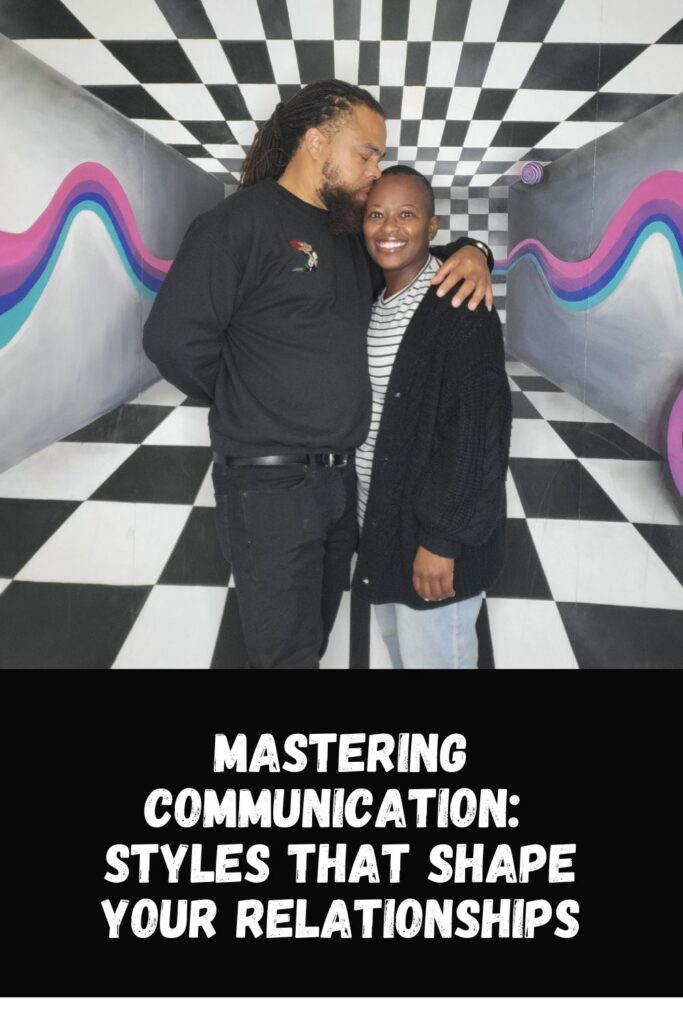
On a recent episode of Sherley’s Show, Sherley and her co-host on the Real Talk Series — her husband — had a raw, honest, and often hilarious conversation about communication in their 25-plus year relationship. What came through clearly was that even two people who genuinely love each other and have chosen to stay together through the hard stuff can still talk past each other in ways that leave both people feeling unheard.
The reason is not always a lack of love. Sometimes it is a fundamental difference in communication style and learning style that nobody ever took the time to identify and understand.
This post is going to unpack exactly what those differences are, why they matter so much inside a relationship, and what you can start doing today to close the gap.
| Real Talk During their conversation, Sherley reflected: “I do believe that we try to be upfront with each other… but communication wasn’t always great in our relationship. There was always a barrier. Kalif and I are extremely different.” That barrier was not a lack of caring. It was two people with different communication wiring trying to connect without a shared language for how they process and deliver information. |
Love Language Is Not the Whole Story
When Gary Chapman introduced the concept of love languages in his landmark book The 5 Love Languages, it shifted the way millions of people think about partnership. Understanding whether your partner feels most loved through acts of service, physical touch, words of affirmation, gift giving, or quality time is genuinely useful. It helps you show up in ways that actually land.
But a love language tells you the what — what your partner needs to feel loved. It does not tell you the how — how they communicate when they are hurt, how they process conflict, how they take in new information, or how they respond under pressure.
Think of it this way. You can know that your partner’s love language is words of affirmation. But if you deliver those words in an aggressive tone during an argument, or in a long, drawn-out emotional conversation when your partner needs directness to feel safe, those words may not land at all. The medium matters just as much as the message.
That is why understanding communication styles and learning styles is the missing layer in most relationship conversations about connection and compatibility.
The Four Main Communication Styles — and What They Look Like in Relationships
Communication styles describe the patterns people default to when they express themselves, especially in moments of stress, disagreement, or emotional intensity. There are four primary styles, and most people lean toward one, though they can shift depending on the situation.
1. Passive Communication
A passive communicator tends to avoid expressing their needs, opinions, or feelings directly. They often go along with what others want to keep the peace, hold things in until they reach a breaking point, or communicate indirectly through hints and silence.
In a relationship, this can look like:
- Saying “it’s fine” when it is not fine
- Withdrawing rather than expressing hurt or frustration
- Resenting a partner for not “figuring out” what they need without being told
- Burying issues until they explode in a way that seems sudden and overwhelming to the other person
Passive communication often develops as a survival strategy. People who grew up in environments where expressing needs felt unsafe may carry this pattern into their adult relationships. The challenge is that a passive communicator’s partner often has no idea something is wrong until the damage is already deep.
2. Aggressive Communication
Aggressive communication is the opposite extreme. An aggressive communicator expresses their needs and feelings in ways that disregard or dismiss the other person. This does not always mean yelling or obvious hostility — aggression in communication can also show up as sarcasm, blame, criticism, or talking over someone without making room for the other person’s perspective.
In a relationship, this can look like:
- Turning every disagreement into a personal attack
- Raising their voice or using forceful body language to “win” an argument
- Dismissing a partner’s feelings as overreactions or weakness
- Dominating conversations without allowing space for a response
Aggressive communication often comes from a place of feeling unheard, overwhelmed, or threatened. It is a way of taking up space when someone fears their needs will be overlooked. But in a relationship, it teaches a partner to either shut down completely or match the aggression — and neither outcome builds connection.
3. Passive-Aggressive Communication
Passive-aggressive communication is perhaps the most common and most damaging style in long-term relationships because it is so easy to miss. According to Psychology Today, passive aggression is ultimately even more destructive to interpersonal relationships than open aggression, because over time it makes all interactions confusing, discouraging, and dysfunctional. A passive-aggressive communicator avoids direct conflict but expresses anger or resentment in indirect ways — through sarcasm, backhanded compliments, the silent treatment, or consistently “forgetting” things they were asked to do.
In a relationship, this can look like:
- Agreeing to do something and then consistently not doing it, or doing it poorly
- Making cutting comments disguised as jokes and then saying “I was just kidding” when called out
- Going silent as a form of punishment rather than a genuine need to process
- Bringing up old issues indirectly rather than addressing them head-on
This style is especially corrosive because it creates confusion. The partner on the receiving end often knows something is wrong but cannot get a straight answer about what it is. Over time, that confusion turns into distrust, walking on eggshells, and emotional exhaustion.
4. Assertive Communication
Assertive communication is the healthiest of the four styles. An assertive communicator expresses their thoughts, needs, and feelings clearly and directly while also making room for the other person to do the same. They can hold their ground without becoming aggressive, and they can be honest without being brutal.
In a relationship, this can look like:
- Saying “I need you to hear me on this” rather than repeating the same thing twenty times
- Being able to say “I disagree” without the conversation spiraling
- Setting clear expectations and following up if they are not met
- Listening to understand, not just to rebut
Assertiveness is a skill, not a personality trait. It can be learned. And in a relationship, when both partners are working toward assertive communication, conflict becomes something that strengthens the relationship rather than a battle that chips away at it.
| Real Talk In the conversation on Sherley’s Show, Sherley described being someone who wants depth, context, and dialogue, while her husband preferred directness and brevity. Neither approach is wrong — but without understanding the other’s style, it reads as nagging on one side and stonewalling on the other. Assertive communication would allow both people to name what they need before the pattern becomes a wound. |
The Science Behind Why Communication Patterns Matter So Much
Research from The Gottman Institute — which has studied over 40,000 couples across more than 50 years — found that it is not conflict itself that predicts whether a relationship survives, but the communication patterns couples use during conflict. Dr. John Gottman identified four destructive communication behaviors he called the “Four Horsemen”: criticism, contempt, defensiveness, and stonewalling. These patterns map directly onto the passive, aggressive, and passive-aggressive styles described above — and their consistent presence is one of the strongest predictors of relationship breakdown.
Understanding which style you default to — and which one your partner leans toward — is not just self-awareness work. It is relationship protection work.
| Enjoying this conversation? This post was inspired by a real, unfiltered episode of Sherley’s Show — where Sherley and her husband get into exactly these kinds of honest, sometimes uncomfortable conversations about what it actually takes to make a relationship last. → Listen to Sherley’s Show at sherleysshow.com |
Learning Styles: How Your Partner Actually Receives Information
Now layer in learning styles. The VARK model — developed by educator Neil Fleming — describes four primary ways people take in and process information: Visual, Auditory, Read/Write, and Kinesthetic. These preferences do not disappear the moment you leave school. They follow you into every conversation, every disagreement, and every attempt you make to connect with your partner.
The most widely recognized learning styles are:
Visual Learners
Visual learners understand and retain information best when they can see it. They think in pictures, patterns, and spatial relationships. In a relationship, a visual learner may not fully absorb what you are saying to them in the middle of a heated verbal argument — but write it down in a text after the fact, and suddenly they get it.
If your partner is a visual learner, consider:
- Following important conversations with a text or note summarizing what was agreed upon
- Using shared visual tools — a calendar, a whiteboard — to communicate household needs and expectations
- Noticing that when they say “I see what you mean” they are not being figurative — they actually need to visualize it
Auditory Learners
Auditory learners process information best through listening and speaking. According to EBSCO’s Research Starters on the VARK Model, speaking is often just as important to these learners as listening — they may need to talk things out in order to understand them. In a relationship, an auditory learner may seem like they need to “hash everything out” verbally before they can move forward. They are not being difficult — they are wired to process through sound and dialogue.
If your partner is an auditory learner, consider:
- Having conversations rather than sending long written messages when something important needs to be addressed
- Giving them space to think out loud without interpreting that as a final statement
- Paying close attention to tone of voice — not just the words, but how the words land
Kinesthetic (Tactile) Learners
Kinesthetic learners process information best through movement, doing, and physical experience. They are hands-on people who learn by trying, touching, and being physically engaged in what is happening. In a conversation, they may fidget, seem distracted, or need to move around to stay present.
This can be easily misread in a relationship. A kinesthetic partner who seems checked out during a serious conversation may not be dismissing what is being said — they may simply not be able to absorb information while sitting still.
If your partner is a kinesthetic learner, consider:
- Having important conversations during a walk, a drive, or while doing something side-by-side rather than sitting across the table staring at each other
- Understanding that physical reassurance — a hand on the arm, a hug mid-conversation — may help them stay regulated and present
- Recognizing that action is often both their love language and their communication language
Reading/Writing Learners
Reading and writing learners process information best through written words. They prefer to receive information in written format, think through journaling or note-taking, and often feel more articulate on paper than in person.
In a relationship, this person may struggle to communicate in real-time. They may need to step away from an argument to process and come back with a written message that says what they could not get out verbally. This is not avoidance — it is how they function.
If your partner is a reading/writing learner, consider:
- Not interpreting their written communication as formal or cold — for them, it is actually more intimate
- Giving them time to process before expecting a verbal response to something heavy
- Welcoming text-based communication as a valid and often more honest channel for serious topics
| Think About This Consider which learning style resonates most with you. Now think about your partner. Are you having conversations in the format that works for them — or only in the format that works for you? That mismatch alone is responsible for more miscommunication in relationships than most people realize. |
When Communication Style Meets Learning Style: The Disconnect Nobody Names
Here is where it gets layered. When you combine a communication style with a learning style, you start to see why two people who love each other deeply can still feel completely unheard in the same conversation.
Imagine an aggressive communicator who is also an auditory learner. They process through speaking, and when they feel unheard, they speak louder, faster, and with more intensity — not because they are trying to attack, but because their nervous system is trying to get the message across in the only mode it knows.
Now pair them with a passive communicator who is a visual learner. They shut down under the intensity of the other person’s delivery. They need stillness and time to process, but instead they are receiving an escalating verbal stream that their nervous system reads as a threat. So they go quiet. And their partner reads the silence as indifference and gets louder still.
Nobody is wrong. Nobody is trying to hurt the other. But without a shared understanding of what is happening, both people walk away feeling unloved, unseen, and exhausted.
This is why the conversation about love languages — as valuable as it is — cannot be the only conversation you have. You also have to ask:
- How does my partner communicate when they are stressed?
- How do I communicate when I am stressed?
- What format does my partner actually need to receive information in?
- Am I delivering things in a way they can actually absorb?
- Am I asking for things in a way that matches how they process?
What This Means for Your Relationship Right Now
You do not need a therapy session or a major relationship overhaul to start putting this into practice. You need curiosity and a willingness to learn your person — not just who they are on a good day, but how they are wired.
Here are some places to start:
Get honest about your own communication style first. Before you analyze your partner, look at yourself. Do you tend toward passivity when you are hurt? Do you go aggressive when you feel dismissed? Are you carrying passive-aggressive patterns you learned in your family of origin that have followed you into your relationship without your full awareness?
Observe, do not assume. Notice what makes your partner shut down. Notice when your conversations gain traction and when they stall. Pay attention to whether they retain information better in writing, in person, or in motion. The Gottman Institute’s research consistently shows that couples who stay curious about each other navigate conflict far more effectively than couples who assume they already know everything about their partner.
Name the style, not the person. Instead of “you never listen,” try “I notice that when we talk about this topic I feel like I am not getting through — can we try approaching it differently?” When you name the dynamic instead of attacking the person, you create room for the conversation to go somewhere productive.
Build new habits together. Decide together that you are going to try communicating in ways that work for both of you. Maybe that means the partner who needs to process verbally gets a set time to talk, while the partner who needs written follow-up gets a text summary afterward. These are not compromises — they are investments in your connection.
| From the Show Sherley and her husband reflected that after nearly three decades together, their communication had strengthened — not because they became more alike, but because they found ways to work with their differences rather than against them. That kind of maturity does not happen by accident. It happens when two people choose to stay curious about each other. |
The Bigger Picture: Communication Is How Relationships Survive
Love is not enough on its own to hold a relationship together. Love is the reason you stay. Communication is the vehicle that actually gets you somewhere together.
When couples say they grew apart, what they often mean is that they stopped finding ways to bridge the gap between how they think, how they process, and how they express themselves. The distance does not usually appear overnight. It builds slowly, one misunderstood conversation at a time, one moment of feeling dismissed, one night of going to sleep without resolution — until two people who were once deeply connected feel like strangers sharing a space.
Understanding your own communication style — and being genuinely curious about your partner’s — is one of the most practical, real-world tools you have for protecting what you have built together.
And if you are in a relationship right now where the communication feels broken or stuck, that does not mean the relationship is over. It may simply mean that the tools you both brought in were not designed for the distance you are trying to bridge. Those tools can be updated.
| Key Takeaways Love languages tell you how your partner wants to receive love — but communication styles and learning styles tell you how they process, express, and receive information. Both matter.The four main communication styles are passive, aggressive, passive-aggressive, and assertive. Assertive communication can be learned and is the healthiest foundation for any relationship.Research from the Gottman Institute found that destructive communication patterns — not conflict itself — are the strongest predictors of relationship breakdown.The VARK model identifies four learning styles (visual, auditory, kinesthetic, read/write) that shape how your partner actually hears and retains what you say.When communication style and learning style are mismatched and unnamed, two people can love each other and still consistently feel unheard.Shifting from ‘you never listen’ to ‘can we try approaching this differently’ changes the entire trajectory of a conversation.Building habits that honor both partners’ processing styles is not a compromise — it is an act of love. |
| Ready to Go Deeper? If this post resonated with you, there is a whole conversation waiting for you on the podcast. Sherley’s Show covers relationship topics like communication, trust, infidelity, healing, and the real work that goes into building something that lasts — with honesty, humor, and no filter. 🎧 Listen to Sherley’s Show → sherleysshow.com Available on Spotify, Apple Podcasts, and wherever you stream. |
Resources & Further Reading
The 5 Love Languages — Dr. Gary Chapman: 5lovelanguages.com
The Gottman Institute — Research-Based Relationship Tools: gottman.com/couples
VARK Learning Styles — Official Site: vark-learn.com
Psychology Today — Passive-Aggressive vs. Assertive Behavior in Relationships: Read the article
Psychology Today — 3 Communication Styles That Poison Relationships: Read the article
Psychology Today — How Passive-Aggressive Remarks Can Damage Love and Trust: Read the article
EBSCO Research Starters — The VARK Model: Read the overview
American Psychological Association — Lessons from the Love Lab: Read the article
Sherley’s Show is learning and growing every single day. We aim to uplift all marginalized voices both on this podcast and in real life. Please note that we are always striving to change the problematic language that society has internalized in us. Thank you for your patience as we aim to strip certain phrases from our vocabulary.
Would you like to be a guest
Are you interested in getting your opinion out about a particular topic but don’t know how to do so? If so, here is an opportunity to do so to share your point of view, PLUS get your message and voice out there. It is always a great way to know about different perspectives and enrich ourselves through knowledge sharing.
Submit your relationship question.
Sherley’s Show provides an atmosphere where every woman is comfortable growing into their best self. Sherley’s Show is a no judgment podcast where we discuss how to rise strong out of all types of obstacles that come with relationships. Through personal life experiences and discussions ranging from infidelity, trust, forgiveness, sex, heartbreak, self love, therapy and more, we offer words of empowerment as you strive to build and maintain all of the relationships in your life. You may be going through something that is unique and difficult. Sharing your story gives others comfort and could also be helping someone else. Let them know they are not alone. Everyone has a story, do not let fear hold you back.
Disclosure: This post contains affiliate links, I will get a commission if you decide to make a purchase through any of my links, at no cost to you. Please read my disclosure for more info.

Want to launch a podcast?
FRee Resource!
Download Sherley’s FREE Bootcamp Podcast Launch Checklist! The no-fluff, step-by-step roadmap for busy women ready to finally launch the podcast they’ve been dreaming about.
At Sherley's Show, we believe that when women feel seen and supported, anything is possible. Whether you're tuning in for inspiration, education, or community—you belong here.



next

say goodbye to being the side chick
When you find yourself really settling with the reality that you are the side chick, when you find yourself tired of the games and/or the complacency, it’s time to ask yourself a few questions.
next

why is therapy important?
Solo therapy, partnered therapy, or group therapy... what exactly are the benefits? If you’re still on the fence about whether or not you should go and if therapy can really do anything for you... this post is for you.
next
CONNECT
elsewhere:

STAY AWHILE AND READ
THE BLOG

BINGE
THE PODCAST
The place where we chat about obstacles that come out of relationships and how to rise up from them. Self-love, marriage, infidelity, sex, heartbreak, and more.

HANG OUT ON

Comments +