
How to Sustain Your Podcast by Delegating Tasks




You Don’t Have to Do It All: Why Delegating Is the Secret to a Sustainable Podcast
So you’ve decided to add a podcast to your brand. Maybe you’ve already launched, or maybe you’re still in the planning stages weighing out the pros and cons. Either way, there’s one topic that doesn’t get nearly enough attention in the podcasting world — and it’s the one that will make or break you faster than any algorithm or download number ever could: trying to do everything yourself.
Podcasting is not a one-person show — even when it sounds like one. Behind every great podcast is a level of production, organization, consistency, and strategy that most people don’t see from the outside. And if you are a business owner, entrepreneur, or content creator who is also building a brand alongside your podcast, the pressure to wear every hat can quietly creep up on you until it becomes a full-on breakdown.
This post is a companion piece to our discussion on the pros and cons of adding a podcast to your brand. If you haven’t read that one yet, check it out here: Why You Should Add A Podcast to Your Business
Now let’s get into what nobody wants to admit: you cannot — and should not — do it all alone.
The Myth of the One-Person Podcast
In the early days of podcasting, many hosts did run solo operations. The medium was simpler, audiences were smaller, and the expectation for production quality was lower. That world no longer exists.
Today, listeners have access to thousands of professionally produced shows. They know the difference between crisp audio and a muddy recording. They notice when a show disappears for weeks without communication. They can feel when a host is stretched too thin. And they will quietly click away and not come back.
Building a sustainable podcast means being honest with yourself about what you can realistically manage — and what you need to hand off, at least eventually. The goal is not to outsource everything on day one. The goal is to have a plan so that when you are ready, you know exactly where help belongs.
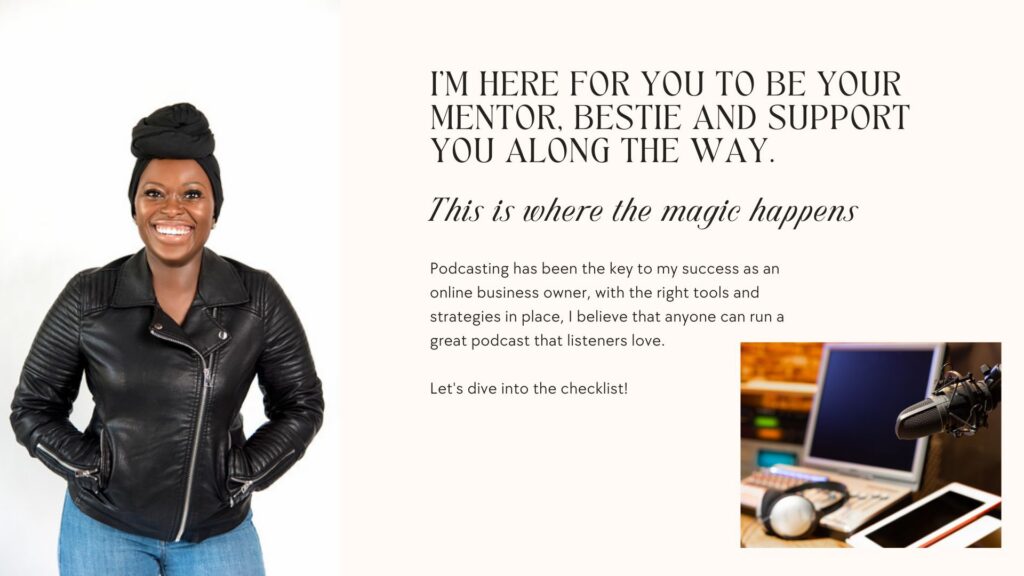
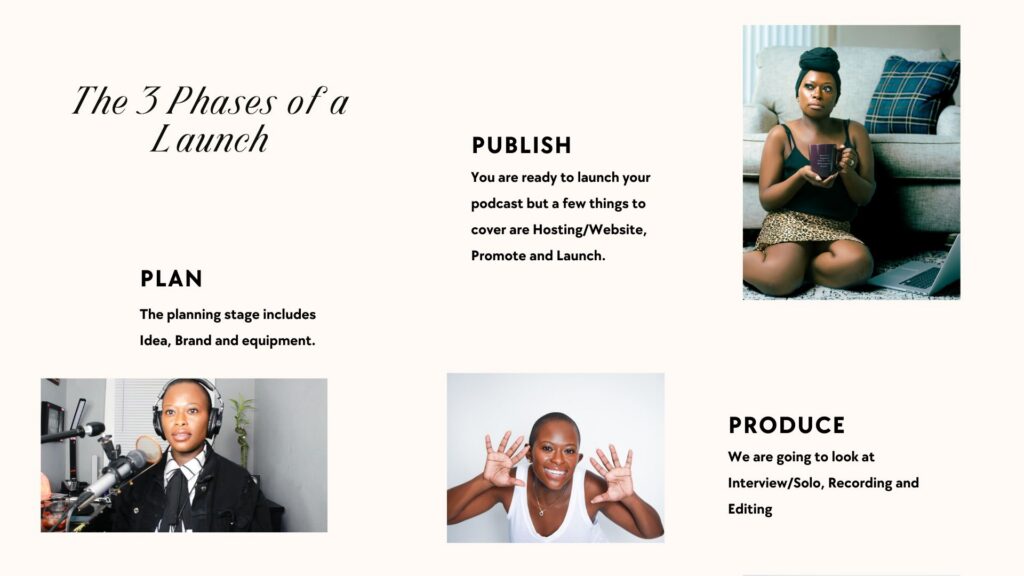
Grab the checklist featured above → Free checklist
Or see all free resources → Free Resources
Start With What You Can Handle — and Only What You Can Handle
Here is the reality for most new podcasters: budget is limited. If you are launching your podcast while also running a business, a full-time job, raising a family, or any combination of those, your financial resources and your time are both precious. You may not be able to hire a team right out of the gate. That is completely okay and completely normal.
What is not okay is taking on more than you can sustain in the name of looking polished before you are ready. Burnout in podcasting does not happen in one dramatic moment. It builds slowly — one missed episode, one skipped blog post, one overwhelming editing session at 11 p.m. — until the whole thing stops feeling worth it.
Start with the tasks that only you can do: hosting the show, bringing your authentic voice, and nurturing the relationship with your audience. Everything else? That is potentially delegatable. Not all at once, but over time.
Ask yourself these questions before you sit down to record:
- What tasks in my podcast production do I genuinely enjoy and do well?
- What tasks drain my energy, take far too long, or produce results I’m not proud of?
- If I had help with just one thing, what would make the biggest immediate difference?
Your answers will start to show you your roadmap for delegation.
The Areas of Podcasting Where Delegation Makes the Most Impact
Let’s break down the most common areas where podcasters try to handle everything themselves — and where bringing in help (even part-time or freelance) can change everything.
Audio Editing
This is often the first thing podcasters try to learn and the first thing that takes over their lives. Audio editing is a skill. A real one. And unless you genuinely love the process, spending three to five hours editing a single episode is three to five hours you are not spending on growing your brand, connecting with your audience, or resting.
Freelance audio editors are available at a wide range of price points. Platforms like Fiverr, Upwork, and Podcast.co have editors who specialize in podcast audio. Even if you can only afford editing help once a month, the relief you feel is real.
Video Editing
If you’re recording video alongside your audio — which more and more podcasters are doing for YouTube and social media clips — video editing is a completely separate beast. It is time-intensive, it requires its own software and skills, and it multiplies your workload significantly.
You do not need a Hollywood-level editor. You need someone who can clean up your footage, add your branding, and cut shorter clips for your platforms. This is a task that frees you up enormously and is easier to outsource than most people think.
Show Notes and Blog Posts
Here’s a hard truth: a podcast without a written companion piece is leaving SEO traffic on the table every single week. Show notes and blog posts help your episodes get discovered by people who have never heard of you. They give your audience something to reference, share, and return to.
But writing quality, SEO-optimized blog content takes time and skill. If writing is not your strength, or if it simply takes too long, this is one of the highest-impact areas to delegate. A freelance writer who understands your brand, your voice, and basic SEO principles can turn your episode into a searchable piece of content that works for you long after the episode airs.
Podcast Scheduling and Guest Coordination
If your show involves guests or co-hosts, the behind-the-scenes coordination — emails, calendar links, prep documents, reminders — can eat up more time than you expect. A virtual assistant who handles scheduling and communication keeps you focused on the interview itself rather than the logistics that surround it.
Social Media Content
Promoting your podcast across Instagram, YouTube, Facebook, and Pinterest requires a consistent posting rhythm that most one-person operations struggle to maintain. Repurposing your episode content into social posts, Reels, graphics, and audiograms is genuinely valuable — but it also takes time that adds up quickly.
A part-time social media coordinator or even a freelance graphic designer for templates can transform how consistently you show up across platforms without you having to design or caption every single post.
Website Maintenance
Website updates, broken links, plugin issues, new page builds — these are tasks that take you away from content creation and often require technical knowledge most podcasters don’t have. If your website is your digital home base (and it should be), keeping it healthy matters. A developer or website manager on a retainer basis is worth exploring once your budget allows.
Delegation Is Not Giving Up Control — It’s Gaining Focus
A common fear around outsourcing is losing the authenticity of the show. What if someone else edits my audio and it doesn’t sound like me? What if the blog posts don’t capture my voice? These are valid concerns — and they are why finding the right people matters.
Delegation works best when you set the standard clearly. Create brand guides. Record a voice memo walking your editor through your editing preferences. Write a content brief for your blog writer. Give feedback. Iterate. The people who work with your brand should amplify your voice, not replace it.
The goal of building a podcast team — even a small one — is not to remove yourself from the show. It is to remove yourself from the tasks that have nothing to do with why people listen to your show in the first place. They listen because of you. Let delegation protect that.
Where to Find Podcast Support (Even on a Budget)
You do not need to hire a full agency to get help. Here are some starting points at various price points:
- Fiverr and Upwork: Great for freelance audio editors, video editors, writers, and virtual assistants. You can start with a single project to test before committing.
- Podcast communities and Facebook groups: Many podcast editors and producers network in spaces like these and offer competitive rates for newer clients.
- Journalism and communications students: Local universities often have students looking for real-world projects and portfolio building opportunities.
- Podcast coaching programs: Structured programs that walk you through not just how to start, but how to build sustainably from the ground up.
The right support looks different for every podcaster. The key is starting the conversation with yourself about where you are spending your time — and whether that time is being spent on the things that only you can do.
A Note on Building Your Team Over Time
Most successful podcast hosts did not launch with a full team. They started scrappy, learned what they needed to learn to get off the ground, and then slowly, strategically moved responsibilities to people who could do those things better.
The most important thing is to be honest with yourself along the way. When a task is taking more from you than it’s giving back to your audience, that’s a signal. When you’re consistently dreading a part of the process, that’s a signal. When the quality of your show is suffering because you’re stretched too thin, that is definitely a signal.
Listen to those signals. Protect your energy. Your listeners need you at your best — not a burned-out version of you trying to do it all.
Key Takeaways
- You do not have to do everything yourself — and trying to will burn you out faster than anything else in podcasting.
- Start with what only you can do: your voice, your story, and your audience relationship. Everything else is potentially delegatable.
- Budget is a real constraint, especially early on — begin by handling what you can manage sustainably, not what looks impressive.
- The highest-impact areas to outsource are audio editing, video editing, blog and show note writing, social media content, guest coordination, and website maintenance.
- Delegating is not losing control — it is gaining focus. The right team amplifies your voice; it does not replace it.
- Help is available at every budget level — platforms like Fiverr, Upwork, and podcast communities are great starting points for finding affordable freelance support.
- Building a team is a gradual process. Listen to the signals — when a task consistently drains you or lowers your quality, that is your cue to outsource it.
- Your listeners need you at your best. Protecting your energy is not optional — it is part of the strategy.
Ready to Start or Grow Your Podcast?
The following resources are exclusively for women who want to launch or scale a podcast as a real income stream.
- Download the free Podcast Launch Checklist — your step-by-step starting point.
- Get the eBook: Find Your Voice: The Woman Behind the Mic — $67 of strategic guidance for the woman building her voice into a business.
- Book a 1:1 Clarity Consultation — $297 for a focused, personalized session on your podcast launch or growth plan.
Visit sherleysshow.com to access all resources.
Sources & Related Reading
Sherley’s Show™ — The Pros and Cons of Adding a Podcast to Your Brand
Sherley’s Show™ — Why There Is No Alternative to Economic Self-Sufficiency
Sherley’s Show™ — Why More Than One Stream of Income Is Important
Sherley’s Show™ — The Social Media Platforms Bloggers Need
Sherley’s Show is learning and growing every single day. We aim to uplift all marginalized voices both on this podcast and in real life. Please note that we are always striving to change the problematic language that society has internalized in us. Thank you for your patience as we aim to strip certain phrases from our vocabulary.
Would you like to be a guest
Are you interested in getting your opinion out about a particular topic but don’t know how to do so? If so, here is an opportunity to do so to share your point of view, PLUS get your message and voice out there. It is always a great way to know about different perspectives and enrich ourselves through knowledge sharing.
Submit your relationship question.
Sherley’s Show provides an atmosphere where every woman is comfortable growing into their best self. Sherley’s Show is a no judgment podcast where we discuss how to rise strong out of all types of obstacles that come with relationships. Through personal life experiences and discussions ranging from infidelity, trust, forgiveness, sex, heartbreak, self love, therapy and more, we offer words of empowerment as you strive to build and maintain all of the relationships in your life. You may be going through something that is unique and difficult. Sharing your story gives others comfort and could also be helping someone else. Let them know they are not alone. Everyone has a story, do not let fear hold you back.
Disclosure: This post contains affiliate links, I will get a commission if you decide to make a purchase through any of my links, at no cost to you. Please read my disclosure for more info.

Want to launch a podcast?
FRee Resource!
Download Sherley’s FREE Bootcamp Podcast Launch Checklist! The no-fluff, step-by-step roadmap for busy women ready to finally launch the podcast they’ve been dreaming about.
At Sherley's Show, we believe that when women feel seen and supported, anything is possible. Whether you're tuning in for inspiration, education, or community—you belong here.



next

say goodbye to being the side chick
When you find yourself really settling with the reality that you are the side chick, when you find yourself tired of the games and/or the complacency, it’s time to ask yourself a few questions.
next

why is therapy important?
Solo therapy, partnered therapy, or group therapy... what exactly are the benefits? If you’re still on the fence about whether or not you should go and if therapy can really do anything for you... this post is for you.
next
CONNECT
elsewhere:
STAY AWHILE AND READ
THE BLOG

BINGE
THE PODCAST
The place where we chat about obstacles that come out of relationships and how to rise up from them. Self-love, marriage, infidelity, sex, heartbreak, and more.

HANG OUT ON

Comments +