
Navigating Judgment in Relationships


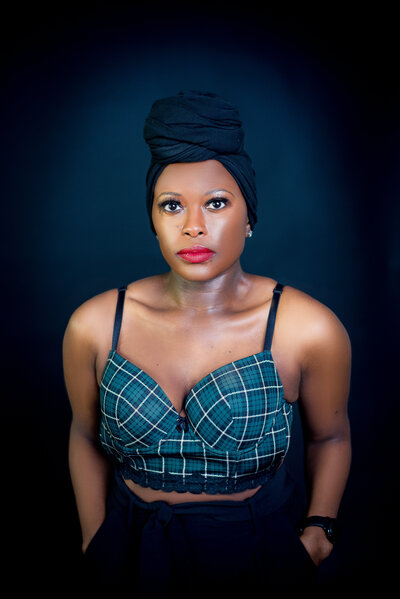

Shunned If You Stay, Shunned If You Go
This content is shared for storytelling, educational, and entertainment purposes only and is not a substitute for professional counseling or therapy.
Why Your Life Was Never Meant to Be a Group Decision
I want to say something today that most people are afraid to say out loud, because it exposes something we all quietly already know: no matter what you choose to do with your own life, someone is going to have a problem with it.
Stay in a relationship where there’s been hurt, and you’re “settling.” Leave, and you’re “throwing away a good thing.” Get divorced once, and you carry a label for years. Get divorced twice, three times, and you become the cautionary tale whispered about at family functions. Stay single — by choice or by circumstance — and suddenly everyone from your auntie to a stranger in your comment section wants to know what’s “wrong” with you, why you haven’t “found somebody yet,” why you’re not “settled down.”
I wrote a post not long ago called “What If We Had Separated? The Question I Still Ask Myself After 29 Years,” where I got honest about the questions I sat with inside my own marriage — the ones that surfaced around years sixteen and seventeen, when separation felt close enough to touch. That post was about the conversation happening inside of me. This one is about the conversation happening around me. Because once you make a decision about your relationship — any decision — you don’t just have to live with it. You have to live with everyone else’s opinion of it too.
And I need you to hear me clearly on this: that is not a reason to let their opinion drive your decision.
The Impossible Standard No One Can Actually Meet
Let’s just call this what it is. There is no version of a woman’s relationship status that fully escapes judgment.
- Stay in a hard marriage, and you’re accused of settling for less than you deserve, of “losing yourself,” of setting a bad example for your daughters.
- Leave a hard marriage, and you’re accused of giving up too soon, of not fighting hard enough, of breaking up a family.
- Divorce more than once, and the story quietly shifts from “it didn’t work out” to “something is wrong with her” — as if a woman’s history of hard relationships is a referendum on her character instead of a record of what she survived.
- Stay single — whether by choice or because the right person hasn’t come along — and you’re met with a level of curiosity and pity that married people rarely have to answer for. “Why are you still single?” gets asked like it’s a diagnosis.
Social psychologist Bella DePaulo has spent nearly two decades researching exactly this. She coined the term “singlism” to describe the stereotyping, stigmatizing, and discrimination directed at people who aren’t married, and she’s documented how deeply it runs, from the workplace to the family dinner table. Her research, published with Wendy Morris in Psychological Inquiry, found that single people are routinely assumed to be immature, maladjusted, and self-centered compared to married people — even though the actual differences in well-being between single and married people are far smaller than the stereotypes suggest.
Divorced women carry their own version of this. Research on the sociology of divorce has repeatedly found that divorced women bear a heavier burden of social stigma than divorced men do, often facing assumptions about their sexuality, their parenting, and their character that men in the same situation simply don’t face at the same rate (ScienceDirect; Sage Reference). One study on the lived experience of divorced women found that their top source of stress wasn’t the divorce itself — it was the loss of social status and the negative stigma coming from their own communities (Stressors and Coping Mechanisms of Divorced Women).
Read that again. The stigma is sometimes harder to carry than the heartbreak itself.
So here’s my question: if staying gets you judged, and leaving gets you judged, and divorcing more than once gets you judged, and staying single gets you judged — what exactly is the “right” choice supposed to protect you from? It isn’t. There is no version of your life that will satisfy everyone’s opinion of it. Which means their opinion was never actually the thing you needed to be protecting.
This Isn’t Just People Being Messy — It’s Structural
Researchers have been studying this for decades. Sociologist Naomi Gerstel wrote about it as far back as 1987, describing how stigma attaches not to divorce as a general category, but to the specific conditions surrounding it — and how divorced people often internalize a sense of being excluded from and devalued in ordinary social life, even among people who love them (Social Problems journal). More recent research on self-stigma in divorced single-parent women describes a process where public judgment gets absorbed until a woman starts believing the negative story about herself — reduced self-esteem, reduced willingness to ask for help, reduced belief that she deserves support (National Library of Medicine).
That’s the part that worries me. It’s not just that people talk. It’s that if you’re not careful, you start agreeing with them.
I refuse to let that happen to the women who follow me. And I refuse to let it happen to you.
Before We Talk About Staying or Leaving, Let’s Talk About the Hurt
I touched on something in my “What If” post that I want to expand on here, because I think we skip past it too quickly. We talk a lot about whether to stay or go, but we don’t talk enough about what actually put a woman in that position in the first place. Hurt is not one thing. It shows up in at least four different ways, and I think every woman deserves the language to name what she’s actually carrying.
Emotional hurt is the one most of us recognize — the silent treatment, the criticism disguised as “honesty,” the words said in anger that never fully leave your body. It’s often the hardest to point to because it doesn’t leave a mark anyone else can see.
Spiritual hurt is one we talk about the least, but it’s real. It happens when your beliefs — whatever they are — get used against you instead of alongside you. Advocates describe spiritual abuse as any attempt to use religion or faith to manipulate, control, or shame a partner: being told “God will punish you if you leave,” being mocked for your faith, or being kept from practicing it altogether (WomensLaw.org; The National Domestic Violence Hotline). You don’t have to be in a “religious” relationship for this to happen. It can happen inside any belief system, including no belief system at all.
Financial hurt doesn’t always look like someone stealing your money. Sometimes it looks like being handed an allowance out of your own paycheck. Sometimes it’s your name kept off the accounts, or being made to feel guilty for spending money you earned. The National Domestic Violence Hotline reports that financial abuse shows up in the vast majority of abusive relationships, and it’s one of the biggest reasons women stay longer than they want to — because leaving without financial security can feel like jumping without a net.
Physical hurt is the one people assume they’d recognize instantly, but it’s not always dramatic. It’s not always a bruise. It can be a shove brushed off as an accident, a grip on your arm that leaves no mark but still says, “I could control you if I wanted to.”
I’m not telling you this to scare you. I’m telling you this because I want you to have the language. You can’t heal from what you can’t name. And you shouldn’t have to figure out which category your pain belongs to all by yourself.
Why I Keep Saying — Go Talk to Somebody
I say this in almost every post I write, and I’m going to keep saying it: please go to therapy. Please ask for guidance. Not because something is wrong with you, but because healing usually goes faster and deeper with the right support in the room with you.
The research backs this up. The American Psychological Association has formally recognized psychotherapy’s effectiveness across a wide range of life challenges. One commonly cited review found that roughly three out of four people who try therapy report meaningful benefit from it (Husk Wellness). That’s not nothing. That’s real.
If what you’re carrying involves any form of abuse — emotional, spiritual, financial, or physical — please also know that the National Domestic Violence Hotline is available 24/7 at 1-800-799-7233, or by texting START to 88788. You don’t have to be certain it “counts” as abuse to reach out. You just have to know that something doesn’t feel right.
My Faith Keeps Me Standing
I am a spiritual woman. I believe in a Higher Being, and I believe prayer is not weakness — it’s the thing that has kept me upright on the days I didn’t have my own strength to stand on. When I sat with my own “what ifs,” prayer is where I brought them. Not to get permission from God to leave or to stay, but to get clear enough to hear myself.
I say this because I don’t want you to think faith and self-advocacy are opposites. They’re not. Staying prayerful doesn’t mean staying silent. Believing in something bigger than yourself doesn’t mean shrinking yourself to fit someone else’s comfort. You are allowed to be a woman of faith and a woman who sets boundaries. You are allowed to believe in a plan bigger than your own and still make the decision, right now, to live the healthiest life available to you.
Your Life Was Never a Group Decision
Here is the bigger picture I want to leave you with. Hard decisions and conflict are not unique to people who are “in” a relationship. They are unique to being alive. The single woman still has hard decisions to make. The married woman still has hard decisions to make. The woman on her third divorce still has hard decisions to make. Nobody gets to skip this part of being human by picking the “right” relationship status.
So stop performing your life for an audience that was never going to be satisfied anyway. The people who question your choices are rarely offering you real support — more often, they’re offering you their own discomfort, dressed up as concern. And you are not required to make yourself smaller, more explainable, or more palatable just to keep the peace with people who were never going to understand your life from the inside anyway.
You are in control of your life. Your life is yours to live. Whatever that looks like for you — married almost thirty years like me, divorced once, divorced three times, or gloriously and intentionally single — you don’t owe anyone a version of yourself that fits neatly into their expectations. You owe yourself honesty, healing, and the courage to keep choosing what’s actually healthy for you, one day at a time.
Key Takeaways
- There is no relationship status that fully protects you from judgment — staying, leaving, divorcing more than once, and staying single are all met with some form of social stigma.
- Social science backs this up: researchers like Bella DePaulo have documented “singlism,” and multiple studies confirm divorced women carry a heavier stigma burden than divorced men.
- Hurt in relationships isn’t one thing. It can be emotional, spiritual, financial, or physical — and naming which one you’re carrying is the first step toward healing it.
- Therapy works. Research consistently shows measurable benefit for people who engage in it, and asking for help is not a weakness.
- Faith and self-advocacy are not opposites. You can be a woman of prayer and a woman with boundaries.
- Hard decisions and conflict exist in every relationship status. Nobody escapes the hard parts of being human by choosing differently.
- Your life is not a group decision. It was always yours to live.
Listen to the Full Conversation
This post is the companion piece to “What If We Had Separated? The Question I Still Ask Myself After 29 Years,” and it pairs with the Real Talk Series episode where Kalief and I get into the honest, unfiltered version of this conversation on Sherley’s Show.
Sherley’s Show offers three ways to connect with the conversations that matter:
- Real Talk Series — Sherley and her husband Kalief get raw and real about marriage, longevity, and the hard truths behind a nearly 30-year relationship.
- Conversations — Sherley and Kira dive deep into infidelity, heartbreak, healing, and what it really means to rebuild after crisis.
- Interviews — Expert guests and everyday women share knowledge, perspective, and lived experience on relationships, self-love, and everything in between.
Let’s Keep the Conversation Going
Have you ever felt shunned no matter what you chose — whether you stayed, left, started over more than once, or stayed single? Drop it in the comments. This is a judgment-free space, and your story might be exactly what another woman needs to read today.
Sherley’s Show™ | sherleysshow.com | Be Yourself. Voice Yourself. Love Yourself.
Sources Cited
- Bella DePaulo — Singlism and Matrimania
- DePaulo & Morris, “The Unrecognized Stereotyping and Discrimination Against Singles,” Psychological Inquiry (SAGE)
- Research trends on divorce among women, ScienceDirect
- Cultural Sociology of Divorce: Social Stigma, Sage Reference
- Stressors and Coping Mechanisms of Divorced Women
- Naomi Gerstel, “Divorce and Stigma,” Social Problems (Oxford Academic)
- Self-Stigma and Mental Health in Divorced Single-Parent Women, NIH/NCBI
- What is Spiritual Abuse — WomensLaw.org
- What is Spiritual Abuse — The National Domestic Violence Hotline
- What is Financial Abuse — The National Domestic Violence Hotline
- APA Resolution on Recognition of Psychotherapy Effectiveness
- The Impact of Therapy — Husk Wellness
- Sherley’s Show: “What If We Had Separated?”
Sherley’s Show is learning and growing every single day. We aim to uplift all marginalized voices both on this podcast and in real life. Please note that we are always striving to change the problematic language that society has internalized in us. Thank you for your patience as we aim to strip certain phrases from our vocabulary.
Would you like to be a guest
Are you interested in getting your opinion out about a particular topic but don’t know how to do so? If so, here is an opportunity to do so to share your point of view, PLUS get your message and voice out there. It is always a great way to know about different perspectives and enrich ourselves through knowledge sharing.
Submit your relationship question.
Sherley’s Show provides an atmosphere where every woman is comfortable growing into their best self. Sherley’s Show is a no judgment podcast where we discuss how to rise strong out of all types of obstacles that come with relationships. Through personal life experiences and discussions ranging from infidelity, trust, forgiveness, sex, heartbreak, self love, therapy and more, we offer words of empowerment as you strive to build and maintain all of the relationships in your life. You may be going through something that is unique and difficult. Sharing your story gives others comfort and could also be helping someone else. Let them know they are not alone. Everyone has a story, do not let fear hold you back.
Disclosure: This post contains affiliate links, I will get a commission if you decide to make a purchase through any of my links, at no cost to you. Please read my disclosure for more info.

Want to launch a podcast?
FRee Resource!
Download Sherley’s FREE Bootcamp Podcast Launch Checklist! The no-fluff, step-by-step roadmap for busy women ready to finally launch the podcast they’ve been dreaming about.
At Sherley's Show, we believe that when women feel seen and supported, anything is possible. Whether you're tuning in for inspiration, education, or community—you belong here.



next

say goodbye to being the side chick
When you find yourself really settling with the reality that you are the side chick, when you find yourself tired of the games and/or the complacency, it’s time to ask yourself a few questions.
next

why is therapy important?
Solo therapy, partnered therapy, or group therapy... what exactly are the benefits? If you’re still on the fence about whether or not you should go and if therapy can really do anything for you... this post is for you.
next
CONNECT
elsewhere:
STAY AWHILE AND READ
THE BLOG

BINGE
THE PODCAST
The place where we chat about obstacles that come out of relationships and how to rise up from them. Self-love, marriage, infidelity, sex, heartbreak, and more.

HANG OUT ON

Comments +