
Know When to Charge: Turning Your Story into Value




From Story to Sale: How to Know When You’re Ready to Charge for What You’ve Lived
Sharing your story built trust. Here’s how to know when — and how — that trust is ready to become a paid offer.
There is a specific moment that trips up almost every woman who has successfully built trust by sharing her story: the moment someone says, I would pay you for this. It should feel like validation, and it usually feels like panic instead — because now there’s a new question sitting underneath the old one. Not just is my story ready to share, but is it ready to sell?
Those are genuinely different questions, and conflating them is where a lot of women either freeze, undercharge dramatically, or avoid monetizing altogether out of a vague sense that charging for something so personal is somehow wrong. I want to separate the two questions clearly and give you real signals for when the second one is ready to be answered yes.
This matters more than it might seem, because getting it wrong in either direction has real costs. Charge before you’re actually ready, and you risk overpromising a transformation you can’t yet reliably deliver. Wait too long after you’re genuinely ready, and you risk giving away, indefinitely, something that could be sustaining your ability to keep doing this work at all.
Why This Feels Different From Any Other Pricing Decision
Pricing a product is a spreadsheet problem. Pricing yourself — your story, your process, your guidance — feels like something else entirely, because it’s tangled up with worth in a way that a physical product never is. If someone doesn’t buy your course, that’s a market signal. If someone doesn’t buy time with you built on your story, it can feel like a referendum on whether the story itself, and by extension you, was worth anything.
I want to name that distortion directly so it loses some of its grip: the price of your offer is not a measurement of your worth as a person. It is a measurement of the transformation you can reliably help someone else achieve. Separating those two ideas is most of the emotional work required before you can price anything with a clear head.
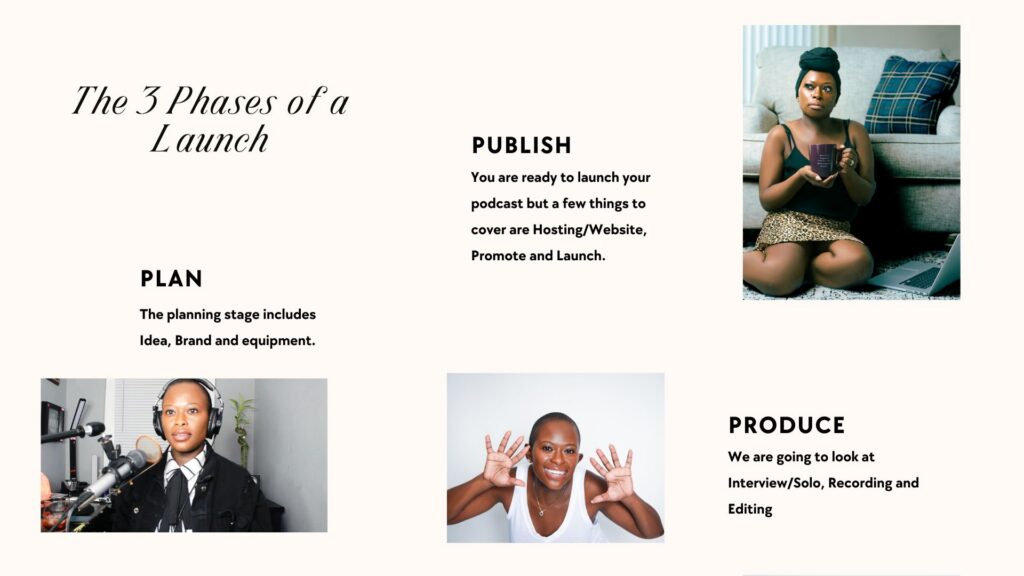
Grab the checklist featured above → Free checklist
Or see all free resources → Free Resources
The Real Signs You’re Ready to Charge
Readiness to monetize looks different from readiness to share publicly. Here are the signals that actually matter:
- People are already asking, unprompted, how they can work with you or learn from you directly — not just responding to your content, but requesting more.
- You can articulate, in one or two sentences, the specific transformation someone experiences by working with you — not just “support” or “guidance,” but a concrete before-and-after.
- You have a repeatable process, even an informal one, rather than a single inspiring story with no method behind it. A moving story earns trust; a method is what you’re actually selling.
- You can talk about your pricing without immediately undercutting it in the same sentence — a sign the earlier worth-distortion has genuinely loosened its grip, not just intellectually but in how you actually speak about your offer.
If most of these are true, you are very likely past the readiness question and into the how-much question — which is its own, more practical conversation.
How to Actually Think About Pricing
The most common mistake I see is pricing based on time — calculating an hourly rate and multiplying it out, the way you might price a freelance task. Consultants and coaches who study pricing consistently point out the flaw in this approach: it punishes you for getting better at what you do, since the more skilled and efficient you become, the less time a transformation takes, which under an hourly model means you’d have to charge less for delivering more value. Value-based pricing — pricing according to the outcome or transformation delivered, not the hours spent producing it — tends to serve both the seller and the client far better.
In practice, that means anchoring your price to the specific transformation your offer creates, not to how many hours you’ll personally spend delivering it. A 60-minute session that gives someone clarity they’ve been missing for two years is not fairly priced by the clock. It’s priced by what that clarity is actually worth to the person receiving it.
One useful exercise: think about what it would cost someone to get a comparable result any other way — through trial and error, through a less specialized program, through months of stalled progress. That comparison, more than a time calculation, tends to produce a number that reflects real value.
Start Where You Are, Raise as You Grow
You do not need to land on your forever price on your very first offer. Plenty of women I’ve worked with started with what amounts to a deliberately modest introductory price — not because that’s what they were worth, but because it built the confidence and the track record to raise prices honestly as demand and results accumulated. There is nothing wrong with starting there, as long as it’s a conscious strategic choice and not a permanent home built entirely out of fear.
What matters most is that your price is intentional — chosen because it reflects the transformation you deliver, not because it’s the number that feels safest to say out loud. Fear-based pricing and strategic starter pricing can look identical from the outside. The difference is whether you have a plan to move off of it.
The Product Ladder Approach
One of the most practical shifts in how I think about monetizing a story came from recognizing that not every reader is ready for the same level of investment. Some people want to try your perspective before committing anything financially — a free resource meets that need. Some are ready for a low-cost, self-paced product that lets them apply your framework independently. Others want direct, high-touch access to you.
Building a ladder — free content, an affordable entry product, and a premium offer — lets your story serve every stage of that relationship, rather than forcing someone straight from “I just found your blog” to “pay me $2,000,” a jump most people simply won’t make no matter how compelling the content was.
This is exactly the thinking behind how I eventually built out the full T2P™ product ladder — a free introductory PDF, an affordable E-Book, and the far more involved FastTrack Accelerator sitting at the top. Each step exists because a different segment of the audience is standing at a different point in their trust and investment journey, and a single price point could never have served all of them well.
A Note on Undercharging as a Hidden Cost
There’s a cost to undercharging that doesn’t show up immediately, but compounds over time: it caps how many people you can actually help. If your offer is priced too low relative to the transformation it delivers, you either have to serve an enormous volume of people to sustain yourself — which usually erodes the quality and depth of what each person receives — or you burn out trying. Pricing according to real value isn’t just about your own income. It’s what allows you to keep the depth and attention in your offer that made it valuable in the first place.
I think about this often with the 1:1 Consultation I offer. Sixty focused minutes, priced to reflect the clarity and direction someone walks away with, allows me to give that hour my full attention without needing to stack five calls into the same afternoon just to make the math work. Undercharging that same hour would eventually force a choice between volume and depth — and depth is what the work actually depends on.
This Is Pillar Five: Revenue, in Practice
Everything in this piece is the practical application of Pillar Five of the Trauma-to-Profit™ framework — mapping how your story connects to your offers, so that the connection between them doesn’t just inspire your audience, it converts. Revenue is the pillar that turns everything the earlier four pillars built — recognition, boundaries, identity, and positioning — into something sustainable.
If you’ve been sitting on a story that people already want more of, and you’ve been hesitant to put a price on it, I want you to hear this clearly: charging for the transformation your lived experience now qualifies you to guide someone else through is not a betrayal of the story. It is, in many ways, the most respectful thing you can do with it — treating it as valuable enough to build a sustainable practice around, instead of giving it away until you burn out.
Key Takeaways
- Readiness to share your story publicly and readiness to charge for it are two different questions with two different sets of signals.
- The price of your offer measures the transformation you deliver, not your worth as a person — separating those ideas is key emotional groundwork before pricing anything.
- Real readiness signals include unprompted requests to work with you, a clear articulation of the transformation you provide, and a repeatable process behind the story.
- Value-based pricing — anchored to outcome, not hours spent — tends to serve both you and your client better than hourly pricing.
- This entire process is Pillar Five of the Trauma-to-Profit™ framework: Revenue — mapping your story to your offers so it doesn’t just inspire, it converts.
Call to Action
Start With Trauma-to-Profit™ (T2P™)
The five-pillar framework behind everything in this post. The free Introduction PDF launches August 1, 2026, and the complete T2P™ E-Book follows on October 1, 2026. Visit the page now to see the full framework and be notified the moment each one goes live.
Apply the Framework Inside FastTrack
FastTrack is the boutique 90-day podcast launch accelerator built entirely on the T2P™ methodology — 15 seats, three cohorts a year, application only. The waitlist is open now; Cohort 1 applications open February 1, 2027.
Get Personalized Clarity
If you want direct, one-on-one strategy before you commit to a bigger step, book a 60-minute 1:1 Consultation with Sherley — $297, one payment, no packages.
Grab the Podcasting E-Book
“Find Your Voice: The Woman Behind the Mic” is the 10,000-word, step-by-step roadmap for planning, recording, and launching your podcast — $67.
Reserve Your Seat at the Free Webinar
“Story to Show: Launch Your Podcast With Clarity, Strategy, and Confidence” is a live training on turning your story into authority using the T2P™ framework.
Listen to Sherley’s Show
Hear these ideas in conversation across all three formats — the Real Talk Series with Sherley and Kalief, Conversations with Sherley and Kira, and Interviews with guest experts.
Sources
Internal Sources
Trauma-to-Profit™ Framework Overview
Build Authority With Your Story: Trauma-to-Profit™ Explained
External Sources
Guide To Value-Based Pricing for Consultants — Consulting Success
Value-Based Pricing for Professional Services — Hinge Marketing

Sherley’s Show is learning and growing every single day. We aim to uplift all marginalized voices both on this podcast and in real life. Please note that we are always striving to change the problematic language that society has internalized in us. Thank you for your patience as we aim to strip certain phrases from our vocabulary.
Would you like to be a guest
Are you interested in getting your opinion out about a particular topic but don’t know how to do so? If so, here is an opportunity to do so to share your point of view, PLUS get your message and voice out there. It is always a great way to know about different perspectives and enrich ourselves through knowledge sharing.
Submit your relationship question.
Sherley’s Show provides an atmosphere where every woman is comfortable growing into their best self. Sherley’s Show is a no judgment podcast where we discuss how to rise strong out of all types of obstacles that come with relationships. Through personal life experiences and discussions ranging from infidelity, trust, forgiveness, sex, heartbreak, self love, therapy and more, we offer words of empowerment as you strive to build and maintain all of the relationships in your life. You may be going through something that is unique and difficult. Sharing your story gives others comfort and could also be helping someone else. Let them know they are not alone. Everyone has a story, do not let fear hold you back.
Disclosure: This post contains affiliate links, I will get a commission if you decide to make a purchase through any of my links, at no cost to you. Please read my disclosure for more info.

Want to launch a podcast?
FRee Resource!
Download Sherley’s FREE Bootcamp Podcast Launch Checklist! The no-fluff, step-by-step roadmap for busy women ready to finally launch the podcast they’ve been dreaming about.
At Sherley's Show, we believe that when women feel seen and supported, anything is possible. Whether you're tuning in for inspiration, education, or community—you belong here.



next

say goodbye to being the side chick
When you find yourself really settling with the reality that you are the side chick, when you find yourself tired of the games and/or the complacency, it’s time to ask yourself a few questions.
next

why is therapy important?
Solo therapy, partnered therapy, or group therapy... what exactly are the benefits? If you’re still on the fence about whether or not you should go and if therapy can really do anything for you... this post is for you.
next
CONNECT
elsewhere:

STAY AWHILE AND READ
THE BLOG

BINGE
THE PODCAST
The place where we chat about obstacles that come out of relationships and how to rise up from them. Self-love, marriage, infidelity, sex, heartbreak, and more.

HANG OUT ON

Comments +