
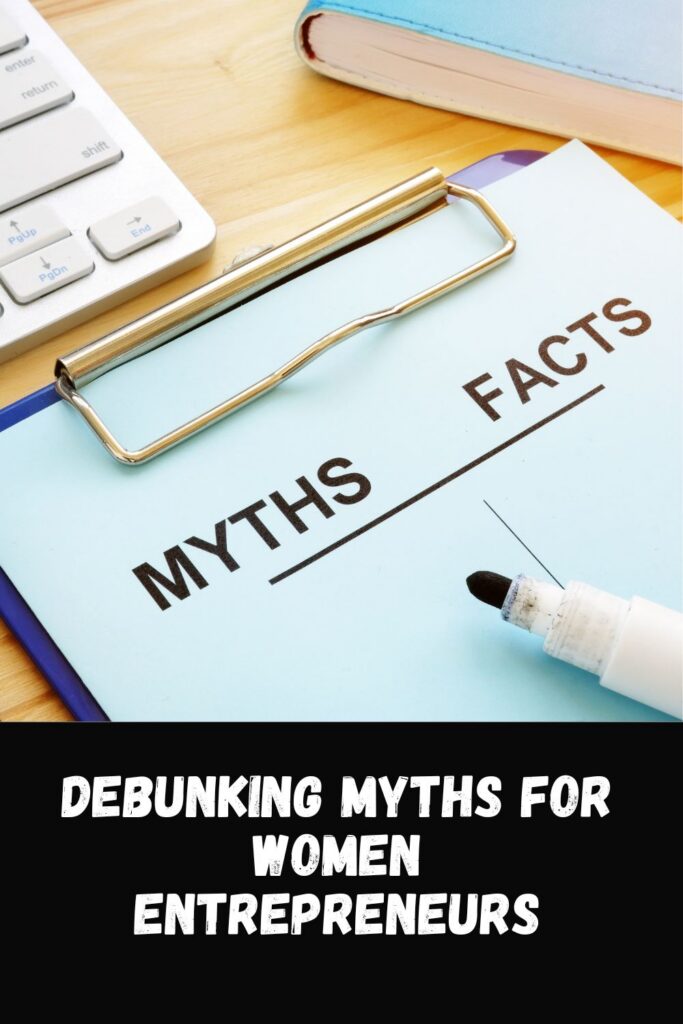
Debunking Myths for Women Entrepreneurs



Five Myths About Turning Your Story Into a Business
The biggest obstacles between women and a platform built from their story are rarely practical. They’re myths. Here are the five I hear most, and the truth behind each one.
In years of working with women who want to build a platform from their lived experience, I’ve noticed something: the obstacles they describe are rarely practical. It’s almost never “I don’t have the technical skill” or “I don’t have enough time,” though those show up too. Far more often, the real obstacle is a belief — something they’ve absorbed as fact that simply isn’t true. I want to name the five I hear most, because I think naming a myth is often enough to loosen its grip.
What’s notable about all five is how reasonable each one sounds on its own. None of them are obviously wrong at first glance, which is exactly why they’re so effective at quietly keeping capable women from starting. Let’s take them one at a time.
Myth One: “You Need Credentials to Be Taken Seriously”
This is probably the most common myth I encounter, and I’ve written about it at length elsewhere because it deserves its own deep dive. The short version: credentials and lived experience answer two different questions. Credentials signal that you’ve met an external, standardized bar. Lived experience signals that you understand something from the inside — and for the specific work of building trust with an audience navigating something hard, that second signal often does more work than the first. Research on personal branding backs this up directly, showing that value propositions become more memorable and persuasive when conveyed through story rather than credentials alone. You need enough credibility to be taken seriously, yes — but that credibility can come from your life, not only from an institution.
Myth Two: “My Story Isn’t Dramatic Enough to Matter”
Women constantly underestimate their own stories by comparing them to the most extreme version of a similar experience they’ve seen online. “My divorce wasn’t as bad as hers.” “My financial struggle wasn’t as severe as his.” That comparison misses the point entirely. What makes a story valuable to an audience isn’t its severity — it’s its specificity and its usefulness. A quieter, more ordinary struggle, told honestly and with a real lesson attached, often connects with far more people than an extreme story, precisely because more people recognize themselves in it. You do not need the most dramatic version of a hard season to have a story worth building on.
In fact, I’d argue the opposite risk is more common than people expect: an extremely dramatic story can sometimes feel less relatable, not more, because fewer people have lived anything close to it. The story that gets the most “I’ve never told anyone this, but the exact same thing happened to me” responses is rarely the most extreme one in the room. It’s usually the most honestly told ordinary one.
Myth Three: “Sharing My Story Means Sharing Everything”
This myth keeps women silent far more often than it should, because it makes authenticity sound like an all-or-nothing proposition. It isn’t. You can share the emotional truth of an experience — what it felt like, what you learned, how you changed — while keeping specific details, other people’s roles, and entire categories of information permanently private. Boundaried storytelling isn’t a lesser, less honest version of authenticity. In my experience, it’s the version that actually holds up over years, because it doesn’t require you to keep exposing more of yourself indefinitely to maintain the same level of connection with your audience.
Myth Four: “I Have to Be Fully Healed Before I Can Talk About It”
This one is subtler and, I think, genuinely well-intentioned — it comes from a real desire not to overshare from an open wound, which is a legitimate concern. But “fully healed” is a moving target that, for most meaningful experiences, never fully arrives in the tidy, complete way this myth implies. What actually matters is not whether you’ve reached some final state of resolution, but whether you can speak about the experience steadily, understand what it taught you, and hold a boundary around what stays private. That bar is achievable. “Fully healed, permanently, with zero residual feeling” often isn’t — and waiting for it can mean waiting indefinitely for a finish line that keeps moving.
Myth Five: “If I Charge for This, I’m Exploiting My Own Pain”
This myth carries real moral weight for a lot of women, and I want to take it seriously rather than dismiss it. But I’d gently reframe it: you are not charging for your pain. You are charging for the transformation, the process, and the guidance you can now offer someone else because of what that pain taught you. Those are different things. A surgeon does not “exploit” a patient by charging for a procedure just because the surgeon’s own hard-won training is what makes the procedure possible. The training and the outcome are what’s being paid for — not the difficulty of acquiring it. The same logic applies here. Charging for the value you now provide is not a betrayal of the experience that shaped you. It’s often the most respectful, sustainable way to keep offering that value to others without burning yourself out giving it away indefinitely.
I’d also point out the quiet flaw in the logic of this myth: if charging for hard-won expertise were inherently exploitative, we’d have to apply that same standard to every helping profession built on lived difficulty — therapists who’ve navigated their own hard seasons, doctors treating illnesses they’ve personally survived, coaches who’ve been through exactly what their clients are facing. We don’t apply that standard to them, because we understand, correctly, that lived understanding paired with real skill is precisely what makes their help valuable. The same reasoning holds here.
A Sixth, Bonus Myth Worth Naming
There’s one more I hear often enough that it deserves mention, even outside the core five: “someone else already told a version of this story, so mine isn’t needed.” This one dissolves quickly under scrutiny. No one else has your specific voice, your specific details, your specific way of explaining what helped. Two women can share nearly identical circumstances and produce two entirely different pieces of value, because the value was never just in the events — it was in how each of them made sense of those events. Someone else covering similar ground is not a reason to stay quiet. It’s often evidence that there’s already an audience hungry for exactly this kind of story.
Why These Myths Persist
All five of these myths share something in common: they sound like humility, caution, or good judgment, which is exactly why they’re so effective at keeping talented women stuck. Nobody feels reckless for believing them. They feel responsible. That’s what makes them worth naming directly, rather than letting them operate quietly in the background of every decision about whether to start.
If You Recognized Yourself in More Than One
If you read this and saw yourself in two, three, or even all five of these, that’s common, not concerning. Each of these myths maps onto a different pillar of the Trauma-to-Profit™ framework — credentials versus story onto Recognize, oversharing onto Release, the healing timeline onto Rebuild, and pricing onto Revenue. The framework exists, in large part, because these five myths are so widespread and so quietly convincing. Naming them is the first step. Working through them, pillar by pillar, is the rest of the work.
I’d encourage you to reread this list once more, slowly, and notice which myth produced the strongest internal reaction — a flicker of defensiveness, a wince of recognition, an urge to explain why your situation is the exception. That reaction is usually pointing directly at the belief doing the most damage right now. It’s worth sitting with, rather than rushing past.
Key Takeaways
- Credentials and lived experience answer different questions — you don’t need one to use the other.
- Your story doesn’t need to be the most extreme version of a hard experience to matter; specificity and usefulness connect with an audience more than severity does.
- Authenticity doesn’t require sharing everything — boundaried storytelling is a stronger, more sustainable version of honesty, not a lesser one.
- “Fully healed” is a moving target for most meaningful experiences. What matters is steadiness, understanding, and boundaries, not a tidy finish line.
- Charging for your story isn’t exploiting your pain — it’s charging for the transformation and guidance that pain now equips you to offer someone else.
Call to Action
Start With Trauma-to-Profit™ (T2P™)
The five-pillar framework behind everything in this post. The free Introduction PDF launches August 1, 2026, and the complete T2P™ E-Book follows on October 1, 2026. Visit the page now to see the full framework and be notified the moment each one goes live.
Apply the Framework Inside FastTrack
FastTrack is the boutique 90-day podcast launch accelerator built entirely on the T2P™ methodology — 15 seats, three cohorts a year, application only. The waitlist is open now; Cohort 1 applications open February 1, 2027.
Get Personalized Clarity
If you want direct, one-on-one strategy before you commit to a bigger step, book a 60-minute 1:1 Consultation with Sherley — $297, one payment, no packages.
Grab the Podcasting E-Book
“Find Your Voice: The Woman Behind the Mic” is the 10,000-word, step-by-step roadmap for planning, recording, and launching your podcast — $67.
Reserve Your Seat at the Free Webinar
“Story to Show: Launch Your Podcast With Clarity, Strategy, and Confidence” is a live training on turning your story into authority using the T2P™ framework.
Listen to Sherley’s Show
Hear these ideas in conversation across all three formats — the Real Talk Series with Sherley and Kalief, Conversations with Sherley and Kira, and Interviews with guest experts.
Sources
Internal Sources
Transform Pain into Power: Unlock Your Business Potential
Build Authority With Your Story: Trauma-to-Profit™ Explained
Trauma-to-Profit™ Framework Overview
External Sources
A New Approach to Building Your Personal Brand — Harvard Business Review
Sherley’s Show is learning and growing every single day. We aim to uplift all marginalized voices both on this podcast and in real life. Please note that we are always striving to change the problematic language that society has internalized in us. Thank you for your patience as we aim to strip certain phrases from our vocabulary.
Would you like to be a guest
Are you interested in getting your opinion out about a particular topic but don’t know how to do so? If so, here is an opportunity to do so to share your point of view, PLUS get your message and voice out there. It is always a great way to know about different perspectives and enrich ourselves through knowledge sharing.
Submit your relationship question.
Sherley’s Show provides an atmosphere where every woman is comfortable growing into their best self. Sherley’s Show is a no judgment podcast where we discuss how to rise strong out of all types of obstacles that come with relationships. Through personal life experiences and discussions ranging from infidelity, trust, forgiveness, sex, heartbreak, self love, therapy and more, we offer words of empowerment as you strive to build and maintain all of the relationships in your life. You may be going through something that is unique and difficult. Sharing your story gives others comfort and could also be helping someone else. Let them know they are not alone. Everyone has a story, do not let fear hold you back.
Disclosure: This post contains affiliate links, I will get a commission if you decide to make a purchase through any of my links, at no cost to you. Please read my disclosure for more info.

Want to launch a podcast?
FRee Resource!
Download Sherley’s FREE Bootcamp Podcast Launch Checklist! The no-fluff, step-by-step roadmap for busy women ready to finally launch the podcast they’ve been dreaming about.
At Sherley's Show, we believe that when women feel seen and supported, anything is possible. Whether you're tuning in for inspiration, education, or community—you belong here.



next

say goodbye to being the side chick
When you find yourself really settling with the reality that you are the side chick, when you find yourself tired of the games and/or the complacency, it’s time to ask yourself a few questions.
next

why is therapy important?
Solo therapy, partnered therapy, or group therapy... what exactly are the benefits? If you’re still on the fence about whether or not you should go and if therapy can really do anything for you... this post is for you.
next
CONNECT
elsewhere:
STAY AWHILE AND READ
THE BLOG

BINGE
THE PODCAST
The place where we chat about obstacles that come out of relationships and how to rise up from them. Self-love, marriage, infidelity, sex, heartbreak, and more.

HANG OUT ON

Comments +