
Balancing a Full-Time Job and Building Your Platform




Building a Platform While Working Full-Time: What It Actually Takes
Not inspiration — logistics. Here’s a realistic, practical breakdown of what it actually takes to build a platform in the margins of a full-time career.
I’ve made the case elsewhere for why your career doesn’t disqualify you from building a platform. This post is different — this one is about logistics. Not whether you can do it, but exactly how, week to week, when your calendar is already full of shifts, meetings, or flights. I built Sherley’s Show while working full-time, and I want to walk through what that actually looked like in practice, not just in theory.
I’m skipping the inspiration in this one entirely. You’ve likely already heard enough of that to know you’re capable. What’s harder to find is the unglamorous, practical breakdown of how the actual hours get found and used — so that’s what this post is going to give you.
Start With an Honest Time Audit
Before you plan anything, get honest about the time you actually have — not the time you wish you had. For me, that meant looking at my flight schedule in blocks: days I was flying, days I was home, days I had genuine, protected stretches of hours versus days that were fragmented into 20-minute gaps. Most career women I’ve worked with skip this step and instead plan around an idealized week that doesn’t reflect their actual life, which sets the whole platform up to feel like it’s failing within the first month.
Do this literally: write out a real week, hour by hour, and mark where genuine focus time exists. You may find you have less than you assumed. You may also find pockets you hadn’t been counting — a commute, a layover, an hour after everyone else is asleep. Both discoveries are useful.
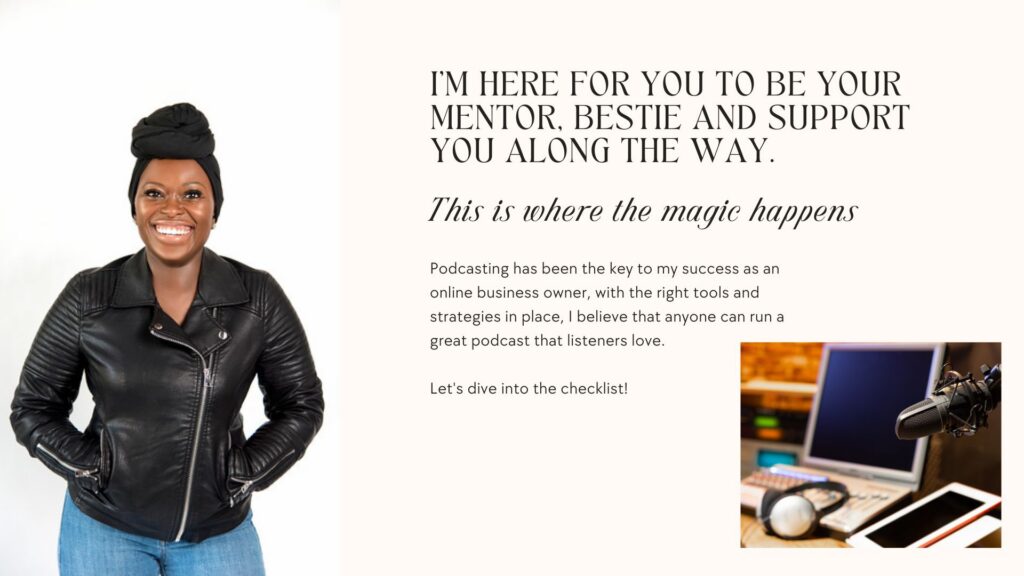
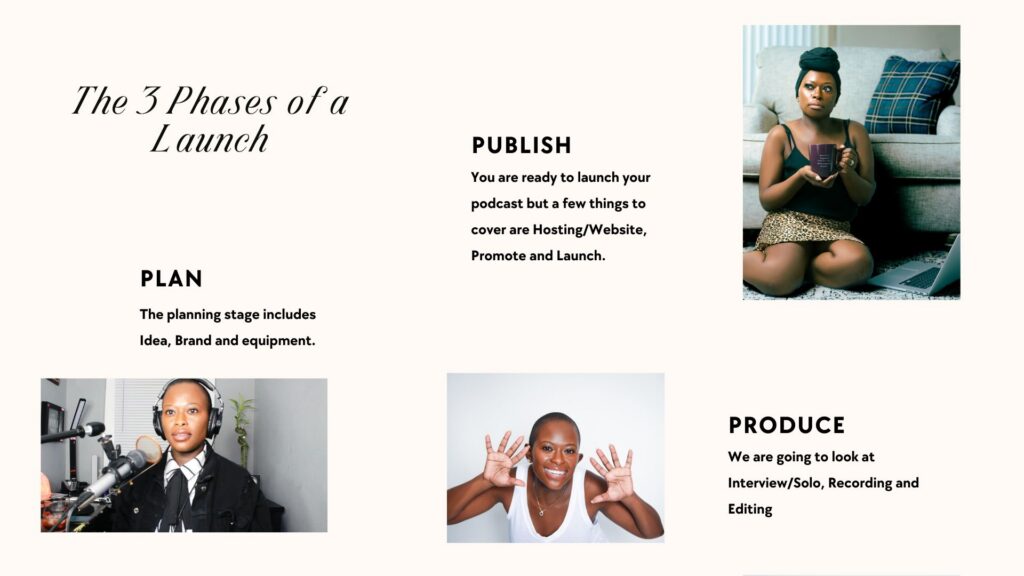
Grab the checklist featured above → Free checklist
Or see all free resources → Free Resources
Batch, Don’t Trickle
One of the biggest shifts that made this sustainable for me was moving away from the idea that content creation happens daily, in small increments, and toward batching — recording multiple episodes in one sitting, writing several posts in one focused block, rather than trying to summon creative energy fresh every single day around an unpredictable schedule.
Batching front-loads the effort into the days you do have real focus time, and then lets the output trickle out on a regular publishing schedule regardless of how chaotic the following weeks get. This single shift is, in my experience, the difference between platforms that survive a busy season and platforms that quietly die during one.
Protect a Non-Negotiable Block, Even a Small One
You do not need ten hours a week to build something real. What you need is a consistent block, even a modest one, that you protect the way you’d protect a work shift — not something you’ll get to if everything else goes well. Research on secondary income streams shows that a large share of people building something alongside full-time work put in somewhere around five to ten hours a week, and that’s enough, over a sustained period, to build something meaningful. The number matters less than the consistency.
For me, that block was almost always my days off — not because they were free of other obligations, but because I decided, deliberately, that a portion of them belonged to this work before anything else could claim them.
Simplify the Technical Side More Than You Think You Need To
A lot of time gets lost to over-engineering the technical setup before a single episode or post exists. You do not need premium equipment, a studio, or a perfect editing workflow to start. What you need is the minimum viable version of each piece — a decent microphone, a simple recording process, an editor or template that removes decisions from your plate — so that your limited time goes toward the content itself, not toward researching gear you don’t yet need.
This is exactly why I built the Podcast Bootcamp Launch Checklist and why FastTrack includes a Resource Vault of done-for-you templates. Time-constrained women don’t need more options. They need fewer decisions and a clear next step.
Let Go of Daily Posting
Daily content is a full-time creator’s strategy, not a career woman’s strategy, and holding yourself to that standard while also working full-time is one of the fastest paths to burnout and quitting. A consistent weekly or biweekly rhythm, sustained for two years, will outperform a daily rhythm that collapses after six weeks almost every time. Consistency compounds. Intensity that isn’t sustainable doesn’t.
Use the Structure of a Program Instead of Building One From Scratch
One of the reasons I built FastTrack as a 90-day program, with a fixed intensive day, a mandatory 1:1 strategy session, and a single group mentorship call at the midpoint, rather than an open-ended, ongoing commitment, is precisely because I know what it’s like to be a career woman without room for another standing weekly obligation. A defined container with a start and end date is far easier to fit around a demanding schedule than an indefinite one, and it gives you a concrete finish line: a launched podcast in 90 days, not an ongoing, never-quite-finished process.
What a Realistic Week Actually Looks Like
To make this concrete: a realistic week for a career woman building a platform might include one batching session of two to three hours on a day off, producing enough content for the next two to three weeks; thirty minutes, a few times a week, for engagement and community response, often squeezed into small gaps in an otherwise full day; and one slightly longer session every few weeks for planning and strategy. That is a fraction of a full-time creator’s schedule, and it is enough, sustained over months, to build something real.
Getting Support From the People Around You
None of this happens in a vacuum. If you have a partner, family, or roommates, building a platform in the margins of a full-time job usually requires their explicit buy-in, not just your own discipline. A protected block of hours on your day off only stays protected if the people around you understand why it matters and respect it accordingly. I’d encourage having that conversation directly, early, rather than assuming it will simply work itself out — explain what you’re building, how much time it actually requires, and what you need from them to make it sustainable. Kalief co-hosting the Real Talk Series with me isn’t just a content decision. It reflects a broader partnership where we both understood, from the start, what this would require of our time together.
The Honest Trade-Off
I won’t pretend there’s no trade-off. Building this way means growth happens more slowly than it would for someone building full-time. It means some weeks, the platform gets less attention than you’d like, because your job needed you more that week. That is a real cost, and it’s worth naming honestly rather than pretending this path is frictionless.
What it buys you in exchange is financial stability while you build, real-world expertise that continues to feed your content, and a business built on a foundation that doesn’t collapse if the platform takes longer than expected to gain traction. For most of the women I’ve worked with, that trade-off is worth making — not because the slower path is easier, but because it’s sustainable in a way the all-in path often isn’t.
I’d add one more piece of honesty: there will be seasons where the platform genuinely stalls because life demanded everything you had. A rough stretch at work, a family emergency, a period where you simply couldn’t find the hours. That is not the same as failure, and it does not mean you have to start over. A platform built slowly, in the margins, is used to unevenness. It can absorb a quiet month or two and pick back up, in a way a platform built entirely on constant daily momentum often can’t.
Key Takeaways
- Start with an honest, hour-by-hour audit of your actual week — not an idealized one — before planning your content schedule.
- Batching content in focused sessions, rather than trying to create daily, is the single biggest shift that makes building alongside a career sustainable.
- A protected, consistent block of time — even five to ten hours a week — is enough over a sustained period to build something real.
- Simplify equipment and workflow decisions early so your limited time goes toward content itself, not researching gear or tools.
- A defined, time-bound program with a clear finish line tends to fit a demanding schedule far better than an open-ended commitment.
Call to Action
Start With Trauma-to-Profit™ (T2P™)
The five-pillar framework behind everything in this post. The free Introduction PDF launches August 1, 2026, and the complete T2P™ E-Book follows on October 1, 2026. Visit the page now to see the full framework and be notified the moment each one goes live.
Apply the Framework Inside FastTrack
FastTrack is the boutique 90-day podcast launch accelerator built entirely on the T2P™ methodology — 15 seats, three cohorts a year, application only. The waitlist is open now; Cohort 1 applications open February 1, 2027.
Get Personalized Clarity
If you want direct, one-on-one strategy before you commit to a bigger step, book a 60-minute 1:1 Consultation with Sherley — $297, one payment, no packages.
Grab the Podcasting E-Book
“Find Your Voice: The Woman Behind the Mic” is the 10,000-word, step-by-step roadmap for planning, recording, and launching your podcast — $67.
Reserve Your Seat at the Free Webinar
“Story to Show: Launch Your Podcast With Clarity, Strategy, and Confidence” is a live training on turning your story into authority using the T2P™ framework.
Listen to Sherley’s Show
Hear these ideas in conversation across all three formats — the Real Talk Series with Sherley and Kalief, Conversations with Sherley and Kira, and Interviews with guest experts.
Sources
Internal Sources
Trauma-to-Profit™ Framework Overview
Transform Pain into Power: Unlock Your Business Potential
External Sources
Side Hustle Statistics 2026: Income, Trends & Insights — Hostinger
How to Start a 6-Figure Business While Working Full-Time — Luisa Zhou
Sherley’s Show is learning and growing every single day. We aim to uplift all marginalized voices both on this podcast and in real life. Please note that we are always striving to change the problematic language that society has internalized in us. Thank you for your patience as we aim to strip certain phrases from our vocabulary.
Would you like to be a guest
Are you interested in getting your opinion out about a particular topic but don’t know how to do so? If so, here is an opportunity to do so to share your point of view, PLUS get your message and voice out there. It is always a great way to know about different perspectives and enrich ourselves through knowledge sharing.
Submit your relationship question.
Sherley’s Show provides an atmosphere where every woman is comfortable growing into their best self. Sherley’s Show is a no judgment podcast where we discuss how to rise strong out of all types of obstacles that come with relationships. Through personal life experiences and discussions ranging from infidelity, trust, forgiveness, sex, heartbreak, self love, therapy and more, we offer words of empowerment as you strive to build and maintain all of the relationships in your life. You may be going through something that is unique and difficult. Sharing your story gives others comfort and could also be helping someone else. Let them know they are not alone. Everyone has a story, do not let fear hold you back.
Disclosure: This post contains affiliate links, I will get a commission if you decide to make a purchase through any of my links, at no cost to you. Please read my disclosure for more info.

Want to launch a podcast?
FRee Resource!
Download Sherley’s FREE Bootcamp Podcast Launch Checklist! The no-fluff, step-by-step roadmap for busy women ready to finally launch the podcast they’ve been dreaming about.
At Sherley's Show, we believe that when women feel seen and supported, anything is possible. Whether you're tuning in for inspiration, education, or community—you belong here.



next

say goodbye to being the side chick
When you find yourself really settling with the reality that you are the side chick, when you find yourself tired of the games and/or the complacency, it’s time to ask yourself a few questions.
next

why is therapy important?
Solo therapy, partnered therapy, or group therapy... what exactly are the benefits? If you’re still on the fence about whether or not you should go and if therapy can really do anything for you... this post is for you.
next
CONNECT
elsewhere:
STAY AWHILE AND READ
THE BLOG

BINGE
THE PODCAST
The place where we chat about obstacles that come out of relationships and how to rise up from them. Self-love, marriage, infidelity, sex, heartbreak, and more.

HANG OUT ON

Comments +