
Unleash Your Expertise: Build a Powerful Platform



Your Career Expertise Is Already a Platform
Disclaimer: Sherley Troutman is not a licensed business consultant, attorney, or financial advisor. The content in this article is for informational and educational purposes only, based on her personal experience coaching career women through podcast launches. Please consult a qualified professional for advice specific to your business.
“I don’t have anything unique to say.” I hear a version of that sentence constantly, almost always from women who, five minutes later in the same conversation, describe fifteen years as a nurse, or a decade running a corporate team, or a career built one client relationship at a time as a flight attendant navigating people at their most stressed. The disconnect isn’t a lack of expertise. It’s that most career women have never been asked to see their expertise as something separate from their job title — as something that could stand on its own as a platform.
This article is for the woman who has caught herself saying some version of that sentence. Not because I want to convince you your job is impressive — you already know that on some level — but because there’s a specific, correctable reason so many women undervalue exactly the thing that would make the strongest platform they could build.
Why This Blind Spot Is So Common
Expertise built inside a career tends to feel invisible to the person who has it, precisely because it’s been earned slowly, through repetition, inside an environment where everyone around her has similar knowledge. A nurse surrounded by other nurses doesn’t feel exceptional for knowing what she knows — she feels normal, because normal is defined by the room she’s standing in. It’s only when that same knowledge leaves the room and reaches someone outside the field that its actual value becomes visible. The blind spot isn’t about modesty. It’s about proximity.
This is also why outside perspective matters so much in this specific conversation. The people closest to you — your coworkers, your manager, your professional peers — are the worst judges of whether your expertise is platform-worthy, because they already have it too. The audience who would genuinely benefit from hearing it doesn’t exist inside your workplace. It exists outside it, and most career women have simply never had a reason to imagine that audience before.
I’ve watched this play out the same way more times than I can count during the Week 1 Live Intensive at FastTrack: a woman describes her job in flat, matter-of-fact terms, the way you’d describe something everyone already understands. Then someone from a completely different field in the room reacts — genuinely surprised, genuinely interested — and you can watch the recalibration happen in real time. What felt ordinary to her a minute earlier suddenly looks different once she sees it land on someone outside her world. It’s one of my favorite moments to witness, precisely because nothing about her expertise changed in that moment — only her awareness of it did.
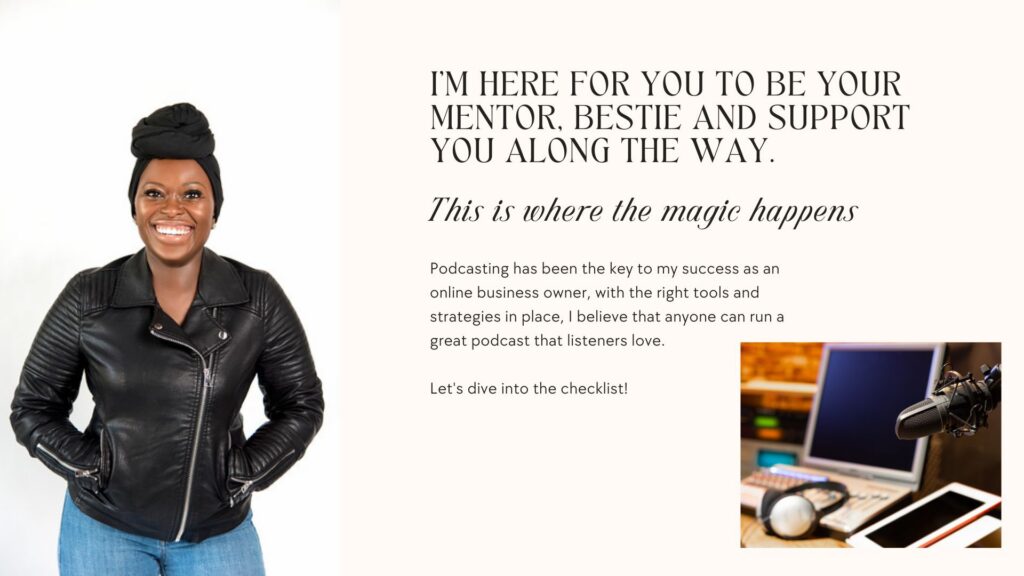
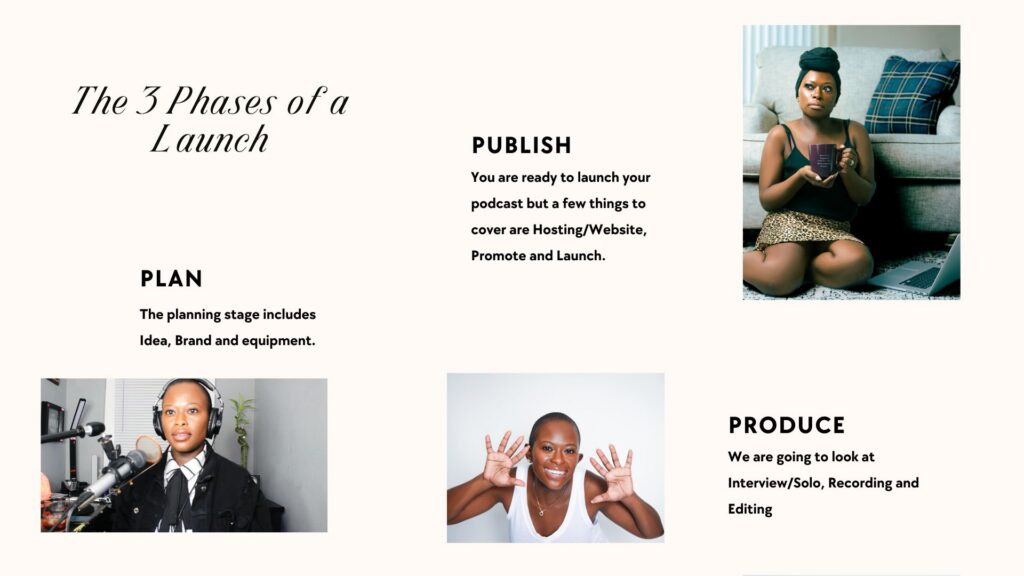
Grab the checklist featured above → Free checklist
Or see all free resources → Free Resources
What “Platform-Worthy” Actually Means
It doesn’t mean rare. It doesn’t mean you need to be the top person in your field, or have a credential nobody else has. It means you know something well enough, and have lived it long enough, that you could explain it clearly to someone who doesn’t have it yet — and that person would be better off for having heard it. That’s a far lower bar than most women assume, and a far more common one than the phrase “unique expertise” implies.
A nurse who has sat with hundreds of families during difficult diagnoses has something to say about navigating fear and uncertainty that no textbook captures the same way. A corporate executive who has led through three rounds of layoffs has something real to say about leadership under pressure. A flight attendant who has de-escalated conflict at 30,000 feet, repeatedly, with no backup and no do-over, has something to say about staying calm that most leadership podcasts only theorize about. None of that requires uniqueness in the sense of never having been said before. It requires lived credibility, which is a different and more accessible bar entirely.
It’s worth separating two things that often get merged in a woman’s head: being the only person who could say something, versus being someone whose way of saying it — shaped by her specific years, her specific stories, her specific field — is worth hearing. Almost nothing anyone builds a platform around is the first time it’s ever been said. What makes it worth listening to is that it’s coming from someone who actually lived it, in her own words, not a repackaged version of someone else’s expertise.
The Difference Between a Personal Brand and a Platform
A lot of the hesitation around this comes from conflating “platform” with “personal brand” — the polished, performative version of self-promotion that understandably makes a lot of career women uncomfortable. That discomfort is valid, and it’s also based on a narrower definition than what’s actually required. A platform, in the sense that matters here, is simply a consistent place where your expertise reaches people who need it. It doesn’t require a persona. It doesn’t require constant visibility or performing a version of yourself you don’t recognize. It requires showing up, in your own voice, around what you actually know.
Podcasting in particular tends to suit career women precisely because it strips away most of what makes personal branding feel uncomfortable. There’s no visual performance to maintain, no curated aesthetic to keep up. It’s you, talking about what you know, to someone who wants to hear it. For a lot of women, that turns out to be a far more natural fit than the version of “building a platform” they’d been dreading.
I think this distinction matters more than it gets credit for, because I’ve watched the fear of personal branding stop women from even considering a podcast, when the two things aren’t actually the same ask. A personal brand asks you to construct and maintain an image. A podcast just asks you to talk, consistently, about something you already know how to talk about — which is a fundamentally different, and for most career women, far more comfortable request.
What Happens When You Actually Name It
This is the part I watch happen over and over, and it never stops being worth mentioning: the moment a woman is asked to articulate her expertise out loud, specifically, to someone outside her field, something shifts. She hears herself say something she’s known for years like it’s new information, because in a sense, to the person listening, it is. That moment — hearing your own knowledge land as valuable to someone else — is usually the actual turning point, more than any strategy session or branding exercise that comes after it.
It’s also, not coincidentally, the exact work the first pillar of the Trauma-to-Profit™ Methodology is built around. Recognize isn’t a metaphor. It’s a literal, specific moment of naming what you know as worth building something around, and it’s usually the hardest and most important step in the entire process — harder, honestly, than anything technical that comes later.
If you want a quick, low-stakes way to test this yourself before committing to anything: try explaining what you do for a living to someone genuinely outside your field, in detail, the way you’d explain it to a curious stranger rather than a coworker who already gets it. Pay attention to what happens in their face and their questions. That reaction — not your own internal sense of whether it was interesting — is usually the more accurate signal.
You Don’t Need to Wait Until You Feel Ready
One more thing worth saying plainly: the feeling of being “ready” to claim your expertise publicly almost never arrives before you start. It tends to arrive after — after the first episode is out, after the first message from a listener who says it helped, after the first small piece of proof that the knowledge you almost didn’t share actually mattered to someone. Waiting for the internal certainty to show up first is, for most women, waiting for something that confidence-building action produces, not something that precedes it.
I understand the instinct to want proof before you commit — it feels responsible, even smart. But the proof you’re waiting for is usually generated by the exact action you’re postponing until you have it. It’s a loop that can run indefinitely if you let it. Somewhere, a version of you is still waiting to feel ready for a platform she could have started building a year ago.
What This Looks Like Once You Actually Start
Once a woman does name her expertise and start building around it, the pattern tends to look remarkably similar across fields. The specifics of what she knows stay the same — the nursing background, the corporate leadership, the years in the air — but the way she talks about it changes. It gets sharper, more confident, less hedged with qualifiers like “I’m no expert, but.” That shift usually happens within the first few episodes, not after months of practice, because talking about something you’ve lived is fundamentally easier than talking about something you’re still trying to convince yourself you’re allowed to say.
That’s really the whole argument of this article, distilled: you already have the material. What’s been missing isn’t expertise. It’s permission — and that’s the one thing nobody outside yourself can actually hand you. The closest thing to it is simply starting, and letting the evidence build from there.
Key Takeaways
✓ Expertise built inside a career often feels invisible to the person who has it — the blind spot is about proximity, not a lack of real knowledge.
✓ Platform-worthy doesn’t mean rare or unprecedented. It means you can explain something clearly enough to help someone who doesn’t have it yet.
✓ A platform isn’t the same as a personal brand — it doesn’t require a persona, just a consistent place your expertise can reach people.
✓ Naming your expertise out loud to someone outside your field is often the real turning point, more than any strategy that follows.
✓ Confidence tends to follow action, not precede it — waiting to feel fully ready before starting usually means waiting indefinitely.
Ready to Turn What You Know Into a Platform
The resources below are for women who want to build a real platform out of the expertise they already have.
→ Explore the Trauma-to-Profit™ Methodology
→ Get the eBook: Find Your Voice: The Woman Behind the Mic
→ Book a 1:1 Clarity Consultation
→ Browse More Business Articles
Be Yourself. Voice Yourself. Love Yourself.
Sherley’s Show is learning and growing every single day. We aim to uplift all marginalized voices both on this podcast and in real life. Please note that we are always striving to change the problematic language that society has internalized in us. Thank you for your patience as we aim to strip certain phrases from our vocabulary.
Would you like to be a guest
Are you interested in getting your opinion out about a particular topic but don’t know how to do so? If so, here is an opportunity to do so to share your point of view, PLUS get your message and voice out there. It is always a great way to know about different perspectives and enrich ourselves through knowledge sharing.
Submit your relationship question.
Sherley’s Show provides an atmosphere where every woman is comfortable growing into their best self. Sherley’s Show is a no judgment podcast where we discuss how to rise strong out of all types of obstacles that come with relationships. Through personal life experiences and discussions ranging from infidelity, trust, forgiveness, sex, heartbreak, self love, therapy and more, we offer words of empowerment as you strive to build and maintain all of the relationships in your life. You may be going through something that is unique and difficult. Sharing your story gives others comfort and could also be helping someone else. Let them know they are not alone. Everyone has a story, do not let fear hold you back.
Disclosure: This post contains affiliate links, I will get a commission if you decide to make a purchase through any of my links, at no cost to you. Please read my disclosure for more info.

Want to launch a podcast?
FRee Resource!
Download Sherley’s FREE Bootcamp Podcast Launch Checklist! The no-fluff, step-by-step roadmap for busy women ready to finally launch the podcast they’ve been dreaming about.
At Sherley's Show, we believe that when women feel seen and supported, anything is possible. Whether you're tuning in for inspiration, education, or community—you belong here.



next

say goodbye to being the side chick
When you find yourself really settling with the reality that you are the side chick, when you find yourself tired of the games and/or the complacency, it’s time to ask yourself a few questions.
next

why is therapy important?
Solo therapy, partnered therapy, or group therapy... what exactly are the benefits? If you’re still on the fence about whether or not you should go and if therapy can really do anything for you... this post is for you.
next
CONNECT
elsewhere:
STAY AWHILE AND READ
THE BLOG

BINGE
THE PODCAST
The place where we chat about obstacles that come out of relationships and how to rise up from them. Self-love, marriage, infidelity, sex, heartbreak, and more.

HANG OUT ON

Comments +