
90-Day Podcast Launch: What to Expect




What Actually Happens Inside a 90-Day Podcast Launch Accelerator
Disclaimer: Sherley Troutman is not a licensed business consultant, attorney, or financial advisor. The content in this article is for informational and educational purposes only, based on her personal experience building FastTrack and coaching women through podcast launches. Please consult a qualified professional for advice specific to your business.
“I want to start a podcast” is a sentence a lot of women say out loud long before they ever hit record. Somewhere between the idea and the first published episode, most of them stall out — not because the idea wasn’t good, but because nobody handed them a real structure to follow. They have the expertise. They have the stories. What they don’t have is a container that turns “someday” into a launch date on the calendar. That is the gap FastTrack was built to close.
If you have been circling the idea of applying, you have probably read the sales page. You know the numbers: 90 days, 15 seats, three cohorts a year, application only. What you might not have a clear picture of is what those 90 days actually look like once you are inside them — the rhythm, the work, the support, and what is genuinely expected of you week to week. So let’s walk through it, plainly, the way I wish someone had walked me through my own first structured launch.
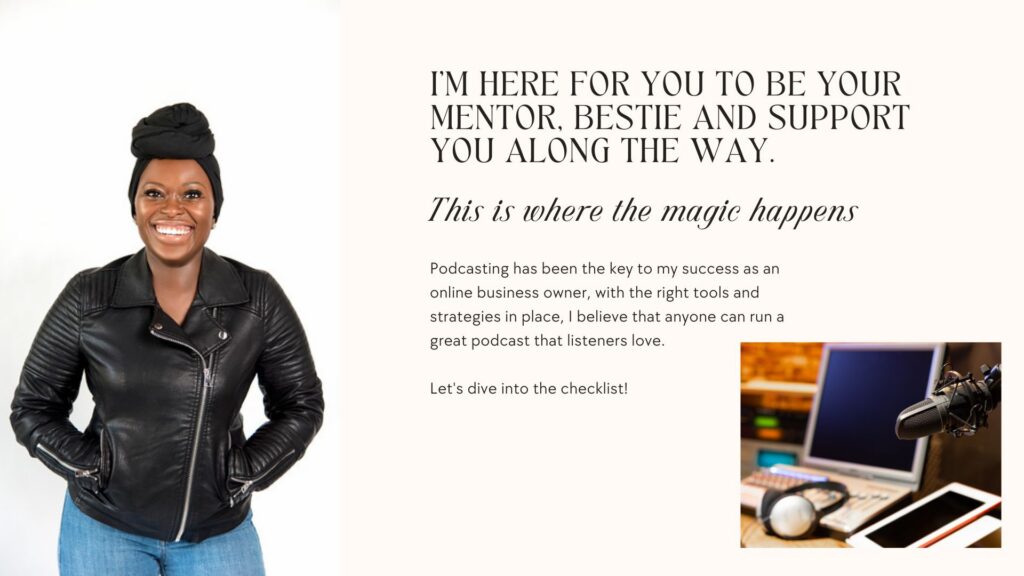
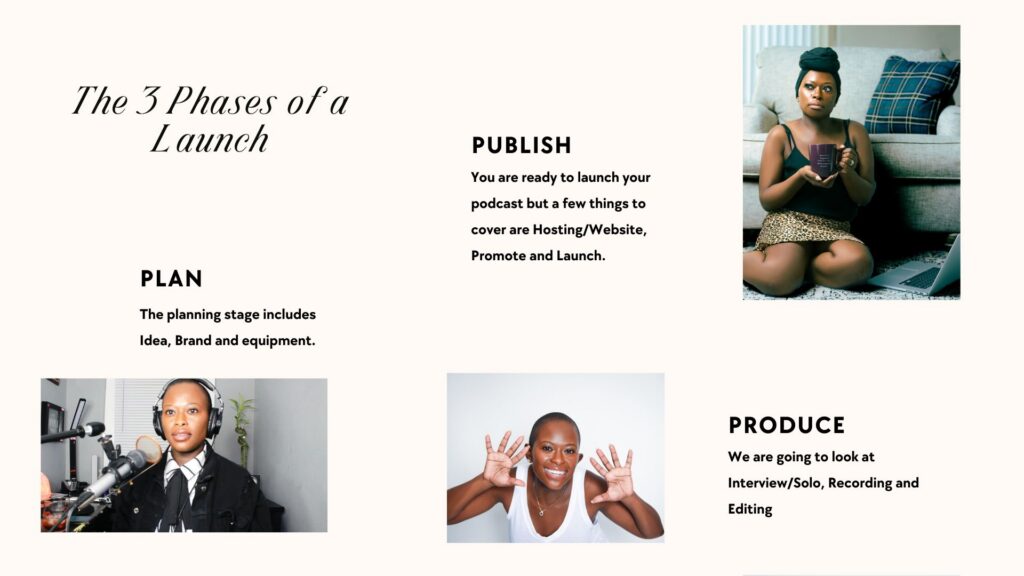
Grab the checklist featured above → Free checklist
Or see all free resources → Free Resources
Why a Program at All, Instead of Figuring It Out Alone
There is nothing stopping any woman from Googling “how to start a podcast” and piecing together a launch on her own. Plenty of women do exactly that, and some of them succeed. But most of the podcasts that start that way either never publish an episode, or they publish six and go quiet, because the plan lived in someone’s head instead of on a calendar with real accountability attached to it.
The difference FastTrack makes is not access to information — the information is not secret. The difference is sequence, deadlines, and a person checking in on your progress who is not your own inner critic. A career woman with a full schedule does not need more content telling her what a podcast could do for her. She needs the next right step handed to her in order, with someone holding her to the deadline the way a boss would hold her to a project timeline at work.
The Container: Why 90 Days, Specifically
Ninety days is long enough to build something real and short enough to force momentum. It is the difference between a program that lets you drift for a year and one that gives you a finish line you can see from day one. Every piece of the curriculum — the live sessions, the workbook, the resource vault — is sequenced against that container, so nothing is optional filler. Each week has a job to do.
The 90-day timeline is the intended goal of the program, not a guaranteed outcome. Individual results vary based on effort, consistency, and how much time you can realistically give it each week — that part is worth naming honestly before we go further, because FastTrack is not a passive experience. It asks something of you.
Week 1: The Launch Day Intensive
FastTrack opens with a 4-hour Live Intensive on Zoom. This is not a webinar you half-watch with your camera off. It is the working session where your entire show concept gets built in real time — your format, your positioning, your episode roadmap, your story framework, and the first draft of your revenue map. You leave that single day with a document you did not have the morning it started: an actual plan, not a vague direction.
This is deliberately front-loaded. Most programs ease you in with orientation content and save the real work for later. FastTrack does the opposite on purpose — momentum built on day one is what carries a cohort through the slower, more technical weeks that follow. By the time you log off that first Zoom call, you are not wondering what your show is about anymore. You know.
This is also the first time you are in the room with the other 14 women in your cohort. That matters more than it might seem like it would. Watching another career woman work through the exact same fears you have — about being seen, about whether her story is “enough,” about whether anyone will listen — does something that a solo course cannot replicate.
Worth naming here: the weeks that follow don’t all look like week one. The rhythm shifts — some weeks lean on homework you work through independently in the Workbook, others bring you back into a live Zoom call or your 1:1 session. The structure changes based on what that stretch of the program is asking of you, not a fixed weekly call every single week.
Weeks 2 and 3: Concept and Brand Locked
With the roadmap from the Intensive in hand, weeks two and three are where you turn a concept into a brand — show name, visual identity direction, show description, and positioning language that will follow you across every platform. This is also when your Mandatory 1:1 Strategy Session with Sherley happens: dedicated, private time focused entirely on your platform and your specific launch plan, not a group call where your questions compete for airtime.
By the end of week three, the guesswork is gone. You know what your show is, who it’s for, and why it exists — in language you could say out loud to a stranger without stumbling. That clarity is worth more than it sounds like on paper. A huge amount of podcast burnout comes from launching without it, then spending the first twenty episodes quietly wondering what the show is even supposed to be.
Weeks 4 to 6: Recording and Asset Creation
This is the production stretch. You are recording your launch episodes, building your cover art, writing your show notes, and pulling together the assets that will actually go live. The Private Resource Vault earns its keep here — done-for-you templates for episode outlines, a show description formula, and a launch checklist so you are not reinventing structure from scratch while also trying to record for the first time.
Week six closes with the Group Mentorship Call — a live hot-seat session with the rest of your cohort. This is the halfway point, and it functions exactly like one: a gut-check, a place to troubleshoot out loud, and a reminder that fourteen other women are in the exact same stretch of the process you are. Whatever is stuck for you — a technical question, a confidence wobble, a piece of your positioning that still feels off — this is where it gets named out loud instead of quietly derailing your momentum.
This is also historically where the real fear shows up. Weeks one through three are strategy and planning, which feels safe. Weeks four through six are where you actually have to record your voice and put your name on something public. The Group Mentorship Call exists specifically because that fear is predictable, and predictable fear deserves a built-in response, not a hope that you push through it alone.
Weeks 7 to 10: Production and Positioning
With episodes recorded, the focus shifts to polish and placement — getting your show properly set up on every platform, refining your positioning, and starting to build the visibility groundwork that will matter the moment you go live. This is where the Podcast to Revenue Roadmap inside the vault gets put to direct use, connecting the show you have built back to the income goals that likely brought you to FastTrack in the first place.
These four weeks are less glamorous than recording and less dramatic than launch week, and that is exactly why they matter. This is where a podcast that sounds good becomes a podcast that is actually positioned to be found — correct categories, a show description built to convert rather than just describe, cover art that reads clearly as a thumbnail, and a publishing rhythm you can actually sustain past week twelve. Skipping this stretch is the single most common reason independently launched podcasts stall after a strong start.
Weeks 11 and 12: Launch and Visibility Activation
The final stretch is publish-and-promote. Your show goes live, and the visibility activation plan built from the 90-Day Launch Roadmap PDF kicks in — the specific, week-by-week promotional actions designed to get your first episodes in front of real listeners instead of into the void. Every client who launches within the 90 days also gets featured on Sherley’s Show platform and social channels, which means your first push of momentum is not something you are generating entirely alone.
Launch day itself tends to feel anticlimactic in the best possible way. By the time your show actually goes live, you have already recorded, already troubleshot the technical pieces, already sat with the discomfort of being seen — the hard part happened weeks earlier. What is left is the genuinely fun part: watching people you have never met start listening to something that started as an idea you almost talked yourself out of.
What You Actually Walk Away With
At the end of 90 days, the tangible outcome is a launched, properly positioned podcast. But the less obvious outcome is the one most graduates mention first when they talk about the experience afterward: proof. Proof that they can commit to something with a deadline and finish it. Proof that their story and their expertise were worth building a platform around. That part does not show up on the sales page, but it is very often the part that changes how a woman moves in the rest of her business after FastTrack ends.
What Holds It Together Between the Big Moments
The live sessions and milestones are the visible structure, but the FastTrack Authority and Launch Workbook is what you are working from every single week in between — your complete strategic guide running from authority positioning through monetization mapping to the full 90-day execution plan. It is the difference between a program that gives you a few good calls and one that gives you a document you will still reference the day you plan season two.
Who This Is Actually Built For
FastTrack is intentionally small — 15 seats, application only, three cohorts a year. That is not a scarcity tactic; it is a structural decision about how much real 1:1 attention a program can give at scale. If you are a career woman with expertise worth sharing — a nurse, a corporate executive, a business owner, a flight attendant, anyone with a professional field she knows deeply — and you are done thinking about starting a podcast and ready to move with structure, this container is built for exactly that.
If you are still deciding whether a podcast is the right platform at all, or whether social media or speaking might serve you better, that is a different starting point — and a 1:1 Clarity Consultation is the better first step before applying here.
Key Takeaways
✓ FastTrack runs on a fixed 90-day container, with every week sequenced to build toward a specific outcome — nothing is filler.
✓ Week 1 is a 4-hour Live Intensive where your full show concept, roadmap, and revenue map get built in real time.
✓ Weeks 2–3 lock your brand and include your Mandatory 1:1 Strategy Session with Sherley.
✓ Weeks 4–6 are recording and asset creation, closing with a live Group Mentorship hot-seat call.
✓ Weeks 7–10 focus on production polish and positioning ahead of launch.
✓ Weeks 11–12 are launch and visibility activation, including a platform feature for every client who launches on time.
✓ The FastTrack Authority and Launch Workbook is the throughline connecting every week of the program.
Ready to See If FastTrack Is Your Next Step
The resources below are exclusively for women who want to launch or grow a podcast as a real income stream.
→ Explore the Trauma-to-Profit™ Methodology FastTrack Is Built On
→ Not Sure Yet? Book a 1:1 Clarity Consultation
→ Get the eBook: Find Your Voice: The Woman Behind the Mic
→ Browse More Business & FastTrack Articles
Be Yourself. Voice Yourself. Love Yourself.
Sherley’s Show is learning and growing every single day. We aim to uplift all marginalized voices both on this podcast and in real life. Please note that we are always striving to change the problematic language that society has internalized in us. Thank you for your patience as we aim to strip certain phrases from our vocabulary.
Would you like to be a guest
Are you interested in getting your opinion out about a particular topic but don’t know how to do so? If so, here is an opportunity to do so to share your point of view, PLUS get your message and voice out there. It is always a great way to know about different perspectives and enrich ourselves through knowledge sharing.
Submit your relationship question.
Sherley’s Show provides an atmosphere where every woman is comfortable growing into their best self. Sherley’s Show is a no judgment podcast where we discuss how to rise strong out of all types of obstacles that come with relationships. Through personal life experiences and discussions ranging from infidelity, trust, forgiveness, sex, heartbreak, self love, therapy and more, we offer words of empowerment as you strive to build and maintain all of the relationships in your life. You may be going through something that is unique and difficult. Sharing your story gives others comfort and could also be helping someone else. Let them know they are not alone. Everyone has a story, do not let fear hold you back.
Disclosure: This post contains affiliate links, I will get a commission if you decide to make a purchase through any of my links, at no cost to you. Please read my disclosure for more info.

Want to launch a podcast?
FRee Resource!
Download Sherley’s FREE Bootcamp Podcast Launch Checklist! The no-fluff, step-by-step roadmap for busy women ready to finally launch the podcast they’ve been dreaming about.
At Sherley's Show, we believe that when women feel seen and supported, anything is possible. Whether you're tuning in for inspiration, education, or community—you belong here.



next

say goodbye to being the side chick
When you find yourself really settling with the reality that you are the side chick, when you find yourself tired of the games and/or the complacency, it’s time to ask yourself a few questions.
next

why is therapy important?
Solo therapy, partnered therapy, or group therapy... what exactly are the benefits? If you’re still on the fence about whether or not you should go and if therapy can really do anything for you... this post is for you.
next
CONNECT
elsewhere:

STAY AWHILE AND READ
THE BLOG

BINGE
THE PODCAST
The place where we chat about obstacles that come out of relationships and how to rise up from them. Self-love, marriage, infidelity, sex, heartbreak, and more.

HANG OUT ON

Comments +