
Podcaster’s Guide: Affordable Gear for Quality Sound


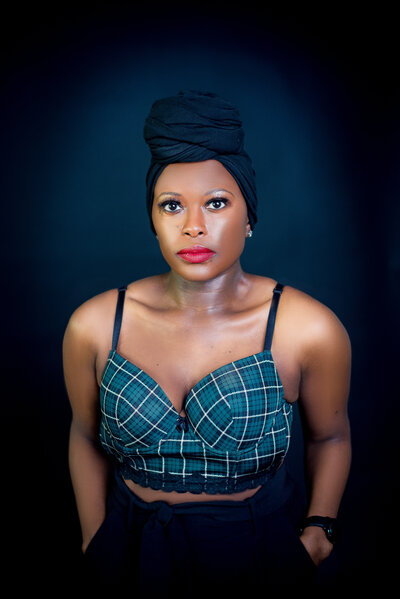

Podcast Gear for Any Budget: Start Smart, Sound Good
Introduction: You Don’t Need a Studio to Sound Like a Pro
One of the most common reasons people delay launching their podcast is gear. They scroll through microphone reviews for hours, fall into a rabbit hole of YouTube comparisons, bookmark seventeen different equipment lists, and suddenly feel like they need thousands of dollars worth of studio-quality equipment just to hit record. The overwhelm is real — and it is one of the most effective dream-killers in the podcasting world. But here’s the truth that every new podcaster needs to hear before they spend a single dollar: your gear is not what makes your podcast great.
Your voice makes your podcast great. Your message makes your podcast great. Your willingness to show up consistently, speak authentically, and connect with the people who need to hear what you have to say — that is what builds a loyal audience. Equipment is simply the vehicle that carries your voice to your listeners. And just like you don’t need a luxury car to get where you’re going, you don’t need a luxury microphone to launch a podcast that makes a real impact.
Whether you’re testing a podcast idea for the very first time, recording on a shoestring budget, or ready to invest in a professional setup that will grow with your show for years to come, this guide is designed to meet you exactly where you are. I’m breaking down podcast gear by budget tier, walking you through what to prioritize before you buy anything, explaining the decisions that matter most at each stage, and giving you clear, specific recommendations so you can stop researching and start recording. Key takeaway: The best podcast setup is the one you’ll actually use — not the most expensive one on the market.
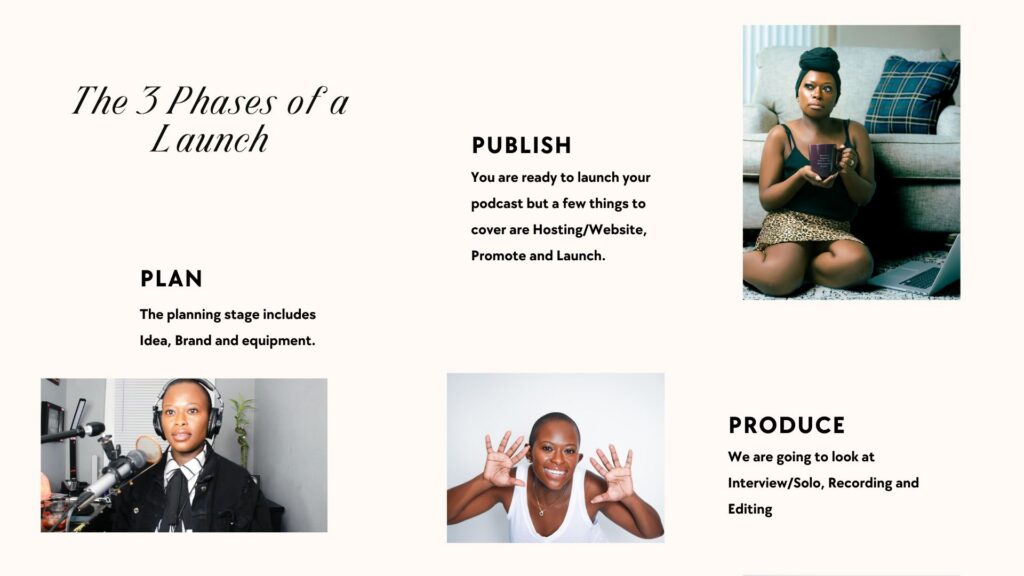
Grab the checklist featured above → Free checklist
Or see all free resources → Free Resources
What to Prioritize Before You Buy Anything
Before you add a single item to your cart, there are a few foundational principles that will save you significant time, money, and frustration. Understanding these principles upfront is the difference between building a setup that serves your show and spending money on equipment that collects dust.
The first and most important principle is this: your recording environment matters more than your microphone. This is the truth that most gear guides skip over because it’s not as exciting as recommending the latest tech, but it is the single most impactful factor in how your podcast sounds. A mid-range microphone used in a quiet, sound-treated room will almost always sound better than a high-end professional microphone used in a noisy, echo-filled space. Hard floors, bare walls, and open ceilings create reverb and echo that no microphone can fix after the fact. So before you upgrade your equipment, look at your environment.
The good news is that treating your recording space doesn’t have to cost anything. Thick curtains absorb sound. Bookshelves lined with books break up sound waves. Recording inside a closet full of hanging clothes is one of the oldest tricks in the podcasting world — and it works beautifully. Even draping a pile of blankets around your recording area can make a dramatic difference in audio clarity. These solutions are free, accessible, and surprisingly effective. Start there before you spend money anywhere else. Key takeaway: A quiet, soft-furnished room is your most powerful piece of podcasting equipment — and it costs nothing.
The second thing to understand before buying is the difference between USB and XLR microphones, because this decision shapes your entire setup. USB microphones plug directly into your computer through a standard USB port with no additional equipment required. They are simple, intuitive, and ready to use straight out of the box, which makes them the ideal starting point for beginners who want to focus on their content rather than their technical setup. You plug it in, open your recording software, and you are ready to go.
XLR microphones, on the other hand, use a professional audio cable that requires an audio interface to connect to your computer. An audio interface is a small piece of hardware that converts the analog signal from your microphone into a digital signal your computer can process. This adds cost and a layer of complexity to your setup, but it also gives you significantly more control over your sound quality, more flexibility in how you build your studio, and a clearer upgrade path as your show grows. If you are just starting out and want the simplest possible setup, go USB. If you are already committed to your show and thinking about where it will be in two to three years, XLR is worth the investment from the beginning. Key takeaway: USB is for simplicity and getting started fast. XLR is for control, quality, and long-term growth. Both are legitimate — choose based on where you are right now.
The third principle is to focus only on core essentials in the beginning and resist the pull of accessories and add-ons until you actually need them. Your starting priority list is short: a microphone, a boom arm or desktop stand to position it correctly, a pop filter or shock mount to control plosive sounds and handling noise, and a pair of closed-back headphones to monitor your audio while you record. That is genuinely everything you need to produce a clear, listenable, professional-sounding episode. Everything else — acoustic panels, mixers, multiple microphones, advanced interfaces — can come later, when your show has grown enough to justify the investment.
Also read: Overcoming Podcasting Fears: 3 Common Mistakes to Avoid
Budget Tier One: Entry Level (Under $70) — For Testing and Getting Started
If you are in the early stages of your podcast journey — still validating your concept, recording pilot episodes to hear how your voice sounds, or figuring out whether podcasting is the right medium for the message you want to share with the world — the entry level tier is exactly where you belong right now. And I say that with full confidence, not as a consolation prize. Starting with entry-level gear is not a compromise. It is smart, strategic, and completely appropriate for this stage of the journey.
One of the most common and costly mistakes new podcasters make is over-investing in equipment before they have proven their commitment to the show. Buying a $400 microphone before you have published ten episodes is like buying a professional chef’s knife set before you have learned to cook. The equipment does not create the skill — the practice does. Start lean, learn your craft, build your consistency, and let your investments grow alongside your show.
At this price point, the FIFINE AmpliGame Microphone is one of the most impressive options available. It offers both USB and XLR connectivity in a single microphone, which means it grows with you as your setup evolves. The cardioid pickup pattern isolates your voice from background noise effectively, the audio quality is genuinely solid for the price, and the RGB lighting is a fun aesthetic touch for podcasters who also record video content. For everything it offers at its price point, the FIFINE AmpliGame consistently surprises people who try it.
Another excellent entry-level option is the HyperX SoloCast, a compact USB microphone that is about as plug-and-play as podcasting equipment gets. There are no drivers to install, no software to configure, and no learning curve to navigate. You connect it to your computer, open your recording app, and it simply works. For someone who wants to eliminate every possible technical barrier between themselves and hitting record, the HyperX SoloCast is a gift. The Samson Q2U is also frequently highlighted in beginner podcasting communities for offering both USB and XLR connectivity at under $100, giving you an organic upgrade path without requiring you to replace your microphone when you eventually invest in an audio interface.
Beyond the microphone itself, your entry-level setup can be completed with free or very low-cost additions. Audacity is a free, open-source recording and editing software that is powerful enough for professional podcasters. GarageBand comes free on every Apple device and is intuitive enough to learn in an afternoon. Anchor — now known as Spotify for Creators — offers free hosting, distribution, and basic recording tools, making it possible to launch a podcast with nothing but a phone and a quiet room. Key takeaway: Entry-level gear is not inferior gear — it is smart gear for the stage you are in. If your show grows, you upgrade. If you pivot, you have not lost much. Either way, you move forward.
Budget Tier Two: Mid Range ($100–$300) — For Growing Shows and Serious Podcasters
Once you have validated your podcast idea, committed to a consistent publishing schedule, and started building a real audience, it is time to think seriously about leveling up your audio quality. The mid-range tier is where the majority of established independent podcasters operate, and for very good reason. Equipment in this price range offers professional-grade sound quality, significantly longer durability, and far more creative control over your audio — all without requiring the kind of financial investment that should only be made when your show is generating revenue.
This is also the tier where the difference in audio quality becomes noticeable to your listeners. Your audience may not be able to articulate exactly why one podcast sounds better than another, but they feel it. Clean, warm, clear audio creates trust and keeps people listening longer. Muddy, echo-heavy, or thin-sounding audio creates friction that pushes listeners away — even when the content is excellent. Upgrading your microphone at this stage is an investment in listener retention as much as it is an investment in sound quality.
The Rode NT-USB Mini is one of the most elegant and capable options in this category. It features a built-in pop shield that eliminates the need for a separate pop filter, excellent cardioid audio pickup that captures your voice with warmth and clarity, and a sleek, compact design that takes up minimal space on your desk. It sounds considerably more polished than anything in the entry-level tier, and it is straightforward enough to use that you can focus entirely on your content rather than your technical setup.
For podcasters who are ready to move into XLR territory, the Rode PodMic is a broadcast-ready microphone that delivers rich, full, professional sound at a price point that respects your budget. It is built to handle the demands of regular recording sessions, it rejects background noise effectively, and it produces the kind of warm, present audio quality that listeners associate with established, credible shows. The Shure MV7X is another excellent XLR option at this tier, designed for podcasters who are already invested in an audio interface and want a microphone that will serve them reliably for years. It draws from the same design philosophy as the legendary Shure SM7B, making it one of the best value propositions in podcasting equipment today.
At this stage, pairing your microphone with a quality audio interface is worth serious consideration if you have not already made that move. The Focusrite Scarlett Solo and the Audient iD4 are both widely respected entry points into XLR recording, offering clean, transparent preamps and simple USB connectivity that integrates smoothly with every major recording platform. Key takeaway: The mid-range tier is your sweet spot for balancing quality, cost, and longevity. Invest here when your show is consistent, your audience is growing, and your commitment to podcasting is no longer in question.
Budget Tier Three: High End (Above $300) — For Monetized and Scaling Shows
When your podcast has genuinely found its footing — when you are monetizing through sponsorships or coaching offers, hosting high-profile guests, positioning yourself as a recognized authority in your niche, or building a personal brand that extends well beyond the podcast itself — your equipment needs to match the level of professionalism your audience has come to expect. This is the tier where podcasting stops being a passion project and becomes a platform, and your gear should reflect that transition.
The Shure MV7+ sits at the top of many professional podcasters’ wish lists, and it earns that position. It offers hybrid USB and XLR connectivity, giving you the flexibility to use it in multiple configurations. It features built-in hardware controls for gain and headphone monitoring, advanced digital signal processing modes that adapt to different recording environments, and the kind of durable, broadcast-quality construction that Shure has built its reputation on. It is one of the most versatile professional microphones available at any price point, and it is built to remain a central part of your setup for years.
The Shure SM7B is the legendary broadcast microphone that has been a fixture in professional radio studios, recording booths, and podcast setups for decades. It delivers the warm, detailed, full-bodied sound that listeners instinctively associate with professional broadcasting. It does require a quality preamp or gain booster — the Cloudlifter CL-1 is the most commonly recommended companion for the SM7B — but the audio it produces when paired correctly is difficult to match at any price point. If you are serious about your podcast as a long-term business and personal brand investment, the SM7B is a purchase you will never regret. Key takeaway: High-end gear is a business investment, not a vanity purchase. Make this move when your show is generating income or when your brand positioning demands it — not before.
The Supporting Gear That Elevates Everything
Beyond the microphone itself, there are several supporting items that quietly make an enormous difference in the quality and consistency of your recordings. None of them are glamorous, but all of them are worth understanding as you build out your setup over time.
A boom arm or adjustable microphone stand is one of the most underrated pieces of podcasting equipment. Positioning your microphone correctly — at the right distance, at the right angle, consistently from session to session — has a significant impact on how your voice is captured. A boom arm also keeps your desk clear and allows you to move freely without accidentally knocking your microphone during a recording session. A shock mount, which suspends your microphone in a cradle of elastic bands, reduces the handling noise and vibration that can creep into your recordings when you adjust your position or bump your desk.
A pop filter is a simple mesh screen that sits between your mouth and your microphone and softens the harsh plosive sounds — the bursts of air that come from words beginning with P, B, and T — that can create jarring spikes in your audio. Many mid-range and high-end microphones include built-in pop shields, but if yours does not, a standalone pop filter is an inexpensive and worthwhile addition.
Closed-back studio headphones deserve a special mention because monitoring your audio while you record is one of the habits that separates consistently good-sounding podcasters from everyone else. When you can hear yourself clearly in real time, you catch problems — background noise, mic distance issues, audio clipping — before they become editing nightmares. The Sony MDR-7506 and the Audio-Technica ATH-M50x are both widely used in professional settings and represent excellent value at their respective price points.
Finally, basic room treatment — even in its most informal form — rounds out a solid podcasting setup. Foam acoustic panels, moving blankets, thick rugs, and soft furnishings all contribute to a cleaner, more controlled recording environment. You do not need to soundproof your space. You simply need to reduce the amount of hard, reflective surface area that causes sound to bounce around the room. Key takeaway: The supporting gear around your microphone is what transforms a decent recording into a consistently professional one — invest in these incrementally as your show grows.
How to Choose the Right Gear for Your Specific Situation
With all of these options laid out, the question becomes: which tier is right for you right now? And the honest answer is that it depends entirely on where you are in your podcasting journey, not where you want to be eventually.
If you are still in the idea phase — thinking about your niche, testing your voice, figuring out your format — start with entry-level gear and free software. Your goal at this stage is to reduce barriers to starting, not to optimize for sound quality. Get something in your hands, hit record, and learn by doing.
If you have published at least ten episodes, you are showing up consistently, and you are starting to see real audience engagement, the mid-range tier is your next logical step. You have proven your commitment, and investing in better gear is now a reasonable reward for that commitment and a tool for sustaining it.
If your podcast is part of a broader business strategy — if it is generating revenue, building your brand, or attracting professional opportunities — the high-end tier is where you belong. At this point, your audio quality is part of your professional presentation, and it deserves the same attention you would give to any other element of your brand. Key takeaway: Choose gear based on the stage you are actually in, not the stage you hope to reach. You can always upgrade — but you cannot get back the time you spent waiting to start.
Final Thoughts: Your Voice Is the Most Valuable Tool You Own
At the end of every gear conversation, I always come back to the same truth: your microphone does not make your podcast. You make your podcast. The clarity of your thinking, the warmth of your delivery, the relevance of your message to the people who need it most — none of that comes from a piece of equipment. It comes from you showing up, episode after episode, with something real to say.
Gear should support your voice, not replace the work of developing it. It should reduce friction, not create it. The moment your equipment becomes a reason to delay rather than a tool to launch, it has stopped serving you. So start where you are. Use what you have. Upgrade when your show earns it. And never let the pursuit of the perfect setup get in the way of doing the work that matters.
Your audience is out there right now, looking for a voice that resonates with exactly what they are going through. They are not waiting for you to have a better microphone. They are waiting for you to hit record.
Ready to Launch Your Podcast?
If this post gave you the clarity you needed on gear, your very next step is making sure you have a complete launch plan to go along with your setup. DM me “PODCAST GEAR” on Instagram @podcastlaunchbootcamp and I’ll send you the free Podcast Equipment Guide along with a quick-start email series to get you moving or or grab the Equipment Guide directly at Podcast Equipment Guide. Your voice deserves to be heard.
Your voice deserves to be heard. Let’s make sure the world gets to hear it.
Sherley’s Show is learning and growing every single day. We aim to uplift all marginalized voices both on this podcast and in real life. Please note that we are always striving to change the problematic language that society has internalized in us. Thank you for your patience as we aim to strip certain phrases from our vocabulary.
Would you like to be a guest?
Are you interested in getting your opinion out about a particular topic but don’t know how to do so? If so, here is an opportunity to do so to share your point of view, PLUS get your message and voice out there. It is always a great way to know about different perspectives and enrich ourselves through knowledge sharing.
Submit your relationship question.
Sherley’s Show provides an atmosphere where every woman is comfortable growing into their best self. Sherley’s Show is a no judgment podcast where we discuss how to rise strong out of all types of obstacles that come with relationships. Through personal life experiences and discussions ranging from infidelity, trust, forgiveness, sex, heartbreak, self love, therapy and more, we offer words of empowerment as you strive to build and maintain all of the relationships in your life. You may be going through something that is unique and difficult. Sharing your story gives others comfort and could also be helping someone else. Let them know they are not alone. Everyone has a story, do not let fear hold you back.
Disclosure: This post contains affiliate links, I will get a commission if you decide to make a purchase through any of my links, at no cost to you. Please read my disclosure for more info.

Want to launch a podcast?
FRee Resource!
Download Sherley’s FREE Bootcamp Podcast Launch Checklist! The no-fluff, step-by-step roadmap for busy women ready to finally launch the podcast they’ve been dreaming about.
At Sherley's Show, we believe that when women feel seen and supported, anything is possible. Whether you're tuning in for inspiration, education, or community—you belong here.


next
say goodbye to being the side chick
When you find yourself really settling with the reality that you are the side chick, when you find yourself tired of the games and/or the complacency, it’s time to ask yourself a few questions.
next
why is therapy important?
Solo therapy, partnered therapy, or group therapy... what exactly are the benefits? If you’re still on the fence about whether or not you should go and if therapy can really do anything for you... this post is for you.
next
CONNECT
elsewhere:
STAY AWHILE AND READ
THE BLOG

BINGE
THE PODCAST
The place where we chat about obstacles that come out of relationships and how to rise up from them. Self-love, marriage, infidelity, sex, heartbreak, and more.
HANG OUT ON

Comments +