
Infidelity Recovery: Key Steps to Rebuilding Trust




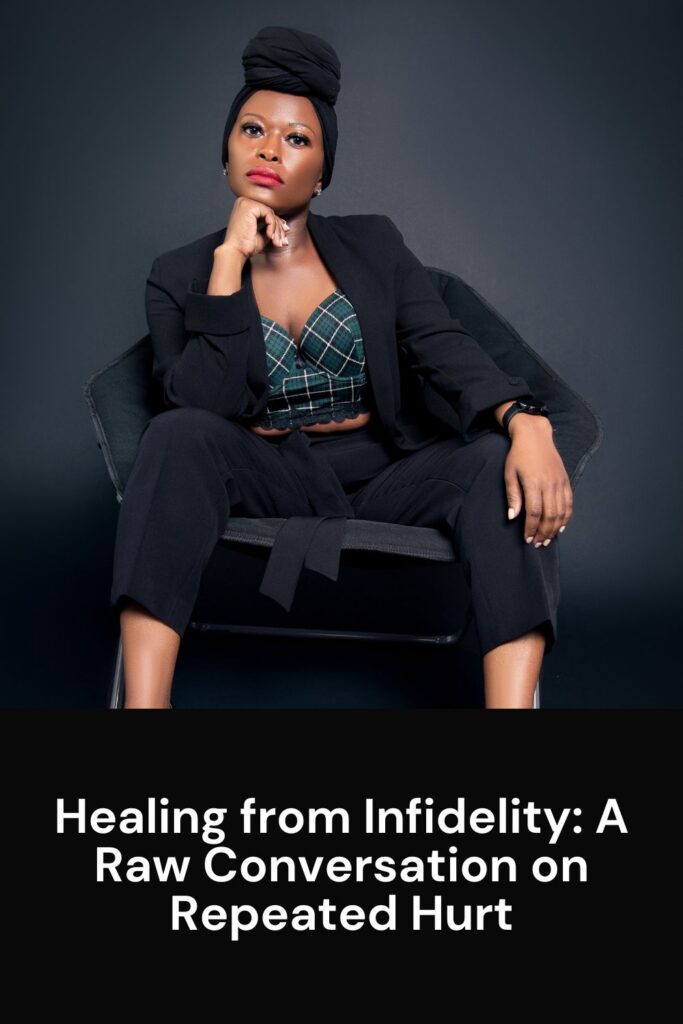
Healing After Infidelity: How to Navigate Betrayal, Rebuild, and Find Peace
This content is shared for storytelling, educational, and entertainment purposes only and is not a substitute for professional counseling or therapy.
Introduction: The Conversation Nobody Wants to Have — But Everybody Needs
Sherley’s Show · Episode Recap · Part Two
To hear this conversation in real time, listen to the full episode. Make sure you tune into the show. You’ll get all the raw, unfiltered moments and deeper insights.
Podcast Blog post: Healing and Decision-Making: Finding Clarity
Infidelity · Betrayal · Healing
The Déjà Vu of Pain
Sherley’s Show | Part Two
Infidelity. Just the word alone can make your stomach turn. Whether you’ve experienced it firsthand, watched someone you love go through it, or spent years fearing it might happen to you, betrayal in a relationship is one of the most universally painful human experiences there is. And yet, it remains one of the most hushed, most misunderstood, and most heavily judged situations a person can walk through.
That’s exactly why Sherley, host of Sherley’s Show, sat down for a deeply personal, unscripted, and at times hilariously honest two-part conversation with her close friend Kira — a woman currently walking through her own season of betrayal, healing, and spiritual reckoning in real time.
What came out of that conversation was something rare: two women refusing to perform their pain, refusing to give you a sanitized version of healing, and instead choosing radical transparency. This blog post pulls from that powerful episode — “The Pain of Déjà Vu, Part Two” — and breaks down the key themes, takeaways, and truths that anyone navigating infidelity needs to hear.
Whether you’re currently in the thick of betrayal, trying to decide whether to stay or go, rebuilding trust in your relationship, or simply trying to understand someone you love who is going through this — this is for you.
Healing Has to Come Before the Decision
One of the first and most important points Kira made in the conversation stopped the room: healing has to be the primary focus, not the repair of the relationship.
This might sound counterintuitive, especially if you’re someone who’s been trying to hold your relationship together with both hands. But the truth is, you cannot build a healthy reconciliation on top of an unhealed person. Whether you ultimately choose to stay in your relationship or walk away from it, you still have to be whole enough to function, to parent, to show up for yourself.
“The healing has to be at the forefront,” Kira said. “The way to balance it is just making that the priority over the repair — which kind of sounds selfish, but it’s not.”
She’s right. It’s not selfish. It’s survival. And it’s strategy.
Prioritizing healing means reading, praying, seeking therapy, sitting with your emotions without drowning in them, and not over-consuming information to the point where you stop actually feeling. It means giving yourself permission to not have it all figured out yet. It means understanding that healing is not a destination you arrive at once — it’s a daily practice, especially in the early stages of betrayal.
If you’ve recently discovered infidelity in your relationship, or if you’re months into processing it and still feel like you’re treading water, this is your reminder: you don’t have to decide everything right now. Focus on becoming well enough to eventually make a clear-headed decision.
The Question Everyone Asks: “Am I Stupid for Staying?”
Both Sherley and Kira were candid about something that many people in their positions wrestle with privately: the persistent, crushing question of am I stupid for not walking away immediately?
Social pressure around infidelity is intense. The general consensus from onlookers is usually swift and decisive — leave. Block. Move on. Start fresh. And while that advice comes from a place of love and protectiveness, it doesn’t always account for the full complexity of a relationship, a history, a family, or even the person who’s been hurt.
Kira shared that part of her ability to see multiple sides of the situation came from the fact that she had also, at one point, been the one who stepped out of a relationship. That experience gave her a wider lens — one that allowed her to ask harder questions of herself, to have some empathy for the complexity of human behavior, without excusing what was done to her.
Sherley echoed this honestly: “I consistently asked myself, am I stupid? What am I doing? Especially when people would say to me, ‘Why would you stay with him if he cheated?’ And then as soon as I mentioned there was more to the story — because I also cheated — then they didn’t know what to say.”
This is the nuance that gets lost in the noise. Infidelity is not always black and white. Relationships are layered. And staying — or leaving — can both be acts of courage depending on the circumstances.
What matters is not what anyone else thinks of your decision. What matters is that the decision is yours, made from a clear and healing place, not from a reactive or performative one.
Can Infidelity Be Prevented? An Honest Debate
This is where the conversation got especially interesting — and where Sherley and Kira found themselves at a genuine impasse, both making valid points that are worth sitting with.
Kira’s position: Infidelity can be prevented, and emotional intelligence is the key. If people are given the tools to identify when they’re approaching a dangerous boundary — when they’re feeling tempted, when they’re seeking something outside of themselves — they can make the choice not to cross the line. Hurt people hurt people. If you’ve done the inner work to heal your wounds, you’re far less likely to wound someone else in the specific way that infidelity does.
She used a powerful personal example: she used to avoid certain layovers in a city where an ex lived, because she knew the temptation would be too strong. That’s emotional intelligence in action — recognizing the setup before it becomes a situation.
Sherley’s position: Infidelity is a conscious choice, and while you can try to prevent it, life has a way of putting people in the wrong place at the right time. Even the most emotionally intelligent person, in a crumbling relationship, under the right set of pressures, can make a decision they wouldn’t otherwise make. And infidelity, she reminded us, doesn’t always start physically — it often starts emotionally, as a friendship, as a conversation that crosses a line.
Both women agreed on one thing: it is 100% a choice. The temptation is not the wrong part. Crossing the boundary is.
And maybe the most productive takeaway from this debate isn’t which of them is right — it’s the question they posed to listeners: should we be having these conversations with our teenagers? Is emotional intelligence around fidelity something we actively teach, or do we assume our children will figure it out?
If you’re a parent, that’s a question worth sitting with. These conversations about loyalty, boundaries, what it means to honor someone you love — they matter far earlier than most of us think to have them.
What to Do When You First Find Out Your Partner Was Unfaithful
Both Sherley and Kira pulled together some of the most practical and grounding advice you’ll find on this topic. If you or someone you love has just been hit with this kind of betrayal, here is what they recommend:
1. Do not make any immediate decisions. Your emotions in those first hours, days, and weeks are not a reliable compass. You are in crisis mode. Your nervous system is activated. Decisions made from that place are often decisions you’ll regret. Give yourself at minimum 30 days before you decide anything major — and if you can stretch it to 60, do that.
2. Seek therapy — and be patient in finding the right one. This is non-negotiable. Your friends love you, but they are not equipped to give you what a licensed therapist can. And as Sherley pointed out, the first therapist you see may not be the right fit. “Date around,” she said — keep trying until you find someone who actually helps you process, not just someone who validates your initial reaction.
3. Separate yourself physically if you can. If your home is large enough to create some distance, use that space. If you can go stay with family or a trusted friend for a few days, consider it. The goal isn’t punishment — it’s clarity. Being in close proximity to someone who just hurt you deeply while you’re still in shock is not a recipe for good decisions or healthy communication.
4. Pray, and lean on your faith. For those who are believers, this is the time to go all the way in on your faith. Not for the performance of it, but for the sustenance. As Kira shared, she would not have made it through without the Holy Spirit actively guiding her, pulling her back from the edge, keeping her from reacting in ways she’d regret. Faith, she said, is not a bonus in times like this — it’s the foundation.
5. Be intentional about who you tell. Not everyone deserves access to your pain. Choose the people you confide in wisely — people who will point you toward God, toward healing, toward sound thinking. People who will validate your feelings without pouring gasoline on your fire. People who will say “I support whatever you decide” and mean it.
Healing Looks Different for Everyone — And That’s Okay
One of the most freeing things about this conversation is how clearly it demonstrated that there is no universal roadmap for healing after infidelity. Sherley and Kira, two close friends, two women of faith, two mothers — heal completely differently. And both of their ways are valid.
Sherley has done the years of work. She’s on the other side of the active storm, and she speaks with the kind of grounded clarity that only comes from time, therapy, and a lot of prayer. She’ll tell you with a straight face that she has forgiven — but also that she has absolutely no desire to be friends with the other woman, and she’s setting firm boundaries around that. She’s not pretending to be further along than she is. She’s not putting on a show. This is what her healed looks like.
Kira is in the thick of it right now. Some days she feels optimistic. Some days she feels neutral, in-between, not sure which way she’s leaning. Some days she has thoughts she wouldn’t dare act on but can’t help thinking. And she’s learning to allow herself to feel all of it without letting those feelings dictate her next move.
Neither of these women is doing it wrong. Healing after infidelity is not a competition and it doesn’t follow a schedule. Some people take months. Some people take years. Some people need to rebuild from the inside out before they can even begin to address what happened in their relationship. Honor your own process.
On Forgiveness, Boundaries, and What “Healed” Actually Looks Like
Let’s talk about the thing that gets the most confused when people discuss healing after betrayal: forgiveness.
Forgiveness does not mean:
- Forgetting what happened
- Pretending it didn’t hurt
- Opening the door to a friendship with the person who wronged you
- Allowing someone unlimited access to your space, your events, your home
Forgiveness means: releasing the debt. Choosing not to let the anger poison you. Deciding that your peace matters more than your resentment.
Sherley was clear — and unapologetic — about the fact that forgiveness and warmth are two different things. She has forgiven the situation. She does not wish harm on anyone involved. But she is setting clear, firm, non-negotiable boundaries — and those boundaries are part of her healing, not a sign that she hasn’t healed.
“Boundaries are extremely important in healing for me,” she said, “and it looks differently for everybody. I have no shame in saying I have no desire to ever want to be friends with her.”
This is what mature healing can look like. You can forgive someone and still say, you’re not welcome in my home. You can forgive someone and still say, I don’t need to be in the same room as you. You can forgive someone and still protect your peace with every boundary at your disposal.
If anyone has made you feel like “real” forgiveness means you have to warmly co-exist with the person who participated in your betrayal, they are wrong. Forgiveness is internal. Boundaries are external. Both can coexist.
The Role of Faith When Emotions Are Running the Show
Both Sherley and Kira are women of faith, and they were honest about the fact that their faith is not a neat, pretty thing right now. It’s active, wrestling, sometimes frustrated — but it’s holding.
Kira described something that resonated deeply: if she let herself act on every emotion she felt during this season, there would be chaos. Cats, dogs, slashed tires, clothes in the trash — she laughed as she listed the things she’s wanted to do versus the things she’s chosen to do.
The difference between those two lists? The Holy Spirit. The grounding that comes from being rooted in something bigger than your feelings. The practice of asking yourself, in your most heated moments: what would I want my son to see? What would I want God to see?
That’s not weakness. That’s extraordinary strength.
For those who are believers walking through this season, lean hard into your faith community, your scripture, your prayer life. Not because faith is a magic fix — it isn’t — but because it provides the stability your emotions cannot right now.
For those who aren’t believers, find your grounding somewhere. A therapist. A trusted mentor. A community. A practice. Something that anchors you when the wave of emotion threatens to sweep you into a decision you’ll regret.
Key Takeaways from “The Pain of Déjà Vu, Part Two”
Here’s a quick summary of the most important things to carry with you from this conversation:
- Healing must come before the decision — whether you stay or go, you need to be whole enough to function either way.
- Don’t make any major decisions in the first 30 days. Give yourself time to move past the initial shock before you choose your next chapter.
- Seek therapy. Real, licensed, professional therapy. Your friends love you, but they have limits. A therapist doesn’t.
- Infidelity is a choice — but emotional intelligence, faith, and strong boundaries can keep you from making it.
- Forgiveness is not the same as reconciliation, and it’s not the same as friendship. You can forgive and still hold firm boundaries.
- Healing looks different for everyone. Stop measuring your process against someone else’s timeline.
- You are not stupid for staying. And you are not cold for leaving. Both decisions can be right, depending on the circumstances and what you feel called to do.
- Lean on your faith, your community, and your wisdom — not just your emotions.
- Infidelity is not the end of your life. There is light on the other side of this.
A Word to Anyone Walking Through This Right Now
You found this post for a reason. Maybe you’re sitting in the middle of the worst pain you’ve ever felt and you needed to know someone else has been there — and made it. Maybe you’re trying to figure out if you’re crazy for considering staying. Maybe you’re the one who caused the hurt and you’re looking for some understanding of the damage you’ve done.
Whatever brought you here: you are not alone. This is survivable. You will be okay.
Infidelity does not get to write the final chapter of your story unless you let it. And the work of healing — the real, unglamorous, non-linear, sometimes ugly work of it — is worth doing. For yourself. For your children, if you have them. For the version of you that exists on the other side of this season.
Go find a therapist. Call a trusted friend. Open your Bible or your journal or whatever it is that grounds you. And when the emotions get too big to hold, talk yourself off the ledge. You have more strength than you know.
Listen to Sherley’s Show
This conversation is just one example of what Sherley brings to every episode of Sherley’s Show — raw, real, honest, sometimes funny, always meaningful dialogue about the things that actually matter in our relationships and our lives.
Subscribe, rate, and review the podcast so you never miss an episode. If this conversation resonated with you, share it with someone who needs to hear it. Leave a comment, send a message, and join the conversation — because this community is built on transparency, and your voice matters here.
Head to the website or find Sherley’s Show on social media to continue the conversation.
Because healing is better when we don’t do it alone.
If this resonated with you, follow Sherley’s Show. It offers more real conversations about relationships, growth, and using your voice.
Sherley’s Show is learning and growing every single day. We aim to uplift all marginalized voices both on this podcast and in real life. Please note that we are always striving to change the problematic language that society has internalized in us. Thank you for your patience as we aim to strip certain phrases from our vocabulary.
Would you like to be a guest?
Are you interested in getting your opinion out about a particular topic but don’t know how to do so? If so, here is an opportunity to do so to share your point of view, PLUS get your message and voice out there. It is always a great way to know about different perspectives and enrich ourselves through knowledge sharing.
Submit your relationship question.
Sherley’s Show provides an atmosphere where every woman is comfortable growing into their best self. Sherley’s Show is a no judgment podcast where we discuss how to rise strong out of all types of obstacles that come with relationships. Through personal life experiences and discussions ranging from infidelity, trust, forgiveness, sex, heartbreak, self love, therapy and more, we offer words of empowerment as you strive to build and maintain all of the relationships in your life. You may be going through something that is unique and difficult. Sharing your story gives others comfort and could also be helping someone else. Let them know they are not alone. Everyone has a story, do not let fear hold you back.
Disclosure: This post contains affiliate links, I will get a commission if you decide to make a purchase through any of my links, at no cost to you. Please read my disclosure for more info.

Want to launch a podcast?
FRee Resource!
Download Sherley’s FREE Bootcamp Podcast Launch Checklist! The no-fluff, step-by-step roadmap for busy women ready to finally launch the podcast they’ve been dreaming about.
At Sherley's Show, we believe that when women feel seen and supported, anything is possible. Whether you're tuning in for inspiration, education, or community—you belong here.



next

say goodbye to being the side chick
When you find yourself really settling with the reality that you are the side chick, when you find yourself tired of the games and/or the complacency, it’s time to ask yourself a few questions.
next

why is therapy important?
Solo therapy, partnered therapy, or group therapy... what exactly are the benefits? If you’re still on the fence about whether or not you should go and if therapy can really do anything for you... this post is for you.
next
CONNECT
elsewhere:
STAY AWHILE AND READ
THE BLOG

BINGE
THE PODCAST
The place where we chat about obstacles that come out of relationships and how to rise up from them. Self-love, marriage, infidelity, sex, heartbreak, and more.

HANG OUT ON

Comments +