
The Truth About Cheating: A Human Experience




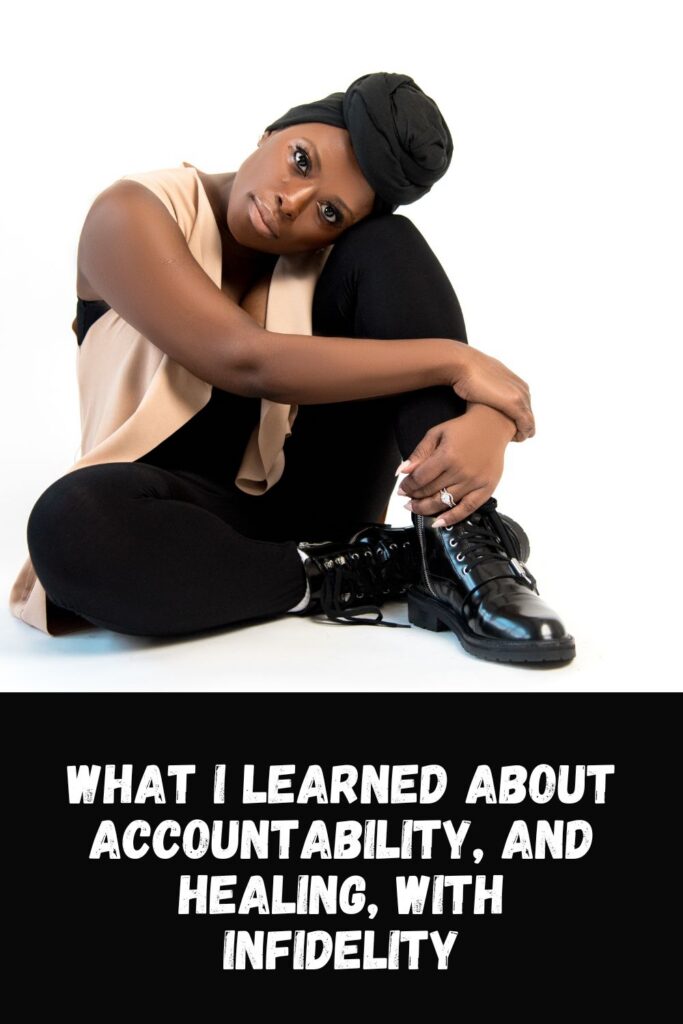
I Cheated Too — And Here Is What I Learned About Accountability, Healing, and the Truth About Infidelity
This content is shared for storytelling, educational, and entertainment purposes only and is not a substitute for professional counseling or therapy.
This is part of the Real Talk Series on Sherley’s Show — where we say the things most people think but very few are willing to put into words.
I Am Going to Say the Thing Nobody Wants to Say
Women cheat.
Not all women. Not most women. But women — real, complex, fully human women — cheat in relationships. And we do not talk about it enough. Not honestly. Not without immediately softening the edges or rushing to an explanation that makes it feel less like what it is.
I know this because I am one of those women.
I have shared the story of what it felt like when my husband was unfaithful — the devastation of it, the grief, the way it broke something in me that took years to rebuild. I wrote about that openly because it was true and because other women needed to hear that betrayal is survivable.
But that is only half of my story.
The other half — the half that is harder to say, the half that sat in me like a stone for a long time — is that before his infidelity, there was mine.
| I was too perfect, in my own mind, to have done something like that. And then I did it. And that told me everything I needed to know about the story I had been telling myself. |
I cried for days afterward. Not because I got caught. Because I could not reconcile the woman I believed I was with the choice I had just made. I had always told myself that only a certain kind of person did things like that. I had drawn a line between myself and that kind of person and felt completely safe on my side of it.
And then I crossed it. And I had to sit with what that meant.
This post is about that reckoning. It is about what I learned — not just about myself, but about infidelity as a human experience rather than a gendered one. And it is about why I think the conversation we are having as a culture — one that pins cheating almost exclusively on men — is doing real damage to real relationships and real women.
The Story We Tell About Who Cheats — and Why It Is Incomplete
We have a narrative. It is pervasive and it is deeply embedded in how we talk about relationships, in the music we consume, in the content we share, in the way we respond when someone tells us their partner was unfaithful.
The narrative goes like this: men cheat. Women are betrayed. Men are the perpetrators of infidelity and women are its victims. Men need to do better. Men cannot be trusted.
There is truth in parts of that narrative. Research does suggest men report cheating at higher rates historically. And I am not here to minimize what women experience when they are betrayed by a partner who was supposed to be faithful. I have lived that experience. I know what it costs.
But the narrative is incomplete. And incomplete narratives cause harm — not just to the people they exclude, but to the very problem they are trying to address.
| When we tell a story where only one gender cheats, we remove the accountability of everyone the story does not include. We make it impossible for certain women to be honest — with their partners, with the people they confide in, and with themselves. |
I have spoken to women who have been unfaithful and who genuinely believe it was different when they did it. That their reasons were more understandable. That the context made it less serious. That they deserved more grace than they would extend to a man in the same position.
That is not healing. That is a double standard dressed up as self-compassion.
And I say that as someone who has been on both sides of this table. I know how easy it is to hold your own infidelity differently than your partner’s. I know how quickly the mind reaches for justification. I also know that justification is not the same as accountability. And without accountability — real, honest, uncomfortable accountability — there is no real healing.
Why Women Cheat — and Why the Reasons Matter Without Becoming Excuses
Let me be clear about something before I go any further: understanding why infidelity happens is not the same as excusing it. Explaining is not the same as absolving. Context matters — but context does not eliminate accountability. Hold both of those things at the same time, because this conversation requires it.
With that said — why do women cheat?
The same reasons anyone does. Not because they are bad people. Not because they are broken or immoral or incapable of love. But because something in the relationship — or in themselves — was not being met, and instead of addressing it directly, they looked for it somewhere else.
Emotional Disconnection
One of the most common threads I have seen — and felt — is emotional disconnection. A relationship that has become functional but not intimate. A partner who is physically present but emotionally unavailable. A longing for being truly seen that has gone unanswered for so long that when someone else offers it, the pull is overwhelming.
This is where the five love languages become not just a tool for connection, but a map for understanding where things went wrong. When we love people in the language we speak rather than the language they receive, we create gaps. And gaps, left unaddressed long enough, become vulnerabilities.
Unspoken Resentment
Resentment that has never been named is one of the most dangerous forces in a relationship. It builds slowly, quietly, and by the time it is visible it has already done significant damage. Women who have spent years absorbing disappointment without expressing it — without asking for what they need, without naming what is missing — sometimes reach a breaking point that does not look like a conversation. It looks like a choice they cannot fully explain even to themselves.
Identity Loss
There is a particular kind of infidelity that comes from a woman who has lost herself inside her relationship, her roles, her responsibilities. Who woke up one day and could not find herself anywhere in the life she was living. The affair, in these cases, is often less about the other person and more about the desperate attempt to feel like an individual again — to feel wanted, chosen, seen outside the context of wife, mother, partner.
This is not a justification. It is an explanation. And it is one that calls for a very different kind of conversation — not about the affair, but about what led a woman so far from herself that she sought herself in the wrong place.
Pure Human Fallibility
And sometimes — and this is the one that is hardest to sit with — there is no profound emotional reason. Sometimes it was a moment of weakness. A lapse in judgment. A decision made without thinking through what it would cost. Sometimes it was lust, plain and simple, and nothing more complicated than that.
That was my experience. There was no grand narrative, no deep emotional wound driving it. It was a mistake I made. A choice I am not proud of. And the fact that it did not come from a place of deep dissatisfaction did not make it easier to reckon with — it made it harder. Because I could not point to a reason that felt proportionate to the consequences.
| I thought I was above it. I had constructed an entire internal story about the kind of person who does things like that — and I was not her. Until I was. That is the humbling truth about human fallibility: it does not ask your permission before it shows up. |
What Real Accountability Looks Like — For Women Who Have Cheated
Accountability is not self-flagellation. It is not spending years punishing yourself or believing you are irredeemably broken. That is not accountability — that is suffering with no productive end.
Real accountability looks like this:
- Owning what you did without immediately explaining it away. The why matters — but it comes after the what, not instead of it.
- Sitting with the impact on your partner without making their pain about you. If they are angry, let them be angry. Do not rush to be forgiven because their grief is uncomfortable.
- Being honest — with yourself first, and then with the people who deserve that honesty — about what the choice revealed. Not about your character as a whole, but about where you were in that moment and what it tells you about what you need to address.
- Doing the actual work. Counseling. Honest conversations. The five love languages, applied genuinely. The willingness to rebuild trust slowly, without demanding a timeline on your partner’s healing.
- Extending to yourself the same standard you would hold a man to. Not more harshness. The same standard. No less accountability because you are a woman.
That last point is the one I want to linger on, because I think it is the one we most often get wrong.
There is a version of self-compassion that slides, almost imperceptibly, into a lowered bar. Where we forgive ourselves for things we would condemn in a partner. Where we reach for our reasons as shields against accountability rather than as context that sits alongside it.
I have had to check myself on this. The work of being honest about my own infidelity — not just to my husband, but to myself — required me to stop holding my behavior to a different standard than I would hold his. That was uncomfortable. It was also necessary.
To the Men Who Are Reading This
I primarily speak to women. That is my community, my focus, my calling. But this post would not be complete without speaking directly to the men who find their way here — because this conversation involves them too.
If your partner has been unfaithful: your pain is real and it is valid. Full stop. Nothing in this post minimizes what infidelity does to the person who was betrayed. I know what that feels like. I have lived it. And I would never stand here and tell you that you should simply understand or get over it.
But I also want to say this: the conversation about infidelity has not been fair to you either. The cultural script that assumes men cheat and women are faithful has done you a disservice — it has made it harder for men who have been cheated on to be taken seriously, to seek support, to grieve openly. The stigma attached to being the man whose partner was unfaithful is real and it is unjust.
| Infidelity is not a gender issue. It is a human one. And the only way we address it honestly is if we are willing to hold every person — regardless of gender — to the same standard of accountability and the same access to grace. |
You deserve support. You deserve honesty. You deserve a partner who holds themselves accountable for their choices with the same standard they would apply to yours.
And if you are a man who has cheated — who picked up this post not sure if it was for you — it is. The reasons, the reckoning, the work of accountability: none of that is gendered. It is just human.
The Both/And: How My Husband and I Carry Both Sides of This
My husband and I are two people who have been on both sides of infidelity. He was unfaithful. I was unfaithful. We have had to sit across from each other with the full weight of both of those truths between us and decide what to do with them.
What we learned — and what I think is one of the most important things I can say in this post — is that carrying both sides did not cancel each other out. His betrayal did not excuse mine. Mine did not excuse his. They were separate things that each required their own reckoning.
But what they did do, eventually, was create a specific kind of humility in our relationship. A we are both human kind of humility. A neither of us is on a pedestal kind of honesty. We stopped being each other’s judge and started being each other’s accountability partner. That shift — from judgment to accountability, from blame to truth — is what saved us.
It did not happen quickly. It did not happen cleanly. It required counseling and hard conversations and months of rebuilding trust in both directions. But it happened. And our relationship is genuinely, tangibly stronger for having gone through it — not in spite of both betrayals, but partly because of the honesty they eventually forced.
| Perfect imperfection. That is what we are. Two people who hurt each other and chose each other anyway — with open eyes this time, and a much more honest understanding of who we both actually are. |
What Healing From Infidelity Actually Requires — From Both Sides
Whether you are the one who was betrayed, the one who betrayed, or — like me — both: healing requires the same foundation. Truth. Accountability. Time. And a willingness to do the work even when the work is uncomfortable.
Here is what I know from having sat in every chair at this table:
If You Were Betrayed
- Your pain does not need to be justified or explained. It simply is. Give yourself permission to feel all of it without performing a healing timeline for anyone else.
- Anger is not the opposite of love. You can love someone and be furious at them at the same time. Both are true. Let them both exist.
- Forgiveness is a gift you give yourself. It is not a declaration that what happened was acceptable. It is a decision to stop carrying the weight of it as your primary identity.
- Counseling is not a sign that your relationship is too broken to fix. It is a sign that you take it seriously enough to get real help.
If You Cheated
- Own it fully before you explain it. Your reasons matter — but they are context, not absolution.
- Your partner’s healing is not on your timeline. Do not make their grief about your discomfort with being unforgiven.
- Do the work on yourself — not just in the relationship, but in you. What does the choice reveal about what you were not addressing? Start there.
- Stop holding yourself to a softer standard than you would hold anyone else. Accountability is accountability. It does not bend for gender.
If You Are Both
- Two wrongs do not cancel each other. They stack. Each one still requires its own reckoning.
- The humility of knowing you are both capable of causing harm is one of the most powerful foundations a relationship can be rebuilt on — if you use it honestly rather than weaponizing it.
- Get professional support. Not because your relationship is broken beyond repair, but because what you are carrying deserves more than the two of you trying to figure it out alone.
Key Takeaways
- Women cheat. This is a truth that the mainstream conversation about infidelity consistently underacknowledges — and the silence does real harm.
- Cheating is a symptom of something unmet — emotionally, personally, or relationally. Understanding the symptom does not erase accountability for the choice.
- Accountability is not gendered. The same standard of honesty and ownership that we expect from men who cheat applies to women who cheat. No exceptions.
- Carrying your own infidelity with the same weight you carry a partner’s is one of the hardest and most necessary things you can do for real healing.
- Forgiveness — of yourself and of a partner — is not the same as excusing the behavior. It is the decision to stop letting it define everything.
- Perfect imperfection is real. Two people can both have caused harm and still build something genuine — if they choose honesty over the comfort of the easier narrative.
- Men who are cheated on deserve the same support, the same acknowledgment of their pain, and the same space to grieve as anyone else.
This is part of a series. Read the full story of how we navigated infidelity from both sides — and came out stronger: [Link: When He Cheated and She Was Pregnant ]
| Listen to the Real Talk Series on Sherley’s Show: This is exactly the kind of conversation we have in the Real Talk Series — my husband and I, both sides of the story, nothing softened. If this post resonated with you, the podcast goes even deeper. Find Sherley’s Show wherever you listen to podcasts. And if you are a woman who has been sitting on a story of your own — one you have never known how to use, share, or build from — visit sherleysshow.com to explore the podcasting and platform-building resources waiting for you. |
Sherley’s Show is learning and growing every single day. We aim to uplift all marginalized voices both on this podcast and in real life. Please note that we are always striving to change the problematic language that society has internalized in us. Thank you for your patience as we aim to strip certain phrases from our vocabulary.
Would you like to be a guest
Are you interested in getting your opinion out about a particular topic but don’t know how to do so? If so, here is an opportunity to do so to share your point of view, PLUS get your message and voice out there. It is always a great way to know about different perspectives and enrich ourselves through knowledge sharing.
Submit your relationship question.
Sherley’s Show provides an atmosphere where every woman is comfortable growing into their best self. Sherley’s Show is a no judgment podcast where we discuss how to rise strong out of all types of obstacles that come with relationships. Through personal life experiences and discussions ranging from infidelity, trust, forgiveness, sex, heartbreak, self love, therapy and more, we offer words of empowerment as you strive to build and maintain all of the relationships in your life. You may be going through something that is unique and difficult. Sharing your story gives others comfort and could also be helping someone else. Let them know they are not alone. Everyone has a story, do not let fear hold you back.
Disclosure: This post contains affiliate links, I will get a commission if you decide to make a purchase through any of my links, at no cost to you. Please read my disclosure for more info.

Want to launch a podcast?
FRee Resource!
Download Sherley’s FREE Bootcamp Podcast Launch Checklist! The no-fluff, step-by-step roadmap for busy women ready to finally launch the podcast they’ve been dreaming about.
At Sherley's Show, we believe that when women feel seen and supported, anything is possible. Whether you're tuning in for inspiration, education, or community—you belong here.



next

say goodbye to being the side chick
When you find yourself really settling with the reality that you are the side chick, when you find yourself tired of the games and/or the complacency, it’s time to ask yourself a few questions.
next

why is therapy important?
Solo therapy, partnered therapy, or group therapy... what exactly are the benefits? If you’re still on the fence about whether or not you should go and if therapy can really do anything for you... this post is for you.
next
CONNECT
elsewhere:

STAY AWHILE AND READ
THE BLOG

BINGE
THE PODCAST
The place where we chat about obstacles that come out of relationships and how to rise up from them. Self-love, marriage, infidelity, sex, heartbreak, and more.

HANG OUT ON

Comments +