
Organic vs. Paid Marketing for Podcasters




Organic vs. Paid Podcast Marketing:
Sherley’s Show | Podcast Education
Why Your Show Needs Both — And How to Build a Budget That Works
Let me be upfront with you before we go any further: marketing is not my primary area of expertise. My lane is podcasting, storytelling, and helping women build shows that turn into sustainable income streams. But here’s the truth — you cannot separate podcasting from marketing. They are not two different conversations. They are the same conversation, just at different stages of the journey.
So while I always encourage you to do your own research and, when your budget allows, to work with a reputable marketing professional or agency, this is a conversation I have to have with you. Because one of the most common mistakes I see new podcasters and small business owners make is believing that creating great content is enough. It is not. Great content that nobody sees does not grow a business.
That is what this post is about. We are going to talk honestly about the difference between organic marketing and paid marketing, why both matter, why a marketing budget is not optional if you are serious about growth, and how to think strategically about which paid options make the most sense for your podcast and your business. This is the conversation that a lot of podcasting guides skip — and it is exactly the one you need to have.
If you have not yet read Building Your Brand with Podcasting: The Honest Guide or How to Grow Your Podcast Audience: The Strategies That Actually Work, start there. This post builds directly on both of those foundations.
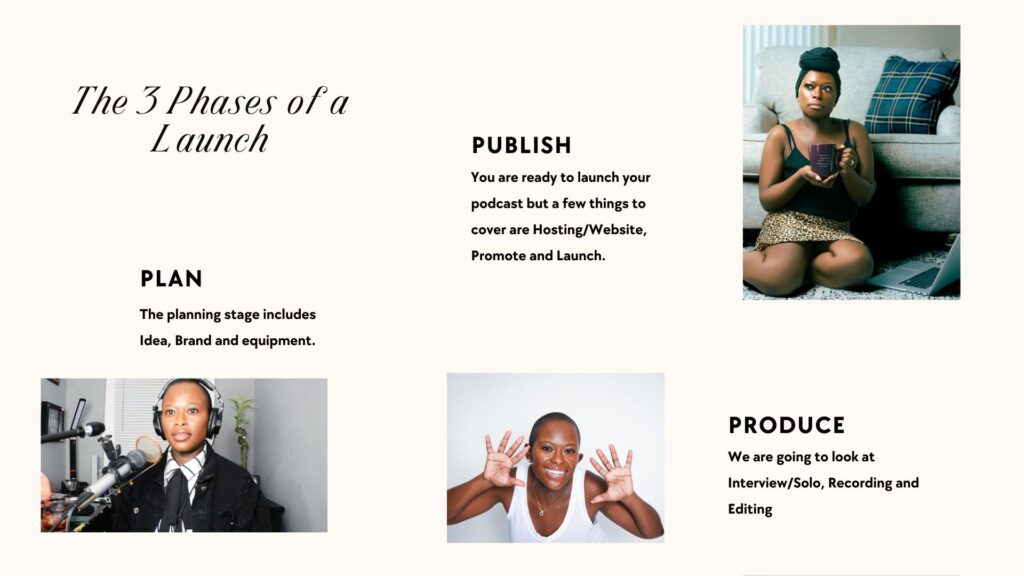
Grab the checklist featured above → Free checklist
Or see all free resources → Free Resources
1. Let’s Clarify the Difference: Organic vs. Paid Marketing
Before we go further, let’s make sure we are working with the same definitions, because these two terms get used interchangeably in ways that can confuse new business owners and podcasters.
What Is Organic Marketing?
Organic marketing refers to any strategy that attracts your audience to your brand without directly paying for placement or promotion. It grows through the value of your content, your consistency, and your presence in the spaces where your audience already spends time.
For podcasters, organic marketing looks like:
- Publishing SEO-optimized show notes and blog posts that rank on Google over time
- Posting consistently on social media platforms where your listeners are active
- Appearing as a guest on other podcasts in your niche
- Building an email list and nurturing it with weekly value-driven content
- Earning listener reviews and word-of-mouth referrals through genuine community building
- Creating shareable content — audiograms, quote graphics, short-form video clips — that travels on its own
Organic marketing is the long game. It builds credibility, trust, and compounding visibility over months and years. It is also, at its core, relatively low-cost — the primary investment is your time and your creative energy.
But here is where many new podcasters get themselves into trouble: they assume organic is free. It is not. Your time has a dollar value. The tools you use to create, schedule, and distribute content have a dollar value. And most critically — organic alone, no matter how excellent your content is, will rarely generate the momentum a growing business needs. Not in today’s algorithm-driven, content-saturated landscape.
What Is Paid Marketing?
Paid marketing refers to any strategy where you are directly spending money to get your content, your show, or your offer in front of more people. You are essentially renting attention rather than earning it organically.
For podcasters and small business owners, paid marketing can look like:
- Running targeted ads on Facebook, Instagram, or TikTok to promote your podcast or lead magnet
- Investing in Spotify or podcast network advertising to reach active podcast listeners
- Boosting high-performing social posts to extend their reach beyond your existing audience
- Using Google Ads to capture search traffic for your podcast topic or business offer
- Paying for newsletter placements or sponsorships in email lists that reach your target audience
- Running YouTube pre-roll ads to promote your show or a specific episode
Paid marketing gives you speed. It can put your show in front of thousands of new potential listeners within 24 to 48 hours of launching a campaign. But it requires a budget, a strategy, and the discipline to track your results — otherwise it becomes a very fast way to spend money without seeing a real return.
2. The Myth of Going Viral: Why Organic Alone Is Not a Marketing Strategy
I want to name something directly, because I hear this belief all the time in podcasting communities and small business spaces: the idea that if your content is good enough, it will grow on its own. That the algorithm will find you. That one viral moment will change everything.
Sometimes that happens. But it is not a strategy. And building a business on the hope of going viral is the equivalent of buying lottery tickets instead of opening a savings account.
Here is the honest reality of organic growth in 2026: algorithms favor accounts with existing engagement and consistent posting history. Platforms reward content that already has traction. If you are starting from zero — no existing audience, no email list, no established presence on any platform — pure organic growth is an extremely slow road. Not impossible, but slow. And for a new podcast competing in a space with millions of active shows, slow can feel indistinguishable from stalled.
This connects to something I wrote about in Diversify Your Income: Lessons from a Podcaster — the idea that relying on a single strategy, a single income stream, or a single growth channel is a fragile way to build anything. Diversity is protection. In marketing, that means using both organic and paid approaches together, each doing the job the other cannot.
| What the Data Says About Organic vs. Paid in 2026 • Organic search generates 35% of B2B lead traffic; paid ads generate just 4% • Organic leads close at nearly 9x the rate of paid leads — but organic takes 3–9 months to build momentum • Businesses with strong organic foundations typically see 20–40% better ROI from their paid campaigns • Over 60% of Google searches in 2025 ended without a click — making SEO-rich content more critical than ever Source: First Page Sage B2B Content Marketing Benchmarks 2026 / Growly Digital |
What the data tells us is not that organic is better than paid, or paid is better than organic. It is that they work best together. Strong organic content improves the performance of your paid campaigns. Paid campaigns accelerate the visibility of your organic content. They are not competitors — they are partners.
3. Why Small Business Owners and Podcasters Must Have a Marketing Budget
This is the part of the conversation that makes some people uncomfortable, and I understand why. When you are starting a podcast or a small business, money is often tight. You are already investing in equipment, hosting platforms, website costs, design, and possibly a team. The idea of adding a marketing budget on top of all of that can feel like a stretch.
But here is what I want you to hear: not having a marketing budget is a business decision with consequences. It means you are relying entirely on organic reach — and as we just established, organic reach alone is a slow and unpredictable path to growth. It means you have no lever to pull when you launch a new offer, release a milestone episode, or want to accelerate your growth during a key season.
Think about what I discussed in Why More Than One Stream of Income Is Important — the principle that financial resilience comes from building multiple channels, not depending on one. The same logic applies to your marketing. A diversified marketing approach — with both organic and paid working together — is more resilient, more scalable, and more likely to deliver consistent results than either one alone.
How to Think About Your Marketing Budget as a New Podcaster
You do not need a massive budget to get started with paid marketing. But you do need to be intentional and strategic about how you allocate what you have. Here is a basic framework:
| Stage of Growth | Suggested Marketing Budget Approach |
| Just launched (0–3 months) | Focus 80% on organic — SEO content, social posting, email list building. Allocate a small test budget ($50–$150/month) to boost your best-performing posts. |
| Early growth (3–9 months) | Shift to 60/40 organic/paid. Run targeted social ads to a lead magnet. Test one paid channel at a time to learn what works for your audience. |
| Scaling (9+ months) | Invest 40–50% in paid channels once you have audience data to target effectively. Use paid to amplify what organic has already proven. |
| Launching an offer or product | Increase paid spend for the launch window — 4 to 6 weeks — then return to your baseline. Treat launches as short-term paid surges with clear ROI goals. |
The key word in all of this is intentional. A marketing budget is not money you throw at ads hoping something sticks. It is a planned investment with a specific goal, a defined audience, and a clear way to measure whether it is working.
4. Organic Marketing for Podcasters: Building the Foundation First
Before you spend a single dollar on paid advertising, you need to have your organic foundation in place. This is not optional — it is strategic. Here is why: paid advertising drives people to your content. If your content is not ready to convert that traffic into subscribers, listeners, or buyers, you are spending money to send people to a dead end.
Your organic marketing foundation as a podcaster includes:
SEO-Optimized Content
Every podcast episode should have an accompanying blog post or show notes page that is written for search. Use your focus keyphrase in the title, the opening paragraph, and naturally throughout the body. Include a full transcript when possible. This is what allows Google — and increasingly AI-powered search tools — to index your content and surface it to people who are actively searching for answers your show provides.
For a full breakdown of podcast SEO strategy, visit How to Grow Your Podcast Audience: The Strategies That Actually Work — it covers the exact framework we use at Sherley’s Show.
Consistent Social Media Presence
You do not need to be on every platform. You need to be consistent on the right platforms for your audience. For most podcasters targeting women in the 25–55 age range, Instagram, Facebook, and Pinterest are strong organic channels. TikTok and YouTube Shorts are increasingly powerful for discoverability, especially if you create short-form video content from your episodes.
The social platform strategy I have found most effective is outlined in The Social Media Platforms Bloggers Need — which covers which platforms drive the most organic reach for content creators and why your energy is better focused on a few done well than many done halfway.
Email Marketing
Your email list is your most powerful organic asset because it is the one channel you own completely. No algorithm can take it away. Build it from day one with a compelling free resource — a checklist, a guide, a mini-course — and nurture it consistently with content that gives your subscribers a reason to stay.
Guest Appearances and Collaborations
Appearing on other podcasts, contributing guest blog posts, and collaborating with other creators in your space are all organic strategies that put you in front of new, pre-qualified audiences without spending a dollar. These also build the kind of third-party credibility that paid ads simply cannot manufacture.
5. Paid Marketing for Podcasters: The Options Worth Your Investment
Once your organic foundation is solid — you are posting consistently, your content is SEO-optimized, and you have a lead magnet that converts — it is time to think seriously about which paid channels are worth testing for your specific show and audience.
I want to be clear again: I am not a marketing professional, and the landscape changes quickly enough that you should always verify current best practices with someone who specializes in this. That said, here are the paid channels that have the strongest track record for podcasters and small business owners building audience-driven brands.
Facebook and Instagram Ads (Meta Ads)
Meta’s advertising platform remains one of the most powerful and accessible options for podcasters, particularly those targeting women in specific age ranges, interest categories, or geographic areas. The targeting capabilities are exceptionally granular — you can reach people based on their interests, behaviors, relationship status, income bracket, and much more.
For podcasters, the most effective Meta ad strategy is usually not promoting an episode directly. Instead, promote a free lead magnet — a checklist, a guide, a free training — and use the ad to build your email list. From your email list, you nurture listeners into subscribers and then into buyers of your paid offers.
- Minimum effective budget: $10–$20 per day to generate meaningful data
- Best for: lead magnet promotion, audience building, retargeting warm audiences
- Learning curve: moderate — requires testing different creative and copy to find what converts
Spotify Podcast Ads
If you want to reach people who are already active podcast listeners — which is exactly who you want — Spotify’s advertising platform allows you to run audio ads between podcast episodes and songs. These ads reach listeners in the exact context you want: headphones in, attention engaged, receptive to podcast recommendations.
- Best for: promoting your show directly to podcast listeners on the platform
- Budget consideration: minimum spends vary; research current rates before committing
- Key advantage: you are reaching an audience already in podcast-listening mode
Google Ads
Google Ads can be effective for podcasters who have done strong keyword research and want to capture people actively searching for the topics their show covers. A well-structured Google search campaign can put your podcast’s landing page, website, or lead magnet in front of someone at the exact moment they are looking for what you offer.
- Best for: driving traffic to a specific landing page or lead magnet offer
- Budget consideration: competitive keywords can be expensive; start with long-tail, niche-specific phrases
- Key advantage: captures intent-based traffic — people who are actively searching
Boosted Social Posts
Before you invest in a full ad campaign, consider boosting your highest-performing organic posts. When a post is already getting good organic engagement — comments, shares, saves — putting even a small amount behind it ($10 to $30) can dramatically extend its reach to people who look like your current audience.
This is a low-barrier entry point into paid marketing for podcasters who are not yet ready for a full campaign strategy. It is not a replacement for a proper ad strategy, but it is a smart, low-risk way to learn what content resonates with new audiences.
Newsletter and Podcast Sponsorships
Paying for a mention or feature in a newsletter or podcast that already reaches your target audience is another form of paid marketing that often gets overlooked. If there is an email newsletter or podcast in your niche with a highly engaged audience, a sponsored mention can be more effective — and more authentic — than a traditional ad.
This is especially valuable for podcasters targeting women in specific life stages or interest areas, because the trust factor of a host recommendation is significantly higher than a display ad.
6. Choosing the Right Paid Channel: Questions to Ask Before You Spend
Not every paid channel is right for every podcast or every business. Before you invest your marketing budget, work through these questions honestly:
| Questions to Ask Before Choosing a Paid Marketing Channel 1. Where does my ideal listener already spend their time online? → This is your starting point. Go where your audience already is, not where you are most comfortable. 2. What is the goal of this campaign — awareness, lead generation, or conversions? → Awareness campaigns (reaching new people) use different formats and metrics than conversion campaigns (getting sign-ups or sales). 3. What is my minimum viable budget for this channel? → Some platforms require higher minimum spends to generate meaningful data. Know before you commit. 4. Do I have tracking set up to measure results? → If you cannot measure it, you cannot improve it. Make sure you have basic analytics in place before spending. 5. Is my landing page or lead magnet ready to convert the traffic? → Paid traffic sent to a weak landing page is wasted money. Optimize your destination first. 6. Am I prepared to test and iterate — or am I expecting immediate results? → Paid marketing rarely works perfectly on the first campaign. Budget for a testing phase. |
These are the kinds of questions a good marketing professional or consultant will walk you through. If you are not sure how to answer them yet, that is a sign that you may benefit from working with someone who can help you build your paid marketing strategy from the ground up rather than figuring it out through trial and expensive error.
7. Making Organic and Paid Work Together: The Integrated Marketing Approach
The most effective podcast marketing strategies in 2026 are not choosing between organic and paid — they are integrating both into a single, cohesive system where each one makes the other more effective.
Here is how that integration works in practice:
- Your organic content — blog posts, social media, podcast episodes — creates a library of proven, resonant material. You learn what topics your audience engages with most.
- You take the organic content that performs best and invest paid budget behind it, extending its reach to audiences who look like your most engaged followers.
- Your paid campaigns drive new traffic to your email list via a lead magnet. Your email list nurtures those leads into loyal listeners and eventually into clients or customers.
- Your growing email list and engaged social audience creates what marketers call a ‘warm retargeting pool’ — people who already know you, making your paid retargeting campaigns far more cost-effective.
- Your organic SEO content continues working in the background, generating free traffic 24 hours a day while your paid campaigns run in focused sprints.
This integrated approach is the framework I build on at Sherley’s Show, and it is directly connected to the income diversification principles I covered in Why More Than One Stream of Income Is Important and the brand-building strategies outlined in Your Story: The Key to Authentic Business Success. Marketing is not separate from your brand story or your income strategy — it is the vehicle that carries both.
The women who build the most successful podcast-based businesses are not the ones with the biggest marketing budgets. They are the ones who understand their audience deeply, create content that genuinely serves that audience, and then make strategic, data-informed decisions about where and how to amplify that content — both organically and through paid channels.
Key Takeaways: Podcast Marketing — Organic, Paid, and the Budget Behind Both
| Marketing Approach | What It Does for Your Podcast Business |
| Organic SEO (blog posts, show notes, transcripts) | Builds long-term discoverability; generates free traffic that compounds over time |
| Consistent social media presence | Nurtures existing audience; builds community and trust that supports paid campaigns |
| Email list building | The only audience channel you fully own; highest ROI for nurturing and conversions |
| Guest appearances / collaborations | Reaches new audiences through trusted endorsement; zero ad spend required |
| Meta Ads (Facebook/Instagram) | Precise targeting; ideal for lead magnet promotion and audience growth campaigns |
| Spotify Podcast Ads | Reaches active podcast listeners in the exact context you want to be discovered |
| Boosted posts | Low-risk entry into paid marketing; amplifies proven organic content affordably |
| Newsletter/podcast sponsorships | High-trust placements with pre-qualified, engaged niche audiences |
The Bottom Line: A Marketing Budget Is a Business Decision
Marketing is not a nice-to-have for a growing podcast business. It is a non-negotiable part of how you grow, how you sustain, and how you scale. The myth that great content markets itself is exactly that — a myth. In a world where millions of pieces of content are published every single day, visibility requires intention. And intention, at some point, requires investment.
You do not have to do it all at once. You do not need a massive budget on day one. But you do need a plan. Start building your organic foundation. Learn your audience. Test one paid channel with a small, measurable budget. Track your results. Adjust. Repeat.
And if you reach a point where you need guidance from a marketing professional who specializes in your space — do not hesitate to invest in that expertise. The return on a well-executed marketing strategy will almost always exceed the cost of getting the help to build it right.
If you are still in the early stages of figuring out whether podcasting is even the right business move for you, start with Overcoming Podcasting Fears: 3 Common Mistakes to Avoid. And if you are ready to think bigger about the income potential your podcast can unlock, Empower Your Future: Financial Independence for Women is essential reading.
Ready to Build Your Podcast with Strategy Behind It?
Sherley’s Show has everything you need to move from idea to income — including free resources, coaching, and a community of women who are doing the work.
→ Listen to Sherley’s Show Now
Remember: Be Yourself. Voice Yourself. Love Yourself.
— Sherley Troutman
Sherley’s Show is learning and growing every single day. We aim to uplift all marginalized voices both on this podcast and in real life. Please note that we are always striving to change the problematic language that society has internalized in us. Thank you for your patience as we aim to strip certain phrases from our vocabulary.
Would you like to be a guest
Are you interested in getting your opinion out about a particular topic but don’t know how to do so? If so, here is an opportunity to do so to share your point of view, PLUS get your message and voice out there. It is always a great way to know about different perspectives and enrich ourselves through knowledge sharing.
Submit your relationship question.
Sherley’s Show provides an atmosphere where every woman is comfortable growing into their best self. Sherley’s Show is a no judgment podcast where we discuss how to rise strong out of all types of obstacles that come with relationships. Through personal life experiences and discussions ranging from infidelity, trust, forgiveness, sex, heartbreak, self love, therapy and more, we offer words of empowerment as you strive to build and maintain all of the relationships in your life. You may be going through something that is unique and difficult. Sharing your story gives others comfort and could also be helping someone else. Let them know they are not alone. Everyone has a story, do not let fear hold you back.
Disclosure: This post contains affiliate links, I will get a commission if you decide to make a purchase through any of my links, at no cost to you. Please read my disclosure for more info.

Want to launch a podcast?
FRee Resource!
Download Sherley’s FREE Bootcamp Podcast Launch Checklist! The no-fluff, step-by-step roadmap for busy women ready to finally launch the podcast they’ve been dreaming about.
At Sherley's Show, we believe that when women feel seen and supported, anything is possible. Whether you're tuning in for inspiration, education, or community—you belong here.



next

say goodbye to being the side chick
When you find yourself really settling with the reality that you are the side chick, when you find yourself tired of the games and/or the complacency, it’s time to ask yourself a few questions.
next

why is therapy important?
Solo therapy, partnered therapy, or group therapy... what exactly are the benefits? If you’re still on the fence about whether or not you should go and if therapy can really do anything for you... this post is for you.
next
CONNECT
elsewhere:

STAY AWHILE AND READ
THE BLOG

BINGE
THE PODCAST
The place where we chat about obstacles that come out of relationships and how to rise up from them. Self-love, marriage, infidelity, sex, heartbreak, and more.

HANG OUT ON

Comments +