
Podcast Monetization: Strategies for Small Shows




How Podcast Monetization Actually Works, Even With a Small Audience
Disclaimer: Sherley Troutman is not a licensed business, financial, or legal advisor. The content in this article is for informational and educational purposes only, based on her personal experience coaching women through podcast launches and general industry research. Please consult a qualified professional for advice specific to your business.
A podcast doesn’t have to hit a massive download number before it can start making money. That’s one of the biggest misconceptions I hear from women weighing whether a podcast is worth the time investment — the assumption that monetization is years away, reserved for shows with six-figure download counts. It isn’t. There are real, legitimate paths to podcast revenue at every stage, and the right one depends far more on your niche and audience quality than on raw size.
This isn’t financial advice, and every number below is a general industry benchmark, not a guarantee — your actual results depend on your niche, your audience, and how consistently you show up. What follows is an honest map of how podcast monetization actually works in 2026, so you can figure out which path realistically fits your show right now.
It’s also worth separating two different questions that tend to get merged: “can my podcast make money” and “should my podcast be the primary way I make money.” For most independent podcasters, especially early on, the honest answer to the second question is no — a podcast is more often a platform that supports a broader business (coaching, consulting, a product, speaking) than a standalone income source in its first year or two. That doesn’t make monetization pointless. It just changes what a realistic goal looks like at different stages.
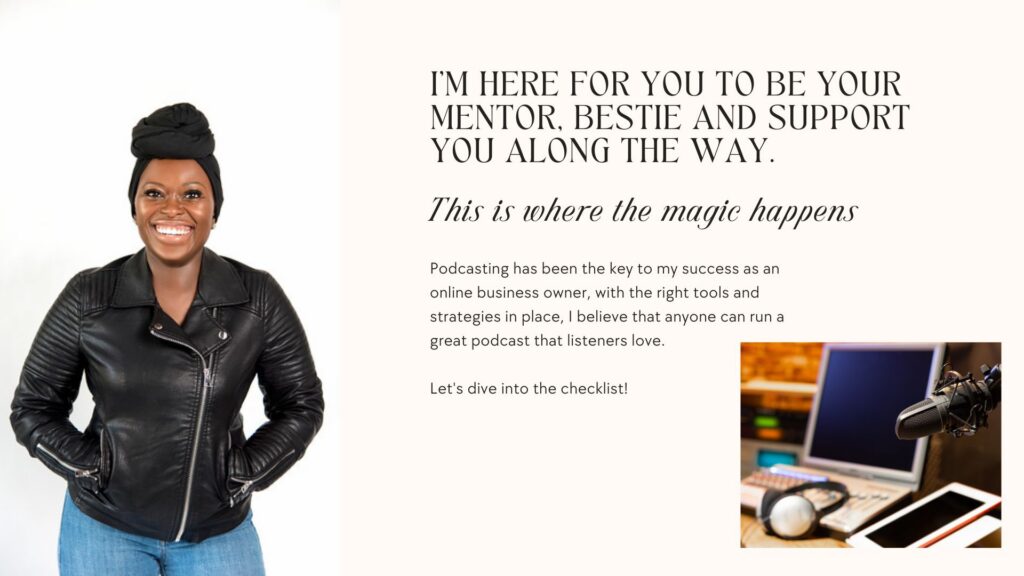
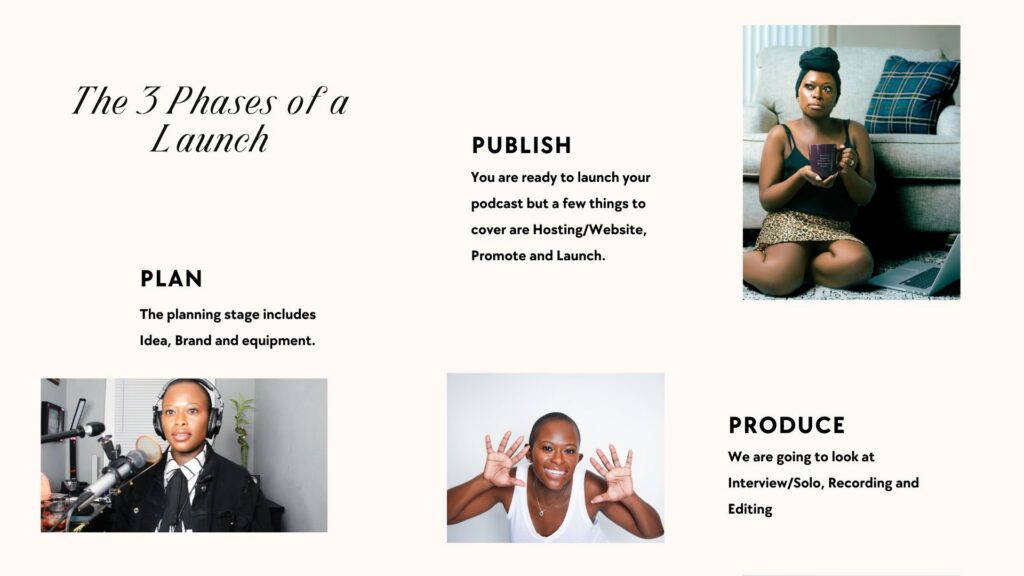
Grab the checklist featured above → Free checklist
Or see all free resources → Free Resources
Affiliate Marketing: The Lowest Barrier to Entry
If your download numbers are still small, affiliate marketing is usually the most realistic starting point. You recommend products or services you genuinely use, include a tracked link or code, and earn a commission on resulting sales. There’s no minimum download threshold, no application process with an ad network, and no need to negotiate a rate — you simply need products relevant enough to your audience that a recommendation feels natural rather than forced.
The honest limitation is that affiliate income is unpredictable and tends to be modest unless your audience is both large and highly engaged with purchasing decisions. It works best as a supplement, and as practice for the pitch and mention skills you’ll eventually use with paid sponsors, rather than as a primary revenue plan on its own.
Direct Sponsorships and CPM Pricing
Once you have a consistent download count, direct sponsorships become realistic. Podcast advertising is priced almost universally in CPM — cost per mille, meaning cost per 1,000 downloads. Industry-wide, host-read ads in 2026 tend to fall in the $18 to $50 CPM range, with the highest end reserved for niche, high-value audiences like business, finance, and B2B software shows, where premium CPMs can run considerably higher. General-interest or lower-engagement categories land toward the lower end of that range.
Mid-roll placements — ads that appear in the middle of an episode rather than at the very start or end — consistently command a meaningful premium over pre-roll or post-roll spots, since listeners who reach the midpoint are demonstrably more engaged than those who drop off early. If you’re structuring your own rate card, that placement distinction is worth building in from the start rather than pricing every ad slot the same.
Most direct sponsors and ad networks look for a minimum in the range of 1,000 to 5,000 downloads per episode before engaging, though this varies significantly by niche — a smaller, highly targeted audience can sometimes command sponsor interest well before hitting those thresholds, particularly if the show serves a specific professional or demographic niche advertisers are eager to reach.
Programmatic ad networks and podcast marketplaces — third-party platforms that connect podcasters with advertisers — sometimes work with shows as small as a few hundred downloads per episode, which makes them a reasonable entry point if you want exposure to the sponsorship process before your numbers support direct brand outreach. The trade-off is that these networks typically take a meaningful cut of the ad revenue in exchange for handling the sales relationship, so the per-episode payout tends to be lower than a direct deal you negotiate yourself.
Flat-Rate Deals: Often the Better Fit for Smaller Shows
For shows below the CPM-negotiation threshold, flat-rate sponsorships are frequently the more practical structure. Instead of calculating cost per thousand downloads, you and the sponsor simply agree on a fixed price per episode or per campaign — commonly landing somewhere in the range of $100 to $500 per episode for smaller, niche shows, sometimes higher depending on audience specificity. Flat-rate pricing removes the pressure of proving download volume and instead lets you sell on audience relevance and engagement, which is often the stronger card for a smaller, more targeted show to play.
This structure also tends to be easier for both sides to plan around. A sponsor knows exactly what they’re paying regardless of a given episode’s performance, and you know exactly what you’re earning regardless of a temporary dip in downloads — which removes some of the volatility that comes with pure CPM arrangements at a small scale.
Barter arrangements are also worth mentioning honestly, even though they’re not cash revenue. Early on, a sponsor offering free product or services in exchange for a mention can be a legitimate way to build a relationship and a track record, as long as you’re clear-eyed that it’s relationship-building rather than income, and you don’t let it substitute for paid deals indefinitely once your show has grown past that stage.
Listener-Supported Models
Platforms like Patreon and Apple Podcasts Subscriptions let your most engaged listeners pay directly for bonus content, ad-free episodes, or simply to support a show they value. This model doesn’t require a sponsor relationship at all — it depends entirely on how invested your audience is, which makes it a genuinely different lever than advertising. A smaller, deeply loyal audience can sometimes generate more reliable revenue through direct support than a larger, more passive one would generate through ads.
The honest trade-off is that listener support requires ongoing value delivery to justify the ask — bonus episodes, early access, or genuinely exclusive content — which is real, recurring production work layered on top of your main show. It’s worth starting only once your core episode production is already a sustainable rhythm, not before.
Programmatic Ads: Passive, But Modest
Programmatic advertising — ads automatically inserted by your hosting platform without you needing to sell anything directly — is the lowest-effort monetization option and also the lowest-paying, typically running in a considerably lower CPM range than host-read placements. Its appeal is that it requires essentially no sales effort on your part and works even for very small shows. Most podcasters treat it as supplemental income layered on top of a primary strategy, rather than a monetization plan on its own.
What Actually Determines Your Rate
Download count matters, but it’s not the whole picture, and treating it as the only variable undersells shows with smaller, sharper audiences. Niche value matters just as much — a modestly sized business or finance-adjacent audience is frequently worth more to the right advertiser than a much larger general-interest audience, because the advertiser is paying for relevance and purchasing power, not just raw reach. Audience engagement — completion rates, how often listeners take action after hearing an ad — also factors heavily into what a sponsor is willing to pay, even if it’s harder to quantify upfront than download counts are.
This is genuinely good news for a niche, expertise-driven show. If your podcast serves career women in a specific professional field, or covers a specific kind of expertise, you may be sitting on exactly the kind of targeted, high-intent audience that commands a stronger rate than raw download numbers alone would suggest — well before you’d hit the thresholds a general-audience show would need.
Host credibility factors in too, in a way that’s harder to put a number on but real nonetheless. A sponsor evaluating two shows with identical download counts will often pay more for the one where the host has clear, demonstrated authority in the subject matter, because that authority is what makes the endorsement land as genuine rather than as a paid read. This is one more place where the expertise you bring into podcasting from your career becomes a direct commercial asset, not just content material.
Building a Monetization-Ready Show From the Start
Whichever path fits your show first, a few habits make every monetization option easier down the line: keep your download and completion data organized so you can speak to it confidently in a sponsor conversation, build your email list alongside your show so you have a direct audience relationship beyond the podcast app, and be selective about what you promote — a smaller number of genuinely fitting sponsorships builds more long-term trust, and more long-term revenue, than saying yes to every offer that comes in.
Monetization rarely arrives as a single dramatic milestone. It tends to build in layers — an affiliate link here, a small flat-rate sponsor there, eventually a rate card you can hand to inbound inquiries with real confidence. Starting with the option that fits your show today is a far more realistic strategy than waiting for a download number that unlocks everything at once.
Key Takeaways
✓ Affiliate marketing is the lowest-barrier starting point for monetization, with no download minimum required.
✓ Direct sponsorships are typically priced in CPM (cost per 1,000 downloads); host-read ads generally range from $18–$50 CPM depending on niche and audience quality.
✓ Flat-rate deals, often $100–$500 per episode for smaller shows, are frequently a better fit than CPM negotiation below the 1,000–5,000 download threshold.
✓ Listener-supported models (Patreon, Apple Podcasts Subscriptions) reward audience loyalty directly, independent of sponsor relationships.
✓ Niche and audience engagement often matter more to your rate than raw download count — a small, targeted, expertise-driven show can command stronger rates than its size alone would suggest.
Sources
CPM benchmark ranges referenced from Acast Advertising and MillionPodcasts 2026 podcast advertising rate guides.
Flat-rate and micro-podcast pricing benchmarks referenced from The Podosphere and InfluenceFlow 2026 sponsorship rate card guides.
Related Reading & Resources
→ How to Build an Engaged Email List for Your Podcast
→ Stop Podfade: Key Systems Every Podcaster Needs
→ 90-Day Podcast Launch: What to Expect
→ Explore the Trauma-to-Profit™ Methodology
→ Browse More Business Articles
Be Yourself. Voice Yourself. Love Yourself.
Sherley’s Show is learning and growing every single day. We aim to uplift all marginalized voices both on this podcast and in real life. Please note that we are always striving to change the problematic language that society has internalized in us. Thank you for your patience as we aim to strip certain phrases from our vocabulary.
Would you like to be a guest
Are you interested in getting your opinion out about a particular topic but don’t know how to do so? If so, here is an opportunity to do so to share your point of view, PLUS get your message and voice out there. It is always a great way to know about different perspectives and enrich ourselves through knowledge sharing.
Submit your relationship question.
Sherley’s Show provides an atmosphere where every woman is comfortable growing into their best self. Sherley’s Show is a no judgment podcast where we discuss how to rise strong out of all types of obstacles that come with relationships. Through personal life experiences and discussions ranging from infidelity, trust, forgiveness, sex, heartbreak, self love, therapy and more, we offer words of empowerment as you strive to build and maintain all of the relationships in your life. You may be going through something that is unique and difficult. Sharing your story gives others comfort and could also be helping someone else. Let them know they are not alone. Everyone has a story, do not let fear hold you back.
Disclosure: This post contains affiliate links, I will get a commission if you decide to make a purchase through any of my links, at no cost to you. Please read my disclosure for more info.

Want to launch a podcast?
FRee Resource!
Download Sherley’s FREE Bootcamp Podcast Launch Checklist! The no-fluff, step-by-step roadmap for busy women ready to finally launch the podcast they’ve been dreaming about.
At Sherley's Show, we believe that when women feel seen and supported, anything is possible. Whether you're tuning in for inspiration, education, or community—you belong here.


next

say goodbye to being the side chick
When you find yourself really settling with the reality that you are the side chick, when you find yourself tired of the games and/or the complacency, it’s time to ask yourself a few questions.
next

why is therapy important?
Solo therapy, partnered therapy, or group therapy... what exactly are the benefits? If you’re still on the fence about whether or not you should go and if therapy can really do anything for you... this post is for you.
next
CONNECT
elsewhere:

STAY AWHILE AND READ
THE BLOG

BINGE
THE PODCAST
The place where we chat about obstacles that come out of relationships and how to rise up from them. Self-love, marriage, infidelity, sex, heartbreak, and more.

HANG OUT ON

Comments +