
How to Prepare for Engaging Podcast Interviews




Guest Booking and Interview Prep: The Real Work Behind a Great Episode
Disclaimer: Sherley Troutman is not a licensed business, financial, or legal advisor. The content in this article is for informational and educational purposes only, based on her personal experience coaching women through podcast launches and general industry research. Please consult a qualified professional for advice specific to your business.
A great interview episode almost never happens by accident. It looks effortless in the finished audio, but that ease is the product of deliberate work done before the recording ever starts, who you booked, how you pitched them, and how you prepared for the conversation. Guest booking and interview prep are two distinct skills, and most first-time hosts underinvest in both, assuming a good guest and a good conversation will simply happen once the mic turns on.
This matters even more for a show built around a specific format, the way our own Interviews format is, episodes with guest experts and everyday women sharing real experiences require a different kind of preparation than a solo episode or a co-hosted conversation. The guest is doing real work by showing up and sharing something personal or professional; the host’s job is to make that work pay off in a genuinely good episode, not waste it through poor prep.
Finding the Right Guests, Not Just Available Ones
The instinct when you’re new is to book whoever says yes fastest. That’s understandable, but it optimizes for the wrong thing. A guest who’s a strong fit for your specific audience, someone whose expertise or story directly serves the women listening to your show is worth more than a bigger name who’s only loosely relevant. Relevance to your audience should outrank name recognition every time, particularly for a niche show where trust with a specific listener base is the actual asset you’re building.
Good guest sources are usually closer than they seem. Your own professional network, past colleagues, people you’ve followed and respected in your field, guests from shows you admire, and referrals from guests you’ve already had on are all stronger starting points than cold outreach to strangers with large followings. A warm connection, even a distant one, dramatically increases both response rate and the quality of the eventual conversation.
It’s worth keeping a running mix of guest types rather than booking the same profile repeatedly. A show that alternates between recognized experts, everyday women with a powerful personal story, and occasional bigger names tends to feel more textured and less predictable to a listener than a show that only ever books one type of guest, however strong that type may be individually.
Writing a Pitch That Actually Gets Read
A guest pitch succeeds or fails in the first two sentences. Busy, accomplished people get generic booking requests constantly, and they can tell within seconds whether yours is one of those or an actual, specific ask. The strongest pitches name the exact topic you’d want to discuss with them, explain briefly why your audience specifically would value hearing from them, and make clear you’ve actually engaged with their work rather than mail-merging their name into a template.
Keep the ask itself simple and low-friction: a clear time commitment, a straightforward recording format (remote, via Zoom, roughly 45 minutes), and an easy way to say yes. The more decisions or questions a potential guest has to resolve before they can respond, the more likely the pitch sits unanswered in an inbox. A follow-up, sent once, a week or so after the initial pitch, is standard practice and not pushy many genuine yeses simply come from a pitch that got buried, not one that was rejected.
It’s also worth mentioning your show’s actual reach honestly, without inflating it. A guest deciding whether to spend 45 minutes with you is weighing that time against other opportunities, and an honest, specific description of your audience who they are, what they care about, roughly how many people you reach helps them make that decision quickly rather than guessing. Overselling your numbers tends to create a worse first impression than modest, accurate ones.
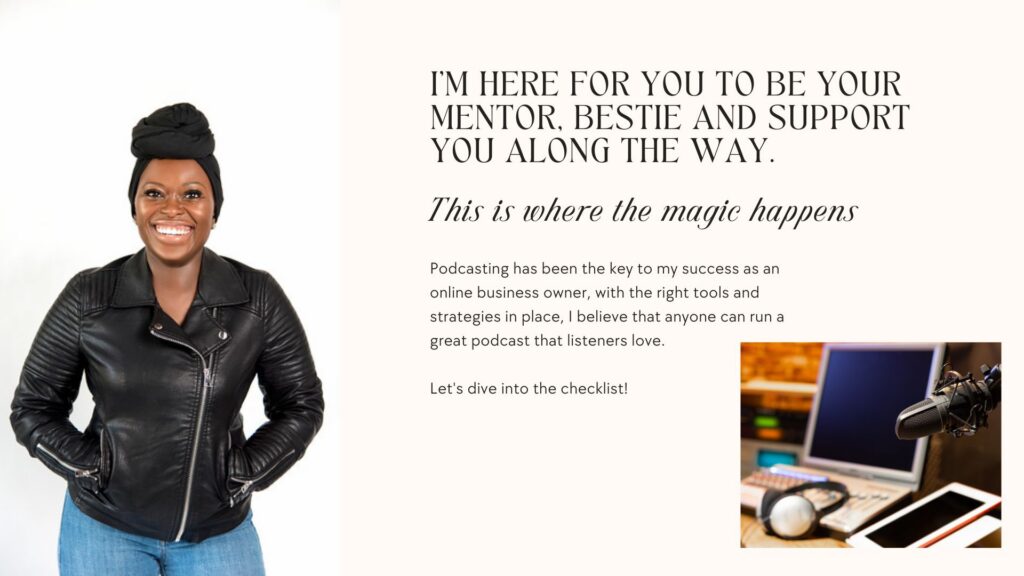
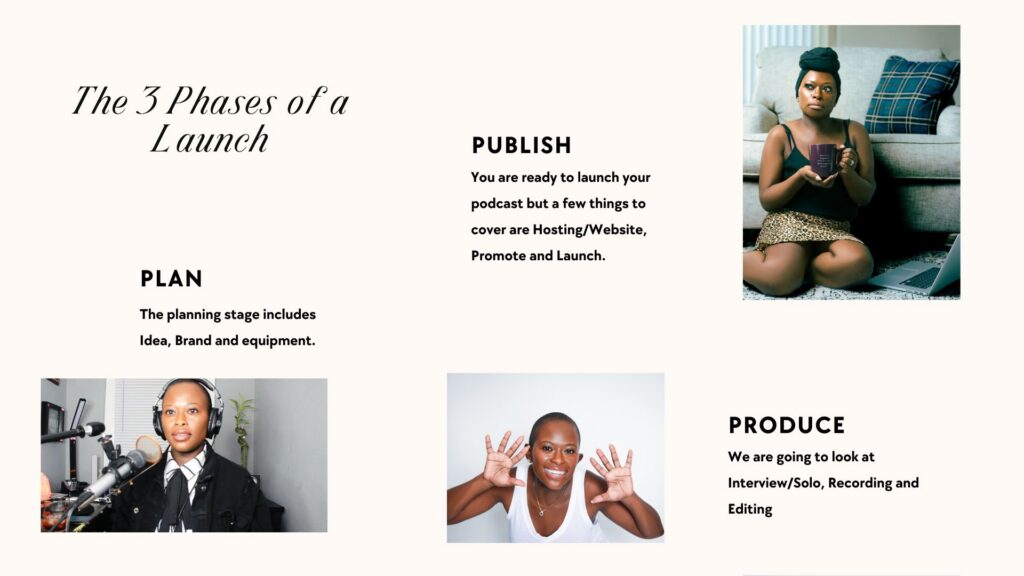
Grab the checklist featured above → Free checklist
Or see all free resources → Free Resources
What to Send Once They Say Yes
The gap between booking a guest and actually recording is where a lot of avoidable awkwardness gets prevented or created. Send confirmation details early: the exact date and time with time zone clearly stated, the platform and a tested link, the general topic and a few sample questions so they can prepare without being blindsided, and a rough sense of episode length. Guests who know roughly what’s coming give noticeably better, more relaxed answers than guests walking in cold.
A short pre-interview call or even a written questionnaire can also surface material you wouldn’t have known to ask about directly — an unexpected angle on their story, a detail that becomes the actual heart of the episode. This step is optional for a fast-moving show, but for a longer-form interview format, it consistently produces stronger episodes.
A brief reminder email 24 to 48 hours before recording is also worth the small effort a confirmed link, the time in their local zone, and a friendly note that you’re looking forward to it. Guests are busy, and a reminder prevents the awkward scramble of a no-show or a rescheduled session, which costs you both time and, occasionally, the guest’s willingness to try again.
Preparing Questions That Create a Real Conversation
The best interview questions aren’t a rigid script they’re a loose structure flexible enough to follow an interesting tangent when one emerges. Prepare more questions than you’ll likely use, organized roughly by theme, so you always have somewhere to go if a thread runs dry, but hold them loosely enough that you’re actually listening to the answers rather than waiting for your turn to ask the next scripted question.
Open-ended questions consistently outperform yes-or-no ones for generating real material. “What was that turning point actually like?” produces a usable, textured answer. “Was that a turning point for you?” produces a one-word answer and dead air. If you notice a guest giving short answers, it’s often a sign your questions are too closed, not that the guest is a poor fit.
It also helps to prepare a small number of specific, researched questions that show you’ve actually engaged with their work, alongside more general ones any guest could answer. The specific questions are usually what makes a guest feel genuinely interviewed rather than generically slotted into a format, and that feeling tends to produce their best, most candid material.
A useful structure for most interview episodes is to move from broader, easier questions early — background, how they got into their field — toward more specific, vulnerable territory as the conversation warms up. Starting with your hardest, most personal question before any rapport has built tends to produce guarded answers, even from guests who would have opened up fully ten minutes later.
Running the Actual Recording
Start with a few minutes of unrecorded small talk before you hit record, it settles nerves on both sides and often surfaces a natural, relaxed energy that’s hard to manufacture once recording has already started cold. Briefly walk the guest through logistics: roughly how long you expect to record, that you’ll edit for length and clarity, and that mistakes or restarts are completely normal and easy to fix in post.
During the conversation, resist the urge to fill every silence immediately. A guest pausing to think through an answer isn’t dead air that needs rescuing — it’s often the moment right before the most honest, specific answer of the episode. Give it a beat before jumping in, and you’ll frequently get a better response than an immediate follow-up would have produced.
If a guest gives an answer that feels incomplete or surface-level, a simple, genuine follow-up — “can you say more about that?” or “what did that actually look like day to day?” — almost always works better than moving on to your next scripted question. Some of the strongest moments in an interview episode come from that second layer of a question, not the first.
After the Recording: The Follow-Up That Builds Your Guest Pipeline
Send a genuine thank-you after the episode airs, along with the published link and, ideally, a few pre-written social captions or graphics they can easily share with their own audience, this makes it effortless for them to promote the episode, which extends your reach well beyond your existing listener base. A guest who has a good, low-friction experience is also your best source for future guest referrals, so treating this stage with real care compounds over time.
Guest booking, done well, isn’t a one-off scramble before each episode, it becomes its own steady pipeline. Keeping a simple running list of potential guests, sorted by how strong a fit they’d be and whether you have a warm connection, means you’re never starting from zero when it’s time to book the next round.
The women who consistently produce strong interview episodes tend to treat guest relationships as ongoing rather than transactional. A brief check-in months later, a genuine comment on something they’ve since published, an invitation to reconnect for a follow-up episode if their story develops further — these small gestures are what turn a single guest appearance into a long-term relationship that keeps feeding your show new material and new referrals for years.
Key Takeaways
✓ Prioritize guest relevance to your specific audience over name recognition or follower count.
✓ A strong pitch is specific, short, and names the exact topic and reason your audience would value them — generic pitches get generic response rates.
✓ Send clear logistics early once a guest says yes: exact time, platform, topic, and sample questions reduce awkwardness and produce better answers.
✓ Open-ended questions produce usable material; yes-or-no questions produce dead air. Prepare a loose structure, not a rigid script.
✓ A genuine post-episode follow-up with shareable assets turns a one-time guest into a source of referrals and repeat promotion.
Related Reading & Resources
→ How to Build an Engaged Email List for Your Podcast
→ How to Turn a Podcast Episode into 20+ Content Pieces
→ Stop Podfade: Key Systems Every Podcaster Needs
→ 90-Day Podcast Launch: What to Expect
→ Browse More Business Articles
Be Yourself. Voice Yourself. Love Yourself.
Sherley’s Show is learning and growing every single day. We aim to uplift all marginalized voices both on this podcast and in real life. Please note that we are always striving to change the problematic language that society has internalized in us. Thank you for your patience as we aim to strip certain phrases from our vocabulary.
Would you like to be a guest
Are you interested in getting your opinion out about a particular topic but don’t know how to do so? If so, here is an opportunity to do so to share your point of view, PLUS get your message and voice out there. It is always a great way to know about different perspectives and enrich ourselves through knowledge sharing.
Submit your relationship question.
Sherley’s Show provides an atmosphere where every woman is comfortable growing into their best self. Sherley’s Show is a no judgment podcast where we discuss how to rise strong out of all types of obstacles that come with relationships. Through personal life experiences and discussions ranging from infidelity, trust, forgiveness, sex, heartbreak, self love, therapy and more, we offer words of empowerment as you strive to build and maintain all of the relationships in your life. You may be going through something that is unique and difficult. Sharing your story gives others comfort and could also be helping someone else. Let them know they are not alone. Everyone has a story, do not let fear hold you back.
Disclosure: This post contains affiliate links, I will get a commission if you decide to make a purchase through any of my links, at no cost to you. Please read my disclosure for more info.

Want to launch a podcast?
FRee Resource!
Download Sherley’s FREE Bootcamp Podcast Launch Checklist! The no-fluff, step-by-step roadmap for busy women ready to finally launch the podcast they’ve been dreaming about.
At Sherley's Show, we believe that when women feel seen and supported, anything is possible. Whether you're tuning in for inspiration, education, or community—you belong here.



next

say goodbye to being the side chick
When you find yourself really settling with the reality that you are the side chick, when you find yourself tired of the games and/or the complacency, it’s time to ask yourself a few questions.
next

why is therapy important?
Solo therapy, partnered therapy, or group therapy... what exactly are the benefits? If you’re still on the fence about whether or not you should go and if therapy can really do anything for you... this post is for you.
next
CONNECT
elsewhere:

STAY AWHILE AND READ
THE BLOG

BINGE
THE PODCAST
The place where we chat about obstacles that come out of relationships and how to rise up from them. Self-love, marriage, infidelity, sex, heartbreak, and more.

HANG OUT ON

Comments +