
Boost Your Podcast’s Visibility with a Blog




Why Your Podcast Needs a Blog (And How to Make It Work for You)
You put in the work. You record the episode, edit it, upload it, and share it on social media. Then you move on to the next one. Sound familiar? For most podcasters, that is the entire publishing cycle — and it is leaving a significant amount of potential growth sitting on the table every single week.
Here is what a lot of podcasters do not realize: audio alone is not searchable. Google cannot listen to your episode. Spotify and Apple Podcast charts favor shows that already have momentum. If someone has never heard of you and types a question into a search engine that your episode answers perfectly, they will never find you — unless there is a blog post attached to that episode.
Adding a blog to your podcast strategy is not about doing more work for the sake of it. It is about making the work you are already doing reach further, last longer, and attract listeners who would never have found you otherwise.
Also read: How to Sustain Your Podcast by Delegating Tasks
Your Audio Content Is Invisible to Search Engines
Search engine optimization — SEO — is how people discover content online through Google, Bing, and other search platforms. The way SEO works is straightforward: search engines crawl text. They read words on a page, evaluate how well that content answers a user’s question, and decide whether to show it in search results.
Audio files contain none of that readable text. An episode about rebuilding your confidence after a toxic relationship, navigating co-parenting after divorce, or launching a podcast from scratch is rich with valuable information — but unless there is written content somewhere on your site connected to that episode, that information is invisible to search engines and to the people searching for exactly what you cover.
A blog post changes that entirely. When you write a companion post for each episode — even a focused, well-structured 800 to 1,500 word post — you are giving search engines something to index. That means people who have never heard of your podcast can find it through a Google search and become listeners because of a blog post they stumbled across months or even years after you published it.
That is content working for you around the clock without you lifting a finger after publishing day.
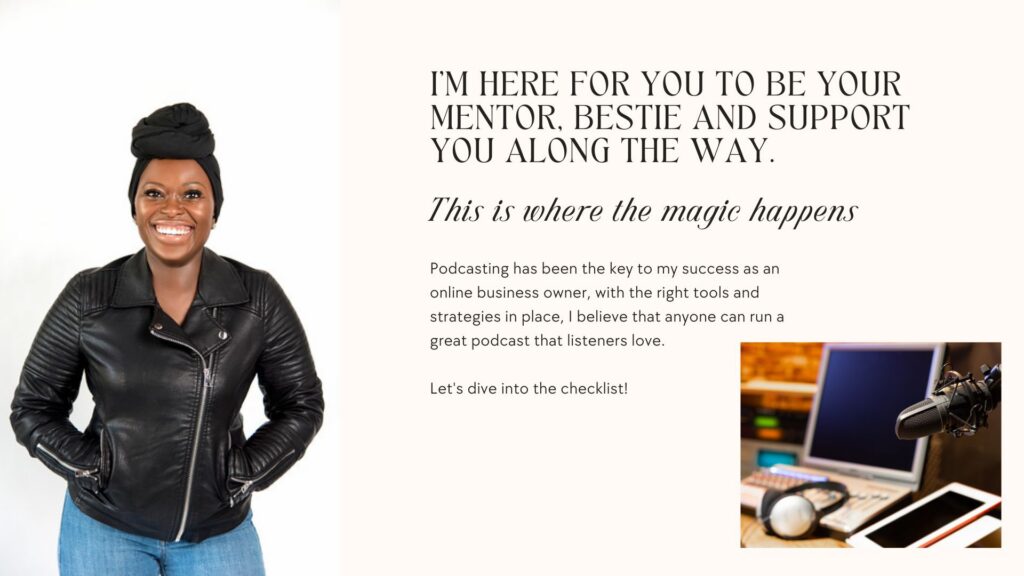
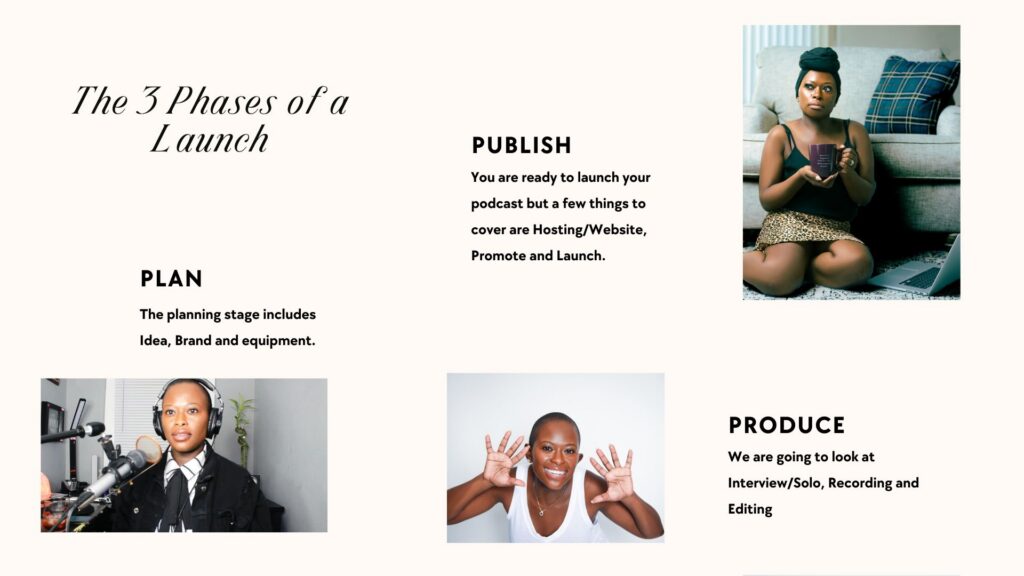
Grab the checklist featured above → Free checklist
Or see all free resources → Free Resources
Show Notes Are Not the Same as a Blog Post
This is one of the most common misconceptions in podcasting. Many hosts publish show notes — a brief paragraph summary of the episode plus a list of links — and consider the written component handled. Show notes have their place, but they are not a substitute for a real blog post.
Show notes are for listeners who already found your episode. A blog post is for people who have not found you yet.
A well-written blog post is crafted around the questions your ideal listener is actually typing into search engines. It expands on the ideas discussed in the episode, provides context and supporting information, and is structured in a way that both readers and search algorithms can follow. It also lives on your website, which means every click builds traffic to your home base rather than to a third-party platform.
Think of it this way: show notes bring your existing audience back. Blog posts bring new audiences in.
How a Podcast Blog Actually Works
Choose a Focus Keyphrase for Every Post
Every blog post should be built around a specific phrase that your ideal listener is likely to search for. This is called a focus keyphrase, and it should appear naturally in your post title, your opening paragraph, and throughout the body of the article. Tools like Ubersuggest or Google’s free autocomplete feature can help you identify what people are actually searching for in your niche.
For example, if your episode covers the emotional stages of healing after a breakup, your focus keyphrase might be something like ‘how to heal after a breakup’ or ’emotional stages of heartbreak.’ Build the post around answering that question thoroughly, and embed your episode as the audio companion.
Structure Your Post for Readers and Search Engines
A well-structured blog post uses clear headings, short paragraphs, and a logical flow from introduction to conclusion. This makes it easy for readers to skim — which most people do before deciding whether to read in full — and easy for search engines to understand the topic and organization of the content.
Your post should include an introduction that hooks the reader, clearly defined sections with descriptive headings, a conclusion or summary, and a call to action that directs them to listen to the full episode.
Embed the Episode in the Post
Always embed the podcast episode directly in the blog post. This keeps readers on your website longer, which is a positive signal to search engines, and gives them an immediate way to transition from reading to listening. Most podcast hosting platforms provide an embeddable player that you can drop directly into your WordPress or website builder.
Include Internal Links
Linking between your own blog posts — called internal linking — tells search engines that your content is connected and comprehensive. It also keeps readers on your site longer by giving them related articles to explore. Every new post you publish is an opportunity to link back to something you have already written, building a web of connected content over time.
Be Consistent
One blog post will not transform your search traffic overnight. SEO is a long game. The podcasters who see meaningful organic growth from their blog content are the ones who publish consistently over months and years. You do not need to post every day. You need to post regularly — ideally once per episode — and trust the process.
Also read: The Best Social Media Platforms for Podcasts: Start Smart
What to Do When Writing Is Not Your Strength
Here is permission you might need: you do not have to write your own blog posts.
If writing drains you, takes hours longer than it should, or produces results you are not proud of, that is a signal to delegate. A freelance writer who understands your brand, your voice, and basic SEO can turn your episode into a searchable, well-structured post that sounds like you — without you having to sit in front of a blank page for hours.
You can also start simple. A focused, clear 800-word post that directly answers the question your episode covers is more valuable than a sprawling, unfocused 2,000-word post that meanders. Quality and clarity will always outperform length for its own sake.
Also read: Organic vs. Paid Marketing for Podcasters
The Long-Term Payoff
The podcasters who invest in blog content early are the ones who look back two years later and see organic traffic coming in from posts they barely remember writing. That is the compounding effect of SEO — it builds slowly and then all at once.
Every episode you publish without a companion blog post is a missed opportunity for a listener to find you. Every episode you do publish with a well-crafted post is a piece of content that can drive traffic, grow your audience, and establish your credibility for years to come.
Your podcast has a voice. Your blog gives it a permanent address on the internet.
Key Takeaways
- Search engines cannot index audio — a blog post is what makes your podcast discoverable to people who have never heard of you.
- Show notes serve your existing audience; blog posts attract new ones. They are not interchangeable.
- Every blog post should be built around a focus keyphrase your ideal listener is actually searching for.
- Structure matters: clear headings, short paragraphs, an embedded episode player, and internal links all strengthen your post.
- You do not have to write the posts yourself — delegating to a skilled writer is one of the highest-impact outsourcing decisions a podcaster can make.
- SEO is a long game. Consistency over months and years is what builds lasting organic traffic.
- Every episode without a companion blog post is a missed opportunity for a new listener to find you.
Ready to Start or Grow Your Podcast?
The following resources are exclusively for women who want to launch or scale a podcast as a real income stream.
- Download the free Podcast Launch Checklist — your step-by-step starting point.
- Get the eBook: Find Your Voice: The Woman Behind the Mic — $67 of strategic guidance for the woman building her voice into a business.
- Book a 1:1 Clarity Consultation — $297 for a focused, personalized session on your podcast launch or growth plan.
Visit sherleysshow.com to access all resources.
Sources & Related Reading
Sherley’s Show™ — Building Your Brand with Podcasting: The Honest Guide
Sherley’s Show™ — Effective Podcast Growth Strategies Revealed

Sherley’s Show is learning and growing every single day. We aim to uplift all marginalized voices both on this podcast and in real life. Please note that we are always striving to change the problematic language that society has internalized in us. Thank you for your patience as we aim to strip certain phrases from our vocabulary.
Would you like to be a guest
Are you interested in getting your opinion out about a particular topic but don’t know how to do so? If so, here is an opportunity to do so to share your point of view, PLUS get your message and voice out there. It is always a great way to know about different perspectives and enrich ourselves through knowledge sharing.
Submit your relationship question.
Sherley’s Show provides an atmosphere where every woman is comfortable growing into their best self. Sherley’s Show is a no judgment podcast where we discuss how to rise strong out of all types of obstacles that come with relationships. Through personal life experiences and discussions ranging from infidelity, trust, forgiveness, sex, heartbreak, self love, therapy and more, we offer words of empowerment as you strive to build and maintain all of the relationships in your life. You may be going through something that is unique and difficult. Sharing your story gives others comfort and could also be helping someone else. Let them know they are not alone. Everyone has a story, do not let fear hold you back.
Disclosure: This post contains affiliate links, I will get a commission if you decide to make a purchase through any of my links, at no cost to you. Please read my disclosure for more info.

Want to launch a podcast?
FRee Resource!
Download Sherley’s FREE Bootcamp Podcast Launch Checklist! The no-fluff, step-by-step roadmap for busy women ready to finally launch the podcast they’ve been dreaming about.
At Sherley's Show, we believe that when women feel seen and supported, anything is possible. Whether you're tuning in for inspiration, education, or community—you belong here.



next

say goodbye to being the side chick
When you find yourself really settling with the reality that you are the side chick, when you find yourself tired of the games and/or the complacency, it’s time to ask yourself a few questions.
next

why is therapy important?
Solo therapy, partnered therapy, or group therapy... what exactly are the benefits? If you’re still on the fence about whether or not you should go and if therapy can really do anything for you... this post is for you.
next
CONNECT
elsewhere:

STAY AWHILE AND READ
THE BLOG

BINGE
THE PODCAST
The place where we chat about obstacles that come out of relationships and how to rise up from them. Self-love, marriage, infidelity, sex, heartbreak, and more.

HANG OUT ON

Comments +