
Building Healthy Relationships: Six Essential Pillars




The Foundation of a Healthy Relationship
Relationships are hard.
And I don’t say that negatively, I say it honestly.
I think social media has made relationships look polished, effortless, romantic, and perfectly put together all the time. But after being with my partner for 28 years, I can confidently say that healthy relationships are built through work, growth, grace, communication, and a whole lot of learning.
That’s what inspired this conversation on Sherley’s Show.
I wanted to talk openly about what truly creates the foundation of a healthy relationship, not just from a romantic perspective, but through friendships, family relationships, and even work relationships too.
My Six Pillars of a Healthy Relationship
When I think about the core foundation of any strong relationship, six things immediately come to mind:
- Trust
- Communication
- Respect
- Consistency
- Loyalty
- Sacrifice
Over the years, I’ve realized that relationships cannot survive without these things.
Love by itself is not enough.
And honestly, I think many of us learn that the hard way.
Trust Is Easy to Give, Until It’s Broken
One thing I’ve struggled with understanding is why we naturally enter relationships giving someone 100% trust almost immediately.
When we first fall in love, we believe the best about that person. We assume they won’t hurt us. We trust them completely before they’ve even had time to fully prove themselves.
But then life happens.
Disappointment happens.
Mistakes happen.
Betrayal happens.
Broken promises happen.
And suddenly, trust starts dropping little by little.
For me, trust feels like percentages.
Maybe something small happens and trust drops from 100% to 98%.
Then another thing happens.
Then another.
And eventually one major situation can bring it all the way down emotionally.
Do I believe trust can be rebuilt?
Yes.
But rebuilding trust requires work from both people, and that’s the hard part.
People naturally want to repair relationships in ways that feel comfortable for themselves instead of doing what actually makes the other person feel safe again.
And that’s where relationships often struggle.
Communication After 28 Years Is Still Hard
One thing people don’t talk about enough is how communication styles can completely differ between two people who deeply love each other.
I love deep conversations.
I like discussing emotions, perspectives, growth, and understanding.
My husband?
He’s much more simple.
Much more humorous.
Much less emotionally expressive than I am.
And after 28 years together, communication is still one of our biggest challenges.
That may surprise people.
I think many assume that after decades together, couples somehow magically master communication.
We don’t.
We’re still learning from each other every day.
Sometimes I’m the Problem Too
One thing I’ve had to become more honest about is my own role in conflict.
My husband has told me before that talking to me can sometimes feel challenging.
And truthfully?
That hurts to hear.
My immediate reaction is defensiveness.
I want to explain myself.
I want to argue my perspective.
I want to protect my feelings.
But when I really sit with it, I realize something important:
Sometimes I’m listening to respond instead of listening to understand.
And that’s something I still need to work on.
Emotional Safety Matters More Than We Think
One of the biggest lessons I’ve learned is that emotional safety is everything in a relationship.
Can your partner speak honestly without fear?
Can they tell you when something hurts them?
Can they be vulnerable without feeling attacked or judged?
That’s emotional safety.
And if I’m being honest, there are moments where I know I haven’t created enough of that space for my husband.
That realization has been difficult for me.
Because sometimes we think we’re showing up one way, but our partner experiences us completely differently.
Relationships & Social Media
Social media has also complicated relationships in ways I don’t think we fully realize.
Even me, someone who understands social media isn’t real life, can still fall into comparison sometimes when my relationship is struggling.
You scroll online and see:
- vacations
- flowers
- matching outfits
- date nights
- romantic captions
- “relationship goals”
And if you’re already emotionally vulnerable in your own relationship, comparison can quietly creep in.
That’s one reason I’ve become more private over the years.
I never want people to look at my relationship online and assume it’s perfect.
Because it’s not.
No relationship is.
Am I Showing Up As My Best Self?
One of the hardest questions I was asked during this conversation was:
“Are you showing up as the person you want to be in your relationship?”
And my honest answer was:
No.
Not all the time.
There are still moments where I react emotionally.
Moments where I become defensive.
Moments where I struggle to give grace.
Moments where I prioritize my feelings over understanding his.
That doesn’t mean I don’t love my partner deeply.
It means I’m human.
And growth in relationships never truly stops.
What I’ve Learned About Healthy Relationships
Healthy relationships are not about perfection.
They’re about intentionality.
They’re about learning how to:
- communicate better
- apologize sincerely
- rebuild trust
- show empathy
- compromise
- sacrifice
- respect differences
- grow together instead of apart
Relationships are like two plants growing in the same pot.
Sometimes one grows faster.
Sometimes one needs more space.
Sometimes one feels crowded.
Sometimes both need pruning.
But if both people are willing to care for the relationship consistently, growth is still possible.
Final Thoughts
If there’s one thing I hope people take away from this conversation, it’s this:
Healthy relationships require presence.
You have to wake up every day and choose to be mindful of another person’s feelings, experiences, and needs, while still growing through your own.
It’s not easy.
It’s not always pretty.
And sometimes it’s incredibly uncomfortable.
But there’s also something beautiful about growing alongside someone through every season of life.
And maybe that’s what real love actually looks like.
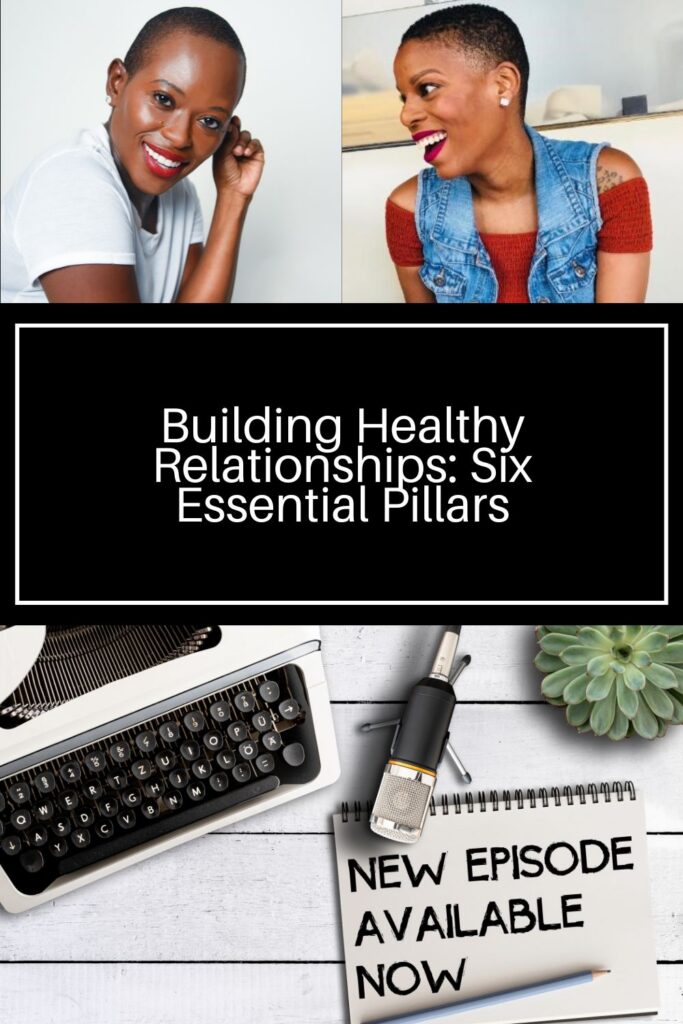
Sherley’s Show is learning and growing every single day. We aim to uplift all marginalized voices both on this podcast and in real life. Please note that we are always striving to change the problematic language that society has internalized in us. Thank you for your patience as we aim to strip certain phrases from our vocabulary.
00:00
to simply answer your question, no. Because if I have to process it for this long, the simple answer to that is no. I’m not showing up how I would like to be in my relationship. Welcome back to The Shirley Show. I am your host Shirley. Our discussions are going to be ranging from personal life experiences,
00:25
infidelity, trust, forgiveness, sex, heartbreak, self-love, and so much more. Let’s dive in, pull up a seat, make sure you’re cozy, and get ready to be challenged and encouraged while you learn with me, your virtual girlfriend. All right. Welcome back to another episode of Fun Palate Podcast. I know it has been a minute since you’ve seen Kira and I recording together. A lot has changed. Even our background has changed. So we are in different settings in our life.
00:55
and good things have happened, you know, we all go through stuff. So we’re gonna talk about today the foundation of a healthy relationship. Now, I also did a video that you can definitely click here where you see my finger is the video is gonna pop up and you can click here to definitely go watch that little short segment of where I’ve been, what’s been going on. So you can see, you know, what’s been happening these last.
01:22
I think it’s been since 2022 since you’ve seen my face. Now, obviously the pack or the podcast is still running and operating in the background. So you can listen at any time, but I have not spit out any new recordings. So to get started with our first episode, we’re going to jump in the foundations of a healthy relationship, exploring trust, communication, emotional safety, and all types of relationships. So,
01:51
I’m gonna pass you the mic.
01:55
Hey Shirley, I’m so glad that we’re doing this again and forgive me because I’m getting over a really bad cold. oh I think this is a really good segue to start our new season just because I’ve had some trials and tribulations and challenges in my marriage. I think that difficult season in my marriage helped me to learn.
02:23
the key pillars to a healthy relationship. And I have notes, so I’m gonna kind of be jumping back and forth so I can stay on track. I think last season we talked a lot about forgiveness and healing on my end, and who would have thought that I would need it to revisit so many of those episodes for my own personal growth journey. But I think going through that time, we were able to build
02:52
a strong foundation just based on what we learned during that season. I think the three key pillars of a healthy relationship are trust, communication, and emotional safety. You said it earlier in the title. We all know how important trust is in a relationship. And I want to be clear that I’m speaking about relationships across all different avenues, friendships,
03:22
romantic relationships, relationships with family, and work relationships. um Trust is so essential to your relationship, to your partnerships, because it fosters security. um In openness, I think trust is really important because it’s built over time, right? um Trust is built through consistency, through honesty, and through being vulnerable. I think about
03:51
the time when you and I first met Shirley and like we kind of became friends and how the start of our friendship was really based off of trusting each other that we weren’t going to be judged. And this is like in really quick moments and also being vulnerable with each other that kind of did the foundation of our friendship. I agree. think the connection to when you were doing the missionary work in Haiti that even strengthened it because I was like, oh, she went to Haiti. oh
04:20
Because psych, because she is cool. Most people, number one, don’t go there. um Haiti in the last few years have had a lot of things going on. So when I heard you were doing that, it, what’s the word I’m looking for? It was like, it hit home because I felt like it was somebody I could talk to when it comes to certain things in that culture that you’ve seen or witnessed.
04:50
also was a major trust factor for me when I met you. Number one, you was cool. We had this trip together and we bonded in that way. And it was very rare because I think we was standing outside waiting for the pickup and you just randomly brought that up.
05:11
I don’t know why we went that direction, but it was very random. Cause I didn’t know you at all before the Yeah. That’s good. I mean, and I also think God kind of established connections too. Exactly. So that was a connection that we needed. And you know, I wanted to say one thing, I’m sorry. I like the fact that when you told me this, said, trust.
05:38
Communication and you said emotional safety for you are three key factors in a relationship. Now for me, there’s six factors that are important to me in a relationship. Trust of course is one of them, communication is one of them, but I also have respect, consistency, loyalty and sacrifice. Those six things for me are the true pillars of what makes a dynamic strong friendship.
06:07
or romantic relationship in my eyes. And I definitely think those will all tie in to these top threes for sure, 100%, especially I heard you say consistency, is definitely, I mean, we just said that’s how trust is built over being consistent, right? I think what happens in relationships is there’s a breakdown when trust is broken.
06:37
that damage from trust being broken, it can and it cannot be repaired. Do you think that more times than not we lean towards trying to repair it or we lean towards just it can’t be repaired, like canceling it out? Like I’m not even gonna try. I’m talking about trust and I’m talking about across all relationships. So don’t just think like romantic, think about with your friends, with your family, people at work. Everything in life.
07:07
I do feel is repairable in some way, or form. I do feel trust is repairable because of course, as you know, and our listeners know, I’ve gone through trust issues in my own relationship. Not so much in my friendships, but in my relationship. Trust is repairable. It takes a long time to repair that trust. Now, what is mind boggling to me and I’m still kind of…
07:35
in the research stage is why do we enter relationships with 100 % trust, especially romantic relationships, a person we don’t even barely know, but we automatically have 100 % for the most part trust in them. At least this is argumentive, this is my perspective, but we immediately enter a relationship with 100 % trust in my mind.
08:03
I entered my relationship, oh my God, this person is great. He’s not gonna do anything to break my heart. And then now the minute something happens, my heart is broken, I’m upset. you know, now points are taken away because for me, it started off at 100%. And then something small, now it’s down to maybe 98%. Then something small again, now we’re down to 96%. And then it takes that.
08:29
big situation to happen and now it’s drastically draining down to 50 and 40%. So this is how I think about trust in my mind to answer your question. So to answer your question, it is repairable. The hard part about repairing trust is the work that needs to be done for each party. And what I’ve learned also through counseling and also through self-development is that
08:59
We tend to do what is comfortable for us to try to repair trust in our significant other or our friends, not doing what needs to be done for them to feel comfortable. Or for the relationship as a whole. trust is repairable, but it’s the matter of our human beings willing to do the work involved to rebuild
09:28
that trust back with somebody because to put it in literal terms, rebuilding trust is like climbing up a hill and you’re literally taking baby steps and each of you are constantly falling along the way. And the top of that hill just seems extremely far when it’s really not. It’s because we’re not learning to work together as a team or put the wall down.
09:56
and look to see what do I need to do for my partner to make them feel trust again in me based on what I’ve done. And that means habits needs to change. People become comfortable. So they don’t wanna change habits that they’re used to, you know, and. Right. Which doesn’t foster any kind of personal growth. And you can’t make somebody change or do something they don’t wanna do. They have to wanna do it themselves.
10:25
So there’s so many revolving pieces of this and that’s the hard part for human beings. is trust able to be rebuilt? In my opinion, yes, it is. But are you really willing to do the work entailed to rebuild that trust? That’s the problem. Yeah, I agree. I think that we go into relationships
10:51
believing the best about our partner or the other person or their friend. And then when they fall short of that, then that starts to affect us and now trust is being broken and we don’t move the same way that we used to. I think part of doing the work in building trust is establishing really good communication. That’s something that Adrienne and I have learned over the course of two years of therapy, small groups, books that we’ve read. uh
11:20
I think that a lot of times I was listening to defend myself instead of listening to actually hear what he was saying. And vice versa. think a lot of times when you’re bringing something to your partner to say, is how I feel, this is how that made me feel, we’re really quick to defend ourselves instead of just listening to take it in. And it’s like, it’s called active listening, right? Like not listening to speak, not listening to…
11:47
Defend yourself something that we learned in therapy and I do this in many relationships. I even do this on the plane when someone says something and he tells me this is how I feel I say what I’m hearing you say is I’m hearing you say is XYZ because sometimes even when you repeat it back, you’re not even hearing what they say you’re interpreting it in a different way.
12:15
And then he’s like, no, that’s not what I’m saying. This is what I’m saying. So that just really quick statement or question has helped us communicate more effectively. And we can communicate by asking clarifying questions. Like I can say, Shirley, you really hurt my feelings when you didn’t tell me how you like my new glasses today. And you would be like,
12:43
Okay, Kira, like I thought I’d seen those glasses a hundred times. I’m like, yeah, but I wore them special for you and you didn’t appreciate them. And then you take it as a defense. Like Kira’s never satisfied. Kira’s like, there’s always something I’m doing wrong. And it’s just like, no, like I just, wore something special for you and you didn’t notice it. You know, it’s like just kind of being able to communicate like that instead of it escalating into an that’s a good example. I like that example. As simple as it is, it’s the truth though, because you know, especially
13:12
I feel, preferably both parties, we don’t tell our partner enough simple things as, you’re beautiful, you look great. know, especially women don’t say it enough to men, as though we’re assuming that the man doesn’t wanna hear it, when in actuality, they don’t mind hearing that from their wife or their girlfriend.
13:37
We don’t say it enough. Now we definitely expect them to say it to us, but that goes along the lines of when your woman gets dressed up, a man is really quick to say, oh, baby, you look good. Women don’t have that saving the action. You ready to go? Okay, I’m ready. Let’s go. Right. But I can tell you that I have learned to do that because my husband’s love language is words of affirmation.
14:04
So I have to build him up in that way. Like, oh, I like your get up today. Oh, you wore that to work. No, Jordance look good. You know, all of that stuff when we go out, like you look really nice when we go to church. You look really nice, babe. Like all that stuff matters, but it’s like simple. Like you’re saying we have to take the time to do things that are going to build not just the other person, but build the relationship as a whole. Right. uh The other thing that I really love to talk about in communication is um nonverbal cues.
14:33
You and Khalif have been together a long time. Me and Adrian have been together. It’ll be 11 years this year. You have those moments where you guys can just look at each other and communicate without saying a word. Very true. Am I right? Very true, right? Even with our children, we can do that. And I also think there’s something like within black culture where we do that. We can do that at work.
15:01
we can just look at each other and communicate without saying a word. I also think knowing those like verbal cues with someone is, it shows closeness, right? It shows like personal connection and we have to be cognizant of it because if Adrian’s giving me a look and I’m not catching on, he’s probably not comfortable with this setting, right? Or he needs an escape.
15:29
Adrian, I would say, is very introverted. um He can be social, but he’s not very talkative. So in social settings sometimes, I can watch his battery deplete. And I have to be really aware of those verbal cues, or I’m sorry, nonverbal cues that he gives me to let me know like, okay, I’m reaching my limit kind of thing, or even jokes, like just small things that happen in between us. I think…
15:56
Communication that way also fosters trust because he knows like I’m in tune with him. I’m checking on him without him even having to say a word. It does make sense. Does that make sense? Communication is even after 28 years, it’s a very difficult battle. It’s hard. Very hard, especially when you have different styles of communication than your significant other does. That’s what makes it even more difficult because
16:26
I to converse in an informational, educational type of way. I like deep conversations. Kaleef likes comedy. He likes to talk about fluff and air. He doesn’t like deep conversations. So it’s hard for us to have conversations because he doesn’t like to go into the deep direction with me.
16:55
Now, when it comes to verbal cues, I definitely know.
17:02
nonverbal cues. I have to give him a lot of grace and that’s hard for me, Kira. Although I can see his nonverbal cues, I tend to not pay attention to them and I have to be honest, I do ignore them because in that moment, I’m being selfish and I’m thinking about my own personal situation.
17:26
And okay, you may have come home from work and you need time to decompress and gather yourself. And I need you now. So for me, it’s like, need to make time for me. Now, again, that could be a very tricky situation because the nonverbal cues that he’s given me a few times is when Khalif comes home from work, he needs that space to decompress. He doesn’t want to talk about a whole bunch of stuff.
17:56
Number one, doesn’t even, he likes to talk, but talking to me, he has told me, is a challenge. It’s a very much of a challenge. And you know, this is vulnerability of the honesty about relationships. After 28 years, you would think you got a damn peck. Absolutely not. Absolutely not. Just yesterday, he aggravated me because he didn’t want to talk. I wanted to talk. So we both were like,
18:25
But how does that make you feel when he tells you that talking to you is a challenge? Like, how do you… You want to know what I really …swallow that?
18:33
No, I wouldn’t know what you say, I really wouldn’t know how it you feel. I get very pissed. I don’t like hearing that. My reply to him is, people don’t have a problem. Maybe it’s you. But I’ve been with you for 28 years. Are my listening stills falling short then? Because am I not truly hearing him? Now, here’s the problem. I wouldn’t mind dissecting it, but he’s very closed in.
19:02
it takes a lot for Kaleef to go like unravel and open up because then the next thing he should say is like, he feels that when we speak, the issue is I become extremely defensive because if he does not say the right thing, then I go um to a different mode of Shirley. If I say something and he replies in a way that
19:31
sounds conflicting to what I’m trying to say or doesn’t sound comforting. He thinks, okay, now we’re about to go into war and this is going to be a combat. So his non-verbal cues is for him, he wants to be able to start the conversation off because he feels if I start the conversation off, it’s going to go left and I haven’t. It’s hard for me to pay attention to that.
19:59
nonverbal cue that he gives to me and I walk right over it. So I guess you and I are opposite. But when it, I have a question, wouldn’t it just be easier, right? To just allow him to have the space when he gets home. Hey babe, like I need basic hello, right? That’s probably like basic hello. And then he goes off.
20:26
I understand that because I feel like when I get back from a trip, I have been touched out, peopled out. I’m exhausted from talking to people. Of course, I want to come home and greet my family. Hi, love you. How was your day? Da da. I’m about to go take a shower. So that’s my time to kind of like step away and decompress. But wouldn’t it just be easier to give him the space to decompress so then when he comes back to you, he’s kind of…
20:53
refueled and then he can engage in a conversation with you and give you all the things that you need in that moment. It’s kind of like the compromise and like bending and understanding that what you want may not be what you’re going to get right in that moment, but it might be better just overall for the relationship. And then he might feel, oh she’s giving me the space. I feel like I can talk to her now. easier said than done. He doesn’t, he doesn’t come back. It is.
21:21
That’s the problem. He doesn’t come back. He just thinks like he takes that and he runs with it. So now I have to say, I’ll say things. Well, do I need to make an appointment? No. I said, okay, so when are we going to touch back on this? So his verbal cues.
21:43
So I agree with you say you do know your partner’s verbal cues. Now what could we if we do nonverbal, I’m sorry, verbal and nonverbal. So you do know your partner’s nonverbal cues. Especially if it’s a sexual verbal cue or if it’s a parenting verbal cue, nonverbal cue. Why do I keep saying verbal cue? Nonverbal cue. It’s okay. You know, and I know. But when it comes to us, nonverbal cue and communication.
22:14
Oh, definitely. need to work on it? I’ll admit that 100%. We’re far away. We’re together, but we’re far away. Really? Because I also have to take him out the category of he’s not my girlfriend. And the conversations I have with my girlfriends and the conversations I have with Khalif are going to be different. But I also am stuck in the factor of why do I have to adjust? I need to feel we’re both adjusting. You’re not adjusting. I’m the only one adjusting. fuck it.
22:44
Mm-hmm. Yeah, think, I mean, compromise is 100 % key to a healthy relationship. It can’t just be one person bending all the time and the other person not bending. And this is like where the communication is gonna come in. Like what I’m hearing you say is, and then like we also learned a really good way to share how we feel when the other person does something that hurt our feelings. And it’s really basic.
23:13
You say…
23:17
Let me think of an example. You have to give something specific. So it can’t say, you can’t say like, you make me feel disrespected. You have to give an example. So it’s like, you make me feel disrespected when you come in the house and you don’t speak to me. I’m not saying this is your example. I’m just saying this is an example. You make me feel disrespected when you come in the house and don’t speak to me. That’s the first step. And the second step is, I really appreciate
23:45
in the mornings when you make my coffee, because it makes me feel like you were thinking of me. That’s number two, right? So then you close with, I hope that you can forgive me for when I yelled at you last week in the car. It’s three totally different things. You’re doing your offense first, how the person made you feel. You’re telling them something that you appreciate about them. And then you’re closing with forgiveness.
24:13
That has totally changed how we approach um grievances with each other, because it’s not all on attack. It’s like, this is what you did in that moment. This is how I felt, but this is what you did that I love and appreciate about you. And please forgive me for when I did this. That has really changed the fabric of how Adrienne and I communicate, because when you want to approach a grievance, you have to have the other two steps with it. Interesting. We learned that same tactic for our counseling.
24:43
It is good. It’s good, Shirley. It’s But it also works. I’ll be the first victim to say we don’t implement it as often as we should. Even our counselor said we need to do 15 minutes every day. need to get, oh, what’s that thing called? What’s that sand thing called? The timer thing.
25:02
Oh, the, I know what you mean, like the little We need to get one of those sand timers. I thought I had one, but we need to get one of those sand timers because he says that sand timer, 15 minutes every day is the minimum. Once the sand timer goes off, then the person who’s talking is done and they give it back to the other person. That’s a great tactic that Khalifa and I do not do as often. Is the 15 minutes just to catch up? just to talk or just to share something minutes, you can talk about anything.
25:32
It’s a way of helping you build communication. So you could do as long as you want, but 15 minutes is a good time. So either party doesn’t feel drained, which is what? Seven and a half minutes for each person. Now that doesn’t mean that the person’s talking for seven and a half minutes. That’s why at the end of that sand, then you flip it back to the other person. You get out what you’re trying to get out and then there’s no interruption. You let the person get out what they need to get out and then you switch.
26:02
and the maximum is 15 minutes, so you put a timer after that 15 minutes. If you choose to wanna continue, you can, or you stop it and you move on. The plan is, the goal is you do it every day. Realistically, sometimes every day is not feasible, especially in our line of work where we’re gone. So you could do it twice a week, three times a week, once a week, whatever works for your relationship dynamic. But we have not implemented that in a long time.
26:31
I do believe we need to start doing that.
26:35
You have all of the tools, Shirley. You’ve learned the, you’re such a self-help girl too. Like you love those self-help books. You have all the knowledge, but you’re just not putting it into practice. And I wonder why, like I wonder, cause it’s like my thought process is like, okay, the way I’ve been doing it is obviously not working. It’s not working. So I’m going to have to try a different way. And that’s what I learned in therapy and group sessions and being with other married couples and couples about just.
27:04
how communication is so important. um Especially it also, like you talked earlier about respect as one of your like six pillars. I think to communicating in a respectful way, like there’s things that we have that are non-negotiables, like we don’t curse at each other. That’s just something that we’re just not going to do. And if it gets to that level ever where one of us is cursing, like we need to have a timeout.
27:33
because now we’re on the line of disrespect. That’s for us, right? Now, if you’re a couple that just always does that and it’s not like a big thing for you, that’s different. But I think having the tools and knowing the different ways and to better communicate and having the resources, it’s just like you gotta put them into practice. It’s so much easier to just do it that way. And it’s not to say that like, we’re gonna get it perfect every single time.
28:03
But at least we have something to kind of bounce back on when we do fall short and like, okay, this is a better way for us to communicate. This is a better way for us to love each other by communicating effectively. agree 100%. One way that him working on the podcast with me is another way to, our counselor says it allows him to step into your world. And that also is going to be another communication style because that’s not 15 minutes. That’s an hour.
28:32
Yeah. That’s an hour of us sitting together talking about a particular topic and sharing our different viewpoints about things. So yes, you’re right. I do have some of the tactics with me and I need to implement them. You have them in your back pocket. I have them and we need to implement them. sometimes there’s stubbornness in me and in him and it’s hard.
29:00
I’m not going to tell you every day is that’s my person. That’s my person. But that person, sometimes he gets on my nerves and I know I get on his nerves and I have to give him grace. understand that. I know my mouth is a very lethal weapon. It’s lethal. I’ll say things and he just looks at me like,
29:30
going on here. Literally. So why am I even in situation?
29:40
will say, I want to segue into emotional safety, because I think you gave a really good example. I’m going to go back to it. ah Emotional safety is a space where the partner feels like they can be their authentic self, or they can say something without fear of being judged or retaliated against. But you said that Khalif told you that it can sometimes be a challenge talking to you. And to me, that’s
30:06
that shows that he feels emotionally safe with you because he was able to tell you that. Now how you respond to that. from that? He feels emotionally safe? Yes, because he was honest. He was honest. uh These are your pillars. He was honest. Okay, okay, I see that because he was honest saying that to me. I’m tying it together. He was honest and he was vulnerable. And remember, vulnerability helps build trust.
30:35
So in him saying like, hey, babe, like, it’s kind of a challenge talking to you. If you, he feels safe enough to say that to you, right? He feels, he does feel safe enough to say that to you, but it’s all about too, how you respond to it. If you make him feel judged by it, if you retaliate against him, then he’s gonna withdraw, right? So now he’s gonna be like, okay, she’s not a safe person for me to share how I’m feeling.
31:04
And then that’s how you get into And me responding like, others doesn’t have a problem. I’m not listening to him. I’m just immediately going into defense mode that you’re the issue, not me. So I know, I know, because in that moment, that’s the problem. It’s in the moment. And that also full circle goes back to why, how do you rebuild trust and can trust be rebuilt? All these are examples of.
31:33
in the moment situations that I don’t want to be logical right now. You’re pissing me off.
31:41
Yeah, but also this is also things that we learn as we grow with emotional intelligence, emotional maturity, understanding how to process our emotions, manage our emotions in a way that’s positive, that doesn’t affect the other person negatively. know, when you have that personal growth, everything isn’t reactive, right? Like, I’m trying to think of an example.
32:10
Adrienne and I had a really silly fight. I feel almost embarrassed to share this, but we had a really silly fight uh probably about a month or so ago. We were at church and ah I was emotional and I was crying and I was just having a moment in church. And so we leave church. Now this is the first time I’ve been to this church. We leave church and I’m like, oh my gosh, my mascara is probably running.
32:39
Right? He’s like, he’s like, no, it looks fine. So I’m like, okay, good. So we’re talking to all these people, new people, Shirley. Okay. New people. I have never been to this church before. Having a good day, da da da. We get in the car. I pull down the visor. Do you know what my face looked like? I had mascara, like, like a raccoon all over my face.
33:09
And immediately I reacted and I felt so bad because Zaire was in the back seat. And I was like, why would you have me in there looking like this? Like, you don’t care about how I represent myself, how I represent you. Like, you got me looking crazy. He’s like, babe, I didn’t think it was that bad. Like you were crying. I’m like, I asked you. So was like a whole like 100 % reaction in that moment where it could have been something that we laughed at. once I…
33:35
I was like, that was so stupid, Kara. Like, that could have been something that we laughed at. Like, ha ha, you got me looking like a raccoon. But in the moment, I felt like you didn’t cover me. You didn’t protect me. You didn’t respect me. You wanted me to, look stupid in front of these people and look crazy. And his thing was like, no, it wasn’t that. I just, I knew that you had a moment and we’re in church. Everyone’s crying. I don’t think anyone judged you. So we had two different views on it.
34:01
But I felt so bad because I reacted so poorly in that moment and so quickly. And I didn’t take time to just kind of sit with it because it was so silly, but it really made me upset. And so I learned every time when I do it the wrong way, I’m like, okay, Kira, remember, you have to take some time to sit with it before you react. And it’s like you said, it’s easier said than done. Because in the moment you’re just like, okay, I’m seeing red.
34:31
Right? But yeah, mean, all that’s to say, like, we’re not going to get it right every single time. you want him to say?
34:41
I wanted him to say, oh babe, you have a lot of mascara on your face. Go to the bathroom and That’s all you wanted him to But the fact that, were you wearing your glasses That’s all I wanted him to say. Okay. No, I mean, from a female perspective, I can understand. And he didn’t say that because his visual perspective is, you’re fine. It is what it is. Yeah, like you look good. You were crying. That’s how it’s supposed to look after you cry. And I’m like,
35:09
Yes, it was that. It was just two different perspectives, but it didn’t warrant the reaction of me being so reactive about it, you know? But yeah, it’s just growing and learning and having that personal kind of restraint to. and little arguments like this happen often in relationships, especially the longer you’ve been with someone.
35:35
the longer these little arguments happen. Sometimes it could be something as silly as a simple innuendo your partner will tell you and it can set off flames. You’re like, what did you say to me? We’ve all been there, Kieran. I can totally understand. It happens a lot on this side of town too.
36:00
I mean, I have to ask you though, sometimes do you ever think and look at your partner and all the things that you’ve been through when you give me this example right here and just be like,
36:12
God am I in the right space.
36:16
Yeah, that’s honest. Am I in the right space? Because these are questions I ask myself all the time. Am I in the right space, God? Am I making the right decision? Am I following your lead? Is this where I’m supposed to be? Is this the path that you had for me? Did I go astray? Did I not listen to you at some point? Every single one. All the things.
36:46
And you know what I hear, what I heard God say back to me is that your marriage is gonna be the example. I hear that too in a very interesting light. do hear it because the road is tough. The road is tough. It’s hard. It’s tough. It really is. it’s just… hard. Sometimes, sometimes, I don’t know, I love my family. I do and I tell them all the time, Kaleef, I love you. Yeah. You are like cool as hell.
37:14
But also, I don’t know if it’s me in my space because it’s like, would I be better off alone? But every now and then I’m gonna lie to you, even my kids, I’ll be like, just go over there. So I also have to now think, okay, now it’s moving from my romantic partner to my children. So maybe he’s not the problem. Maybe I’m the problem in the moment. Or maybe the problem is that you just need space. You just need a break. You just need a reset. I think that’s really natural.
37:44
I think women naturally, um while the man is the head of the household, like that’s what I believe. I really feel like women are the managers. We have everything going in our brain. I have to make all the appointments. I have to schedule this. I have to pick up the groceries. Oh, we need more of this. I have to go do that. have to, it’s like your brain is constantly on the go. You’re constantly making sure the house runs smoothly, right? And our…
38:11
another layer to our lifestyles that we’re flight attendants. So we’re not here physically all the time. So even when you’re away, you’re thinking about the stuff that you have to do when you get home. And then when you get home, you’re, mean, for me, cause I’m commuting and I have to think about the stuff that I have to get ready for when I go to work. So your brain is constantly going, your body is constantly going. And I think it’s natural to be like, this would be so much easier if I was just by myself, right? That’s natural.
38:41
There’s nothing wrong with thinking like that. I just think that maybe what your body and your brain is telling you in that moment is like, need a reset, you need a refresh, however that looks for you. For me, sometimes like, it’s just going to the movies by myself. I love to go to the movies by myself. That’s like one of my favorite things. It’s just having alone time, like, and sometimes even when I’m home and…
39:07
Adrian will come home. We do have this thing too, where it’s like, need like 20 minutes. does. You both? Yeah. We both do. Depending on what it is. Like, if I get home, I usually am home before him because I pick up Zaire from school and then he comes in shortly after, like not even a half hour after we get home. And he’ll be like, I just need a few minutes. I’m like, yeah, go ahead. Or he’ll come home and I’ll be like, I’m sorry. I know you just got home, but I need 20 minutes. And he’s like, okay.
39:37
You know, it’s like, sometimes you just need those little bursts of like refuel to kind of get you through the day. think feeling like that, Shirley, is so natural and so real because we have a lot that we carry and I don’t think people realize.
39:56
how heavy that burden can be. The burden is very heavy. It’s very heavy because when I think about that, I immediately, I can honestly say I think about it once a month at times where it’s like,
40:10
That’s natural, because that’s when you need a refresh. Maybe you need to do a spa day once a month. I done every two weeks. I get my feet done every two weeks with the exception of now. And I’m trying to incorporate a massage soon, like starting in March. I’m trying to incorporate a massage, but I’m like, okay, maybe there’s something else I need to do to help with that feeling that I’m feeling because that has nothing to do with the three of them.
40:39
it has to do with me. know? Right. And I do feel like, I do feel like you should be able to articulate that in a way that’s emotionally mature to Kaleef to be like, hey, listen, I think I need a little bit of a refresh, like once a month, to do a facial.
41:06
or to do a massage because sometimes I feel really overwhelmed by all of the things that I’m carrying for the household. That is also an example of using emotional safety, right? Because you should be able to tell him that honestly, to be vulnerable and he won’t retaliate, he won’t be mad at you for it. He’s not gonna judge you for it, be like, oh, you can’t handle it, like da da da da. He’s like, oh, okay, babe, like I understand that. Do you Now I will say in his defense, he won’t have a problem with that.
41:35
He won’t have a, the part for us is just our communication styles is very different. So that’s where we have issues is with our communication style. But when it comes to self care, he has no problem with self care at all. do what you gotta do, you know? And that way, you know, if it’s gonna help this house run more, even more smoothly, you do it because he’s very 90’s, 50’s. He’s a very old school individual, old school.
42:05
Gen X, even though he’s a millennial, I feel like he’s more of a Gen X where he has the provider role and I take care of the home role. So, yeah. Yeah, I would agree. I think we’re both, all of us are millennials. Adrian’s also Jamaican, so culturally- he a millennial as well? Just at the Cups like I am? And Kaleef? Okay.
42:34
He’s at the cusp, yeah. He’s at the cusp. His is like provider protector, right? And then you take care of the house. That’s it. And that’s just kind of how our balance is. I know that that’s not what it is for every relationship, right? But that’s what works for us. works for us. It works for you guys. I do want to pivot too, because you mentioned a good point that we are millennials. How do you feel like the whole digital age of being on social media and seeing other relationships, do you feel like you fall into the,
43:04
place of comparison with other relationships. And I want to talk about that a little bit and how it ties into like my foundation of healthy relationships. And that’s one of the reasons why I don’t post as often as I used to when it comes to our relationship, because I don’t want to give a visual perspective to others that our relationship is perfect when it’s not.
43:34
We over here struggling. They is barely breathing. Okay. So I don’t want to put that out there. Now I understand there are some content creators that work together with their significant other. So everything looks iced and cool and like, oh my God, they get along all day, every day because they work together. I don’t know what’s going on behind the scenes. I just know what I see visually.
44:02
on TikTok, Facebook, Instagram, preferably those three platforms. Snapchat, we’ll add that in there. I don’t know what’s going on on those four platforms behind the scenes, but I do agree as a millennial who truly was not raised up with such because Facebook came out in 04. I was already 21, 21 years old when Facebook,
44:32
There was no Instagram, was no Snapchat, there was no TikTok. So I was already well past the stage of that’s growing up with that social media platform. I do believe that couples, I shouldn’t say need to be mindful. That’s not the word that I’m looking for, but it’s… You mean like need to be mindful when they’re sharing their relationship on social media?
45:00
I want people to be more transparent. Relationships are not perfect. You’re talking to somebody who’s been with someone for 28 years, and there’s a dark side to this. There really is. And I’m not saying that we need to now start posting negativity on social media, because I like to see the happy couples and the great things that are going on in our lives. But go back to what you said.
45:29
I even fall victim of comparison, especially when things are not going good in my relationship or I’m having a bad day. So this is why I have to be mindful of what I consume when it comes to social media because it’s very hurtful for the relationship when you’re in that space where you don’t wanna compare, but we are humans, we are prone to error and it’s something that we’re going to do.
45:58
The thoughts gonna go through our mind. And we’re gonna have to fight it like, don’t do it, Shirley. Don’t do it. Don’t do it. Yep. That’s so good. I mean, you said everything perfectly. I personally, my mental health could not handle social media because I did exactly what you said that we’re prone to. When I’m in a bad space in my relationship, I start comparing my relationship to what I see on social media. Why can’t he be like this? Why aren’t we like this?
46:27
why isn’t this happening? I should have went with this person, da, da, da, da. And then you fall into this trap of like never feeling satisfied or always trying to attain for something that’s not real. Because social media is a highlight reel. Like you said, people are not very transparent and gonna show like when they’re having problems, because then if you do show, then now people are saying, this is not the place for you to be talking about your issues. It’s like, well, like what am I supposed to do? Like you wanna be,
46:56
kind of a whole person and show like, I’m kind of struggling in this area or we’re struggling in this area, but it’s not really viewed as appropriate. So what I love about this setting and the podcast is we can be transparent in that setting. ah But the social media aspect for me, and I think for our relationship was not healthy. There’s nothing wrong with social media, but I know what my mental health can withstand. And that was not it.
47:22
So it was kind of like setting a boundary for me of like, okay, I can’t do social media because I can’t handle it. It has nothing to do with Adrian, right? Even if we’re in a good place, right? I can fall into this kind of spirit of comparison when I get on social media. And then I’ll meet people and then they’re like, or I’ll see people. And this is from before.
47:47
And they would say, oh my gosh, you guys are relationship goals and you’re always going places. And I’m like, girl, honey. You don’t know how much I was crying the last year, right after that vacation that we took. Like, you don’t know because they’re just seeing the highlights, right? And it’s like, no, I’m like, and I met up with a friend not too long ago and she’s in her singleness and it’s really beautiful to see.
48:16
that she’s so content in her singleness. And I kind of, told her, I was like, I wish I was like that because I may not have rushed to be married or be in a relationship if I was really content with who I was. But I felt like I was on this timetable that I had to do all these things by a certain time, you know? And I was just encouraging her because I’m like, on the other side, marriage and relationships, long-term relationships are really beautiful.
48:45
There’s a lot to learn and there’s a lot of personal growth, but it’s not easy. It’s not like butterflies are flying around singing all the time and we’re just happily ever after. There’s a lot of beauty in recovering from things that happen, right? I think the reconciliation is a really beautiful thing in relationships, because it makes you stronger. It definitely does. It’s not easy.
49:15
You know, it’s not easy. It’s really hard trying to flourish, nourish a good, healthy relationship. Just like parenting, when it comes to relationship, there’s no manual given to us. You start a relationship typically what we’re going to say average age of 16, maybe when you have your first boyfriend. On average, I don’t have statistical information. I’m just guesstimating right now. Right. And…
49:43
I’ll be the first to say my kids, haven’t provided them a lesson about relationships and they’re not learning it in school. So it’s visually what they’re seeing their father and I represent both the good and the bad. Yeah, that’s how you’re providing the lesson. And I know we are not the greatest at this. There are others who are even better than us. ah
50:11
And we have good qualities and bad qualities that I pray to God every day that I say, I hope the kids don’t take away those bad qualities, know, and they do better in their relationship than their father and I even did. But what is better? That is the quote unquote question. What is better? You know, we’re all supposed to be decent human beings. We have more respect a lot of times for our friendships.
50:40
than we do our romantic relationships. We are more respectful with our platonic friends than we are with our significant other, which is… That’s a whole topic for a whole nother day. And it always… I’ve never been upset with my girlfriends the way I’ve been upset with Kaleef. You know what I’m saying?
51:09
I mean, there’s a lot of reasons to because it’s a soul tie, right? But I also think that… um
51:21
you’re not in such an intimate relationship with your friends like you with your partner. So it’s gonna be different in how we react to it. I do wanna say, do you ask yourself this question? Are you showing up as the person you want to be in your relationship? To simply answer your question, no. Because if I have to process it for this long.
51:48
The simple answer to that is no, I’m not showing up how I would like to be in my relationship, especially with my partner. I know my words can hurt. I know if he doesn’t respond the way I would like him to respond, I immediately go into um fight and flight mode.
52:13
So if you don’t feel like you’re showing up as your best, right? We’re never going to be 100%. Do you know the areas that you need to work on? feel like we talked about it. But we can always, I think it’s always good to revisit everything. Yeah. I do know the areas I need to work on. One of the areas I need to work on is really, truly understanding my
52:43
partner and how I need to show up for him and when I need to show up for him.
52:56
and know what not to take so seriously and use it against him. He sent me an Instagram reel. The lady was very comical and she said, for a woman who’s been divorced three times, you know how to keep your marriage together? Just don’t talk.
53:20
oh Yeah, this is what he sent me. So it’s a challenge because I’m like, yeah, there’s a reason. Now, the type of Shirley that I am. I was going to say, what do all of those things fall into that you said? my pillar. So being the Shirley that I am now, honestly, he sees it as innocent fun. I’m going to send this to you. But also there’s a part of Khalif that I know like,
53:50
There’s a 10 % of him that’s serious about like, just don’t talk to me sometimes. And me, when I hear, when I see that reel, I laugh about it. But I also think, yeah, she’s been divorced three times. Did you catch the point? Divorced three times. But he glazes through that, all he sees is the other. So you see the different perspectives of something he sent me. My mind is in a different place and his mind is in a different place. But in that moment,
54:19
Yeah. I may laugh about it, but I’m like, okay, save this and I’ll use it later. You know, so that’s why I say when you asked me the question, am I in the place? Am I playing the role? Are you showing up as the person you want to be? I’m not. know, but it’s things like that where if I get too serious with him, then I know he’s not going to like that.
54:46
because to him, he was just sending it as fun, even though there’s a small part of him that’s like, yeah, just don’t say nothing sometimes. He’s being serious. I mean, I think this is a really good thing to take inventory on and reevaluate your response. And that’s what we would encourage our listeners to do, right? To think about their current relationships and how they’re showing up as their best self.
55:14
if they are building their foundation of their relationship on trust, open communication, and emotional safety. I agree 100%. I agree 100%. It falls back into emotional safety. There’s one, well, I guess this wraps around because out of my pillars, I think when we talked about, you use the word,
55:43
compromise, which also falls right into the line of sacrifice. I use the word sacrifice, but compromise is the same thing. When I gave you the example I did earlier where you have to compromise for your partner, being in a relationship I feel is learning how to be.
56:07
not always right. Selfless? I don’t know if that’s the right word.
56:16
not always right, but
56:21
being mindful of your partner’s feelings, having empathy for your partner and not being what, apathetic and not caring because a lot of us fall into the A category and not the E category when it comes to empathy and apathy. A lot of times we just don’t care because we’re stuck in our own feelings.
56:47
I mean, that’s what emotional intelligence is.
56:51
Like if you look up the definition of emotional intelligence, it is basically like the ability to manage your own emotions, right? Process others’ emotions in a positive way that shows empathy, understanding, and I think what was the other thing? um Diffuse conflict. Diffuse conflict. Well, there you go. Literally the definition of emotional intelligence. that’s the hardest part in a relationship. You know, I think one thing I want to share as we close up.
57:22
is I want the listeners to know that being in a relationship, no matter if you’ve been together for six months or 28 years, wherever you fall in or longer. know, we, Kira has uh three pillars that she finds important, which is trust, communication, and emotional intelligence. I have six pillars.
57:51
which is also trust, communication, respect, consistency, loyalty, and sacrifice. But when you think about it, they all tie together in some way, shape, or form. You also have to remember that you are sharing your life with someone that you are growing together with. It’s like planting a seed and these two flowers are blossoming together or figuring out how to blossom together without causing rift.
58:22
you know, two plants in a pot. And as they start growing, one starts to get really wild and the other’s trying to be classy and consistent. And the other’s like, can you please get your leaves out of my way? Like you all in my space. And that is the simple comparison and a literal form that I can provide you when it comes to sharing your life with somebody. It’s hard.
58:48
I’m not here, I’m very transparent. One thing you’ll know about Shirley is I’m transparent. It is hard and I don’t, I can’t say it enough, it is very hard. Every day you have to wake up, you have to be present, you have to be mindful, you have to be thoughtful about the other party. Everything you say really truly has to be thought out. And I don’t want you to see that as a negative because it’s not. This is a person that you’re growing your life with.
59:17
You should be just concerned for their feelings and they should be just concerned for yours.
59:27
If I can have you take one thing away from today’s podcast is.
59:35
Love your partner unconditionally.
59:41
But you know, love is an interesting word because, man, I don’t even know if I like that takeaway, Kira, because love your partner unconditionally. What really, really, what does that mean?
01:00:00
I really think that that’s a heavy burden. I don’t believe in unconditional love. think the only person that can love us unconditionally is God. I think that we do love with conditions. That’s why we get hurt. That’s why we have problems. That’s why trust is broken and we have conflict. I think a good takeaway is to build your relationship on the same foundations, right?
01:00:29
So like you have your six pillars. I say maybe three, I have top three. As long as you and Kalief are building your relationship on those six pillars, you’re agree.
01:00:43
So it’s like building your relationship on what foundation is best, but also knowing like just from science and studies of what makes a relationship work, they’re gonna be what do we trust? Communication, emotional safety. I agree. know. know. Cause when I said love unconditionally, immediately my mind went to
01:01:11
I have conditions. That’s a heavy burden. we set boundaries and conditions and boundaries are the same thing, especially to go back is. The only one. Can the trust be rebuilt? When boundaries are set. yeah. Mm-hmm. Don’t worry, I got you. We circled back. But I like it. We got it back. I like it. Well, listeners, as we end this episode, again, we always appreciate you for listening to us. um
01:01:41
Remember also that everything Kira and I share is from our perspectives, from our relationships. There’s going to be a lot of other podcasters that offer so much more other perspectives that may even be better than ours because I’m always listening, learning, paying attention of how I can improve. So we’re always interested in your feedback, your thoughts.
01:02:11
and how this episode is going to help you strengthen your relationship. How can you do better? How can you be present as your true self in your relationship for who you want your partner to see you as? All right, with that being said, you guys have a great one. We’ll see you on the next episode. Have a good one, loves. Bye-bye. Thank you for tuning into the show. If you want to continue the conversation or share your takeaways,
01:02:38
Head on over to the website or join us on social media. I want to hear from you. Don’t forget to rate and subscribe to the podcast so you never miss an episode.
Would you like to be a guest
Are you interested in getting your opinion out about a particular topic but don’t know how to do so? If so, here is an opportunity to do so to share your point of view, PLUS get your message and voice out there. It is always a great way to know about different perspectives and enrich ourselves through knowledge sharing.
Submit your relationship question.
Sherley’s Show provides an atmosphere where every woman is comfortable growing into their best self. Sherley’s Show is a no judgment podcast where we discuss how to rise strong out of all types of obstacles that come with relationships. Through personal life experiences and discussions ranging from infidelity, trust, forgiveness, sex, heartbreak, self love, therapy and more, we offer words of empowerment as you strive to build and maintain all of the relationships in your life. You may be going through something that is unique and difficult. Sharing your story gives others comfort and could also be helping someone else. Let them know they are not alone. Everyone has a story, do not let fear hold you back.
Disclosure: This post contains affiliate links, I will get a commission if you decide to make a purchase through any of my links, at no cost to you. Please read my disclosure for more info.

Want to launch a podcast?
FRee Resource!
Download Sherley’s FREE Bootcamp Podcast Launch Checklist! The no-fluff, step-by-step roadmap for busy women ready to finally launch the podcast they’ve been dreaming about.
At Sherley's Show, we believe that when women feel seen and supported, anything is possible. Whether you're tuning in for inspiration, education, or community—you belong here.



next

say goodbye to being the side chick
When you find yourself really settling with the reality that you are the side chick, when you find yourself tired of the games and/or the complacency, it’s time to ask yourself a few questions.
next

why is therapy important?
Solo therapy, partnered therapy, or group therapy... what exactly are the benefits? If you’re still on the fence about whether or not you should go and if therapy can really do anything for you... this post is for you.
next
CONNECT
elsewhere:
STAY AWHILE AND READ
THE BLOG

BINGE
THE PODCAST
The place where we chat about obstacles that come out of relationships and how to rise up from them. Self-love, marriage, infidelity, sex, heartbreak, and more.

HANG OUT ON

Comments +