
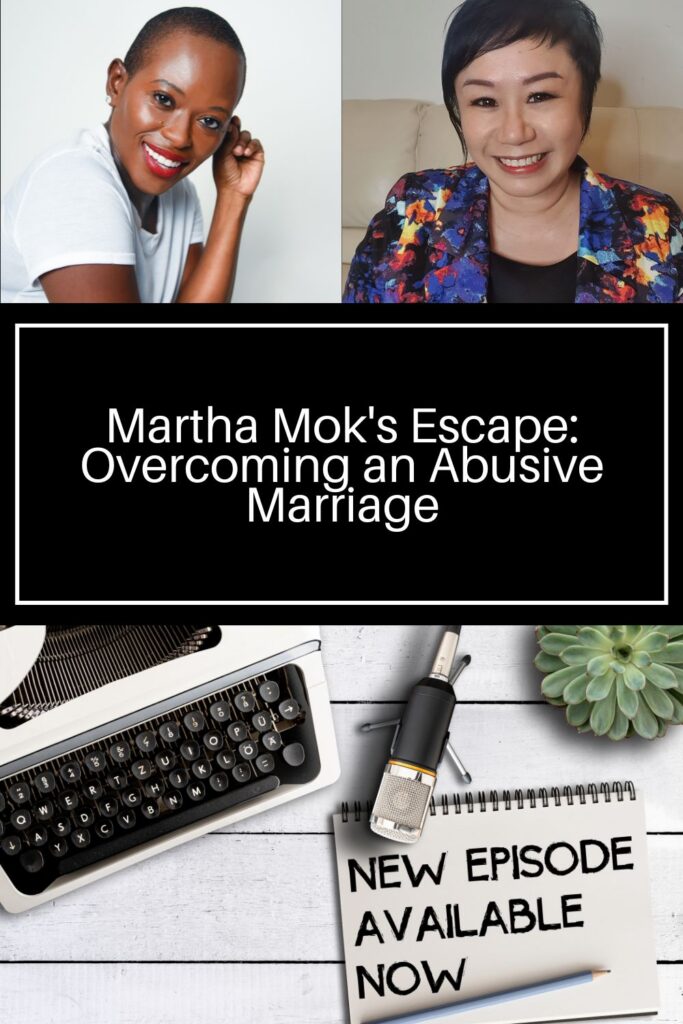
Martha Mok’s Escape: Overcoming an Abusive Marriage




From Silence to Success: Martha Mok’s Journey Out of an Abusive Marriage
Category: Interview | Source Episode: Martha Mok — Vulnerability and Success
To hear our conversation in real time, listen to the full episode below. Make sure you tune into the show. You’ll get all the raw, unfiltered moments and deeper insights.
Podcast Episode: Martha Mok: Vulnerability and Success
Some marriages show their true colors within the first ninety days. Martha Mok’s did — and she stayed for nineteen years anyway. On a recent episode of Sherley’s Show, Martha opened up about the marriage she almost didn’t survive, the childhood that shaped her tolerance for pain, and the decision on her fortieth birthday that finally set her free. Her story is a hard one, but it’s also proof that the woman staring at rock bottom is not the same woman she becomes.
The Red Flags Showed Up in Month Three
Martha met her first husband in Hong Kong when she was twenty-one. Within two and a half months he proposed, and three months into the marriage, he had already stopped coming home at night. Martha remembers waiting for him at a bus stop at three in the morning, hoping to catch sight of the bus that might finally bring him home. She calls that version of herself needy now, but at the time she had no frame of reference for what a healthy relationship was supposed to feel like — he was the only partner she had ever had.
That’s a pattern worth naming: the earliest version of a red flag is rarely a full-blown crisis. It’s usually a small, easy-to-explain-away moment that quietly asks you to accept less than what you deserve.
A Childhood That Taught Her to Endure
Long before her marriage, Martha had already learned how to survive in silence. She was bullied from age six through her early teens, so severely that classmates once vandalized her family’s front door and her father’s car. She was also sexually abused by a relative during childhood, a memory she says she buried so completely that she didn’t consciously revisit it until years later, once she began doing her own healing work.
By the time she met her husband, Martha had already spent most of her life being told, directly and indirectly, that she wasn’t worth protecting. Staying in an unhealthy relationship, she reflects now, wasn’t weakness. It was the only version of love she had ever seen modeled.
Why Nineteen Years
Martha’s honesty here is the heart of the story: she knew something was wrong within three months, and she stayed for nineteen years. Her husband was financially controlling and emotionally abusive, and as her confidence and income grew, he became more volatile rather than less.
If that timeline is hard to understand from the outside, it isn’t unusual. Psychologists describe a pattern called trauma bonding, in which cycles of harm followed by moments of calm or affection create a powerful, confusing attachment between a person and the partner hurting them — one that can make leaving feel far more complicated than simply walking away, as Psychology Today explains in its overview of the phenomenon. Martha also carried a promise she’d made to her husband’s dying mother, that she would look after him, a promise she held onto out of loyalty long after the marriage had stopped being safe.
The Turning Point
Martha’s fortieth birthday became the line in the sand. She looked honestly at her life and asked herself a blunt question: if she only had twenty years left, what did she actually want? The answer was simple — to be happy, to be free, and to find her own sense of belonging again, not belonging to someone else. That same year, she finally left.
Leaving Safely, With Almost Nothing
Martha didn’t leave with a financial cushion or a five-year plan. She left with a few hundred dollars, her cat, and a network of friends she was finally brave enough to ask for help. A student’s family helped her move. A friend covered two months of rent without being asked twice. Work came in at exactly the moments she needed it most.
Her advice for any woman in a similar position is practical: lean on trusted friends or neighbors, consider a separate phone line if your communication is being monitored, and remember that domestic violence hotlines and shelters exist specifically to help people plan a safe exit. The National Domestic Violence Hotline (800-799-7233) is available 24/7 for anyone who needs support thinking through their next step.
Learning What a Healthy Relationship Actually Feels Like
Martha admits she didn’t know how to date. Her first husband was the only relationship template she had, so she spent roughly a year meeting people and reading dozens of books on relationships, and by her own account, she ran from her now-partner more than once out of fear. What finally shifted things wasn’t finding someone who chased her back. It was learning the difference between being cared for and being controlled, and slowly unlearning the instinct to treat every red flag as a five-alarm fire.
The Smile That Doesn’t Lie
Martha’s closing image says more than any single lesson could. Looking back through a decade of old photos, she couldn’t find one where her smile reached her eyes, not until the photos taken after she met her current partner. The smile doesn’t lie, she says now. It’s a reminder that healing doesn’t always announce itself with a big declaration. Sometimes it shows up quietly, in a photo, in a birthday party at forty, in the first time in your adult life that you feel safe enough to be loud in a room.
Key Takeaways
- Red flags rarely start big. Notice the small ones, the ones you’re most tempted to explain away.
- Staying doesn’t mean weakness. Loyalty, fear, and trauma can bind people to a relationship long after it has stopped being safe.
- Leaving is a process, not a single moment. Martha’s exit was built on friends, strangers, and small acts of trust before it ever became certainty.
- Healing changes how you show up in new relationships, including learning to receive real care without treating it as a threat.
- You are not responsible for what was done to you, and you are allowed to ask for help.
If Any of This Feels Familiar
If part of Martha’s story hits close to home, please know you don’t have to sit with it alone. A licensed therapist or a domestic violence advocate can offer support that goes beyond what any podcast episode or blog post ever could. The National Domestic Violence Hotline is available 24/7 at 800-799-7233 for anyone who wants to talk through their options, confidentially and at their own pace.
Listen to the Full Conversation
Martha’s complete story, her voice, her tears, and the parts of this conversation too textured for a blog post to fully capture, is on this week’s episode of Sherley’s Show:
Listen to “Martha Mok: Vulnerability and Success” →
More From Sherley’s Show
Say Goodbye to Being the Side Chick
How to Make a Relationship Work Even After a Heartbreak
Sources
National Domestic Violence Hotline, “Why People Stay in an Abusive Relationship,” thehotline.org
Psychology Today, “Trauma Bonding,” psychologytoday.com
Sherley’s Show is learning and growing every single day. We aim to uplift all marginalized voices both on this podcast and in real life. Please note that we are always striving to change the problematic language that society has internalized in us. Thank you for your patience as we aim to strip certain phrases from our vocabulary.
Would you like to be a guest
Are you interested in getting your opinion out about a particular topic but don’t know how to do so? If so, here is an opportunity to do so to share your point of view, PLUS get your message and voice out there. It is always a great way to know about different perspectives and enrich ourselves through knowledge sharing.
Submit your relationship question.
Sherley’s Show provides an atmosphere where every woman is comfortable growing into their best self. Sherley’s Show is a no judgment podcast where we discuss how to rise strong out of all types of obstacles that come with relationships. Through personal life experiences and discussions ranging from infidelity, trust, forgiveness, sex, heartbreak, self love, therapy and more, we offer words of empowerment as you strive to build and maintain all of the relationships in your life. You may be going through something that is unique and difficult. Sharing your story gives others comfort and could also be helping someone else. Let them know they are not alone. Everyone has a story, do not let fear hold you back.
Disclosure: This post contains affiliate links, I will get a commission if you decide to make a purchase through any of my links, at no cost to you. Please read my disclosure for more info.

Want to launch a podcast?
FRee Resource!
Download Sherley’s FREE Bootcamp Podcast Launch Checklist! The no-fluff, step-by-step roadmap for busy women ready to finally launch the podcast they’ve been dreaming about.
At Sherley's Show, we believe that when women feel seen and supported, anything is possible. Whether you're tuning in for inspiration, education, or community—you belong here.



next

say goodbye to being the side chick
When you find yourself really settling with the reality that you are the side chick, when you find yourself tired of the games and/or the complacency, it’s time to ask yourself a few questions.
next

why is therapy important?
Solo therapy, partnered therapy, or group therapy... what exactly are the benefits? If you’re still on the fence about whether or not you should go and if therapy can really do anything for you... this post is for you.
next
CONNECT
elsewhere:
STAY AWHILE AND READ
THE BLOG

BINGE
THE PODCAST
The place where we chat about obstacles that come out of relationships and how to rise up from them. Self-love, marriage, infidelity, sex, heartbreak, and more.

HANG OUT ON

Comments +