
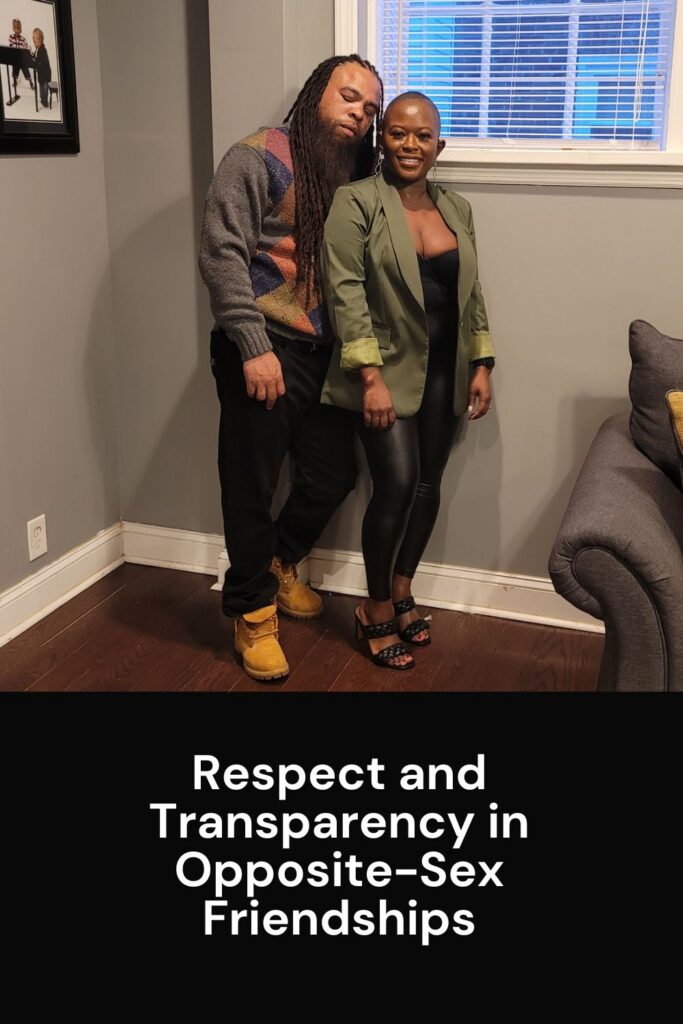
Respect and Transparency in Opposite-Sex Friendships




How to Set Boundaries With Friends of the Opposite Sex in a Relationship (Without Losing Yourself)
“The ‘Advice Time Series’ is for informational and entertainment purposes only. The perspectives, opinions, and discussions shared in this series are based solely on personal life experiences and do not constitute professional therapy, counseling, psychological guidance, or any form of licensed professional advice. Nothing shared in this series should be used as a substitute for professional help. If you are experiencing a personal or emotional crisis, please seek the support of a licensed therapist or counselor. Sherley’s Show is not responsible for any decisions made or outcomes experienced based on the content of this series.”
Sherley’s Show — where real conversations lead to real change.
Sherley’s Show · Episode Recap
To hear this conversation in real time, listen to the full episode. Make sure you tune into the show. You’ll get all the raw, unfiltered moments and deeper insights.
Femme Parler Podcast was rebranded in 2025 and is now Sherley’s Show
Podcast Blog post: Advice Time Series: Relationship
Let’s have the conversation that most couples tiptoe around but never actually finish: Can you have friends of the opposite sex while in a committed relationship? And if so, what does respect actually look like?
On a recent episode of Sherley’s Show, host Sherley and her partner sat down for an unfiltered, no-holds-barred discussion about exactly this. What followed was one of the most honest conversations about friendships, jealousy, boundaries, and trust you’ll ever hear. If you’ve ever felt confused, guilty, or conflicted about maintaining opposite-sex friendships while being in a committed relationship, this one is for you.
Also listent to: Choosing the Right Support: Therapist, Counselor, or Coach
It’s Not About Ownership — It’s About Respect
One of the most powerful things Sherley opened with was a reframe that more people in relationships need to hear: being in a relationship is not an ownership agreement. You are still a full human being with the right to choose your friends. Nobody gets to dictate who you can and cannot talk to simply because you’re in a partnership with them.
But — and this is where the real conversation begins — freedom in a relationship does not mean freedom from accountability.
What truly matters, Sherley argues, is not whether you have friends of the opposite sex, but how you conduct yourself within those friendships. Are you acting as though you’re single? Are you placing yourself in situations that disrespect the relationship you’ve built? Are you hiding people, conversations, or plans from your partner? These are the questions that matter.
The goal isn’t to eliminate friendships. The goal is to make sure that your relationship is always protected by your choices, even when your partner isn’t in the room.
What “Respectful” Actually Looks Like
So what does a respectful friendship with someone of the opposite sex look like when you’re in a relationship? Based on the conversation on Sherley’s Show, here are the core principles that came up:
You should never conduct yourself as though you’re single. This doesn’t mean you walk around announcing your relationship every five minutes. It means your behavior, your tone, your late-night texts, and your emotional availability should not be giving mixed signals to someone who may be developing feelings for you. Behaving like you’re available is an invitation — whether you intend it or not.
Your partner should always know where you are and who you’re with. Transparency isn’t a cage. It’s a sign of respect. When your significant other is aware of your friendships, knows who your friends are, and isn’t left in the dark, trust is built — not broken. Secrets breed suspicion. Openness breeds security.
Your friend should know you’re in a relationship. This seems obvious, but it’s surprisingly common for people to keep their relationship status ambiguous around friends they may have had history with, or friends who might have feelings. Being clear and upfront with your friend about where your life is protects everyone involved.
Make yourself known — but do it naturally. Sherley shared something personal here: when a male friend of hers was in a relationship and they happened to be on a call together and his partner was in the background, Sherley immediately introduced herself. No awkwardness. No weirdness. Just a natural acknowledgment: I exist, I’m a friend, there’s nothing to hide here. That level of ease and transparency is what healthy, boundaried friendships look like.
The Truth About Who Sets the Tone
One of the most eye-opening moments of the episode came when Sherley said something that needs to be repeated loudly:
“Nobody gives a damn about your relationship if you don’t set the boundaries yourself.”
This is real, and this is important. People outside of your relationship are not responsible for protecting it. Your friends — of any gender — are not responsible for knowing your limits if you’ve never communicated them. If you want your friendships and your relationship to coexist peacefully, the responsibility starts and ends with you.
If you’ve never told your opposite-sex friend that you won’t be texting them at 2 AM, they don’t know that’s a line. If you’ve never made it clear that your partner comes first, they may not prioritize that reality. The tone you set in every friendship determines whether or not that friendship will ever threaten what you’ve built.
Setting the tone is not being controlling. It is not being paranoid. It is being a committed, communicative partner who values their relationship enough to protect it — even from the outside in.
When Friendships Have History: Navigating Past Sexual or Romantic Connections
Here’s where the conversation got especially honest. What about friends you’ve been physically or emotionally intimate with in the past? This is a category that requires an even higher level of awareness.
Both Sherley and her partner agreed: if there has been a sexual history with someone, maintaining that friendship while in a committed relationship requires a level of transparency that most people are not comfortable having. It’s not impossible, but it takes intentional conversation, full disclosure to your partner, and consistent respect for the new dynamic.
The problem isn’t always that people have bad intentions. Often, the problem is that comfort becomes intimacy, and intimacy becomes a complication that no one planned for. The ease you feel around someone you’ve been with doesn’t disappear just because you’ve both moved on. Being aware of that dynamic and maintaining clear emotional and physical limits is non-negotiable.
Friendships, Jealousy, and the Reality of Insecurity
The conversation took a turn toward jealousy — specifically, the way jealousy often masquerades as control, and how partners who seem unbothered sometimes actually care more than they let on.
In their relationship, Sherley admitted that even though her partner often comes across as laid-back and non-controlling, there have absolutely been moments where jealousy surfaced. That’s normal. That’s human. The question is not whether your partner will ever feel jealous — they will. The question is whether you are creating environments that invite jealousy unnecessarily.
When your partner questions why you’re talking to a specific person every day, that’s not always insecurity speaking. Sometimes, it’s a legitimate and valid concern. A daily phone relationship with someone of the opposite sex, while in a committed partnership, warrants a conversation. Not a fight. Not defensiveness. A conversation.
Sherley’s take on this was nuanced: if your male or female friend is in a relationship, you should naturally scale back your communication because they are now building a life with someone else. Not because you’re no longer friends, but because respecting their relationship means not positioning yourself as a constant emotional presence in their daily life.
The Bigger Conversation: Why People Step Outside Relationships
The episode took a deeply candid turn when the topic of infidelity was addressed directly. Both Sherley and her partner were transparent about the fact that infidelity had occurred on both sides of their relationship at different points. Rather than shame or blame, what stood out most was the why behind the behavior — and what it revealed about what was missing.
One of the most raw quotes from the episode: when someone stops finding peace at home, they go looking for it somewhere else. And that somewhere else — whether it’s a friendship that has gone too far, or an entirely separate relationship — becomes a distraction that eventually creates even more chaos.
This isn’t justification for cheating. It’s a call to address what’s broken at home before it breaks everything else. If you’re finding yourself emotionally invested in someone outside of your relationship, that is a sign that something inside the relationship needs honest attention. Not an outside distraction — an honest conversation with your partner.
What Real Friendship With the Opposite Sex Looks Like
So what does it look like when it’s done right? When it’s actually just friendship, with no blurred lines, no secret conversations, and no reason for your partner to feel uneasy?
It looks like a friend your partner has met, or at minimum knows about. It looks like interactions that you’d have the exact same way whether or not your partner was standing right next to you. It looks like a friendship where boundaries aren’t just understood — they’re lived. Where your friend respects your relationship, you respect their time and space, and no one is acting single when they’re not.
It looks like what Sherley described with her one true male friend: someone who felt like a brother, where certain limits were simply part of the foundation of the friendship. No awkward conversations needed, because the respect was already built into the dynamic.
That’s the goal. Not isolating yourself from everyone of the opposite sex, but being intentional enough about the friendships you maintain that your partner never has a reason to question what’s really going on.
Key Takeaways From This Episode
Here’s what Sherley’s Show wants you to walk away with after this conversation:
1. You can have opposite-sex friendships in a relationship — but you set the tone. No one outside of your relationship will protect it if you don’t establish the standard first. Be clear about your boundaries, communicate them to your friends, and live them consistently.
2. Transparency is not a threat to your independence — it’s a sign of maturity. Letting your partner know who you’re spending time with, making sure they’ve met or are at least aware of your friends, and never creating situations where secrets need to be kept is how trust is built over time.
3. If a friendship is making your partner uncomfortable, the conversation is overdue. Rather than dismissing your partner’s concerns as jealousy or insecurity, listen. Ask what they’re feeling. Sometimes the most loving thing you can do is acknowledge that something needs to change — even when you didn’t mean for it to get there.
4. When something is missing at home, address it at home. If you find yourself turning to someone outside of your relationship for the emotional intimacy, peace, or attention that’s lacking in your partnership, use that as a signal to address what’s broken — not a reason to step outside the relationship.
5. Real friendship respects what you’ve built. A true friend — regardless of gender — will honor your relationship. They’ll back off when you’re building a life with someone. They’ll introduce themselves. They won’t create drama or test your loyalty. If someone calling themselves your friend is doing the opposite, that’s worth examining.
Final Thoughts
Opposite-sex friendships are not the enemy of committed relationships. Dishonesty is. Disrespect is. Avoidance of the real conversations is.
When both partners are secure, communication is open, and the tone of every friendship is set by someone who is fully committed to the relationship they’re building — friendships with anyone become a non-issue.
At Sherley’s Show, the mission has always been to bring the real conversations to the surface so that women — and the people who love them — can build better, stronger, more honest relationships. This episode was no different.
Whether you agreed with every word or found yourself pushed and challenged, that’s exactly the point.
Ready to Keep the Conversation Going?
This is just one conversation in an ongoing series of real, raw discussions about relationships, self-love, boundaries, trust, and rising strong through every obstacle that comes your way.
Join the community, listen to full episodes, and share your own takeaways at Sherley’s Show
Have thoughts on this episode? Disagree with something you heard? We want to hear it all. Head to the website, find us in the community, and drop your perspective. The more voices in this conversation, the better.
Don’t forget to subscribe so you never miss an episode — conversations straight from the heart, no filter.
Love yourself. Voice yourself. Be yourself. — Sherley’s Show
Sherley’s Show is learning and growing every single day. We aim to uplift all marginalized voices both on this podcast and in real life. Please note that we are always striving to change the problematic language that society has internalized in us. Thank you for your patience as we aim to strip certain phrases from our vocabulary.
Would you like to be a guest
Are you interested in getting your opinion out about a particular topic but don’t know how to do so? If so, here is an opportunity to do so to share your point of view, PLUS get your message and voice out there. It is always a great way to know about different perspectives and enrich ourselves through knowledge sharing.
Submit your relationship question.
Sherley’s Show provides an atmosphere where every woman is comfortable growing into their best self. Sherley’s Show is a no judgment podcast where we discuss how to rise strong out of all types of obstacles that come with relationships. Through personal life experiences and discussions ranging from infidelity, trust, forgiveness, sex, heartbreak, self love, therapy and more, we offer words of empowerment as you strive to build and maintain all of the relationships in your life. You may be going through something that is unique and difficult. Sharing your story gives others comfort and could also be helping someone else. Let them know they are not alone. Everyone has a story, do not let fear hold you back.
Disclosure: This post contains affiliate links, I will get a commission if you decide to make a purchase through any of my links, at no cost to you. Please read my disclosure for more info.

Want to launch a podcast?
FRee Resource!
Download Sherley’s FREE Bootcamp Podcast Launch Checklist! The no-fluff, step-by-step roadmap for busy women ready to finally launch the podcast they’ve been dreaming about.
At Sherley's Show, we believe that when women feel seen and supported, anything is possible. Whether you're tuning in for inspiration, education, or community—you belong here.



next

say goodbye to being the side chick
When you find yourself really settling with the reality that you are the side chick, when you find yourself tired of the games and/or the complacency, it’s time to ask yourself a few questions.
next

why is therapy important?
Solo therapy, partnered therapy, or group therapy... what exactly are the benefits? If you’re still on the fence about whether or not you should go and if therapy can really do anything for you... this post is for you.
next
CONNECT
elsewhere:
STAY AWHILE AND READ
THE BLOG

BINGE
THE PODCAST
The place where we chat about obstacles that come out of relationships and how to rise up from them. Self-love, marriage, infidelity, sex, heartbreak, and more.

HANG OUT ON

Comments +