
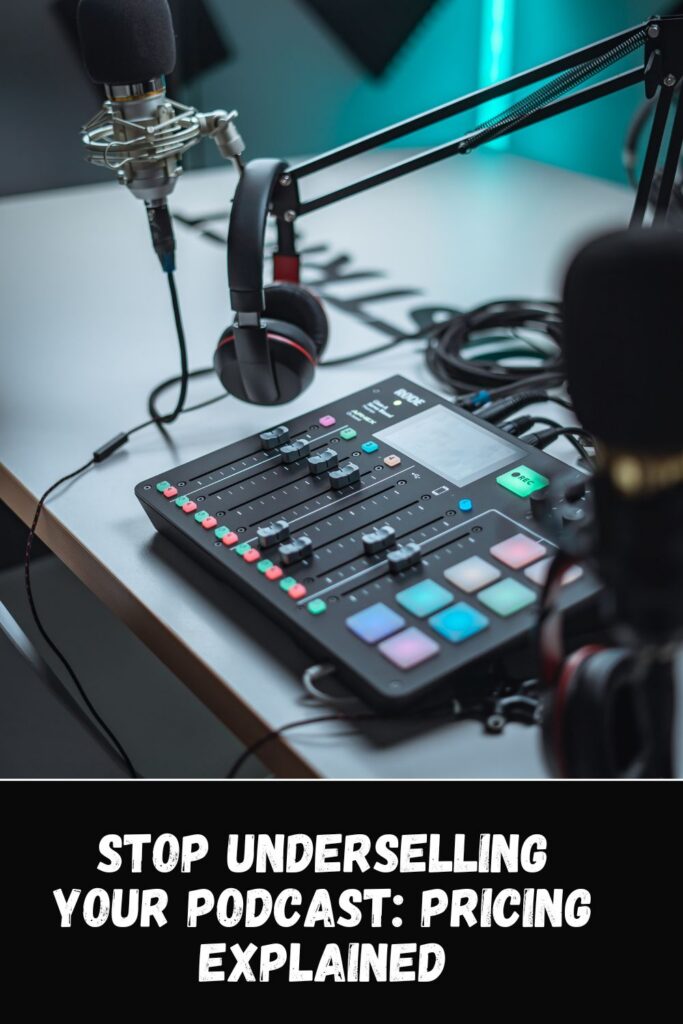
Stop Underselling Your Podcast: Pricing Explained




How to Price Your Podcast Sponsorships Without Underselling Yourself
You finally get the email every podcaster dreams about. A brand loves your show, your audience is exactly who they want to reach, and they ask one simple question: “What are your rates?”
And suddenly your stomach drops. You have no idea. So you pull a number out of thin air, second-guess it, and either price yourself so low you barely cover your editing software or so high you scare off a perfectly good partner. Sound familiar?
Here is the truth most new podcasters never hear: pricing your sponsorships is not about guessing what feels comfortable. It is about understanding your value, knowing the benchmarks, and asking with confidence. Underselling does not just cost you money on one deal. It anchors every future conversation to a number that is too small and quietly tells brands your work is worth less than it is.
This guide walks you through exactly how to price your podcast sponsorships so you stop leaving money on the table and start treating your show like the business it is.
Why So Many Podcasters Undersell Themselves
Before we get to numbers, let us name what is really happening. Most podcasters underprice for three reasons.
First, they have no benchmarks. When you do not know what the industry actually pays, every number feels like a shot in the dark, so you default to “cheap” to avoid losing the deal.
Second, they confuse audience size with worth. Podcasters with a few hundred dedicated listeners often assume they have nothing to sell. In reality, a small, highly engaged, niche audience can be far more valuable to the right brand than a huge, scattered one.
Third, they treat the podcast as a hobby that happens to make a little money, rather than a business. If you have been building toward monetization, you already know your show is an asset. Pricing is simply where that belief meets a dollar figure. (If you are still on the fence about treating your show as a revenue source, my post Why You Should Add a Podcast to Your Business is a good place to start.)
The fix for all three is the same: information. Let us get you some.
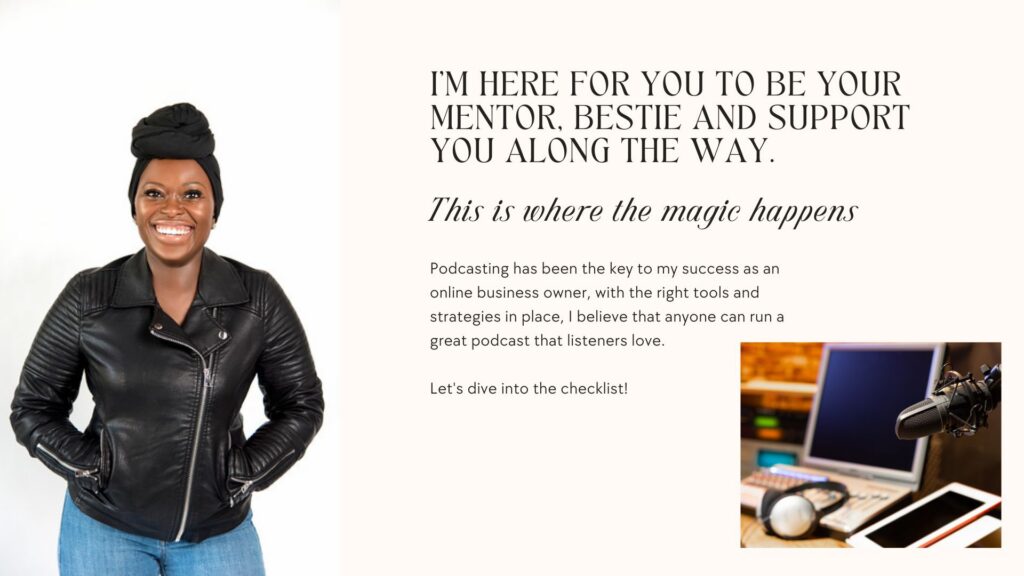
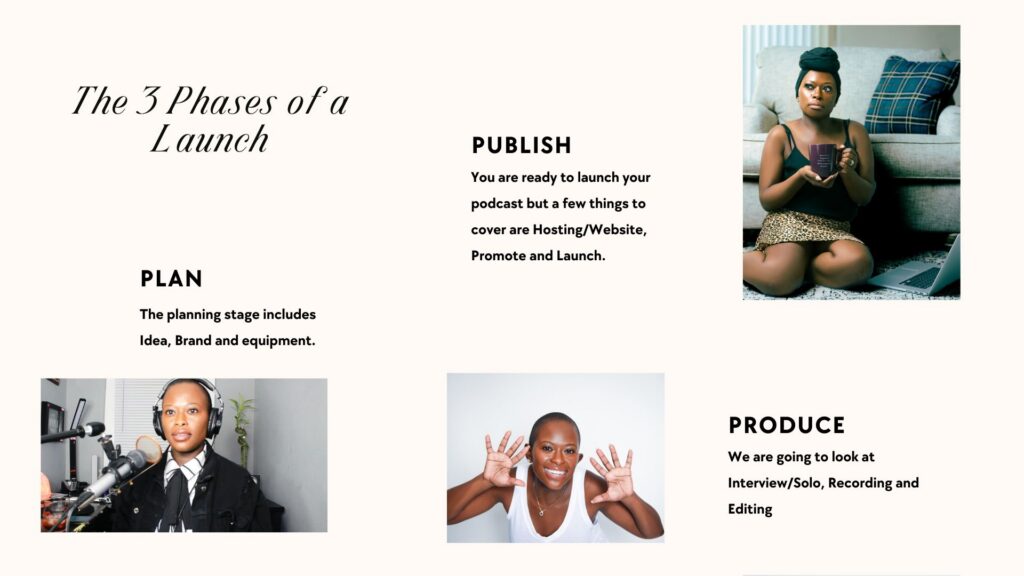
Grab the checklist featured above → Free checklist
Or see all free resources → Free Resources
The Two Ways Podcast Sponsorships Are Priced
Almost every sponsorship deal you will ever encounter uses one of two pricing models. You need to understand both.
1. The CPM Model (Cost Per Mille)
CPM stands for “cost per mille,” which is just a fancy way of saying cost per one thousand downloads. It is the industry standard. You charge a set rate for every 1,000 downloads an episode earns, typically counted within the first 30 days after release.
So if your rate is $25 CPM and your episode gets 4,000 downloads, the math is simple: 4,000 divided by 1,000 equals 4, and 4 multiplied by $25 equals $100 for that placement.
CPM works best once you have reliable, consistent download numbers, and it is the model larger brands and ad networks expect.
2. The Flat-Rate Model
With a flat rate, you skip the download math entirely and charge one fixed price for the placement, regardless of exact download counts. According to the team at Fame, flat-rate sponsorships are especially common with smaller and highly specialized shows because they offer predictability for both sides and reward a deep, loyal connection with a specific audience.
If you are early in your monetization journey, flat rates are often your friend. They let you price based on the value of your niche audience rather than a download number that may still be growing.
Know Your Benchmarks: What Podcast Ads Actually Cost in 2026
Here is the part that takes the guesswork out of the conversation. Podcast ad placements are usually priced by where they fall in the episode, and each placement carries a different going rate.
Based on current 2025–2026 industry rate analyses from Ad Results Media, Adopter Media, and Acast, the typical ranges look like this:
- Pre-roll (a short ad at the very start, usually 15–30 seconds): roughly $15–$30 CPM. Everyone hears it, but it is shorter and more scripted.
- Mid-roll (a 60-second-ish ad in the middle of the episode): roughly $25–$40 CPM, and often the highest-value spot. Listeners are most engaged here and least likely to skip, which is why mid-rolls reportedly convert two to three times better than other placements, according to Castos.
- Post-roll (an ad at the end): roughly $10–$20 CPM, since some listeners drop off before the episode finishes.
Your niche matters enormously, too. General entertainment and comedy shows tend to sit at the lower end. But business, finance, and B2B shows can command $35–$55+ CPM because advertisers pay a premium to reach decision-makers and buyers, per rate data compiled by Podsqueeze. If your audience has real purchasing power or a specific professional focus, that is leverage. Use it.
One more detail worth your time: longer, story-driven host-read ads (60–90 seconds) consistently outperform robotic 30-second reads, which is exactly why advertisers will pay more for them. Your authentic voice is not a nice-to-have. It is the product.
You Do Not Need a Huge Audience to Charge Real Money
This is the mindset shift that changes everything. There is a stubborn myth that you need tens of thousands of downloads before a brand will pay you a cent. The data says otherwise.
Consider this: in the US, roughly 44% of all podcast ad spend goes to just the top 500 shows, yet those shows reach only about 12% of the total podcast audience, according to Acast. That means the overwhelming majority of real, reachable, engaged listeners are sitting with creators like you, not the celebrity mega-shows. Smart brands know this and are increasingly buying based on the audience they want to reach rather than chasing big names.
Even at modest numbers, the money is real. Castos notes that a show with around 500 downloads per episode can realistically earn $50–$150 per episode from a direct niche sponsor that is a perfect fit for the audience. You do not have to wait until you are “big enough.” You have to be the right fit.
And the audience trust is there to back it up: an often-cited industry figure holds that roughly 74% of podcast listeners have taken action after hearing a podcast ad, whether visiting a website or buying a product, as reported by awisee. That kind of action is exactly what brands are paying for.
How to Calculate Your Own Rate, Step by Step
Let us turn all of this into a number you can actually quote.
Step 1: Pull your real download numbers. Look at your average downloads per episode within the first 30 days. Use an honest, consistent average, not your single best episode.
Step 2: Pick your placement and a CPM from the benchmark ranges above. If you are in a business or niche professional space, you can comfortably aim toward the higher end.
Step 3: Do the math. Divide your downloads by 1,000, then multiply by your chosen CPM. Example: 2,500 downloads ÷ 1,000 = 2.5, then 2.5 × $30 mid-roll CPM = $75 per placement.
Step 4: Consider a flat rate instead if your downloads are still modest. If 2,500 downloads at $30 CPM only nets $75 but your audience is a dream fit for a niche brand, a flat rate of $150–$250 per episode may be entirely fair, because you are pricing the relationship and relevance, not just the raw number.
Step 5: Build packages, not one-offs. A single ad is easy to skip. A four-episode package, or a pre-roll-plus-mid-roll bundle, raises your total deal value and gives the brand the repetition that actually drives results.
Create a Simple Media Kit So You Are Never Caught Off Guard
The reason that “what are your rates?” email feels so stressful is that you are answering from scratch every time. The fix is a one-page media kit you prepare before anyone asks.
Your media kit should include your average downloads per episode, a short audience description (who they are, what they care about, where they are located), your engagement highlights, your ad formats and rates, and one or two proof points if you have run sponsorships before. With this ready, you respond to brand inquiries in minutes with confidence instead of panic.
If creating professional assets like this feels overwhelming on top of producing episodes, that is completely normal, and it is exactly the kind of behind-the-scenes work you can hand off as you grow. My post on how to sustain your podcast by delegating tasks breaks down what to keep and what to outsource.
Negotiate Without Caving
When the conversation gets to numbers, hold your ground gracefully.
Lead with your standard rate, not a discount. If a brand pushes back, do not slash your price. Instead, adjust the package: offer fewer placements, a shorter ad read, or a different placement at the same per-unit rate. This protects your value while still giving you room to say yes.
Offer value-adds instead of discounts when you can: a social media mention, a newsletter inclusion, or a shout-out in your show notes can sweeten a deal without lowering your core rate. (For more on weaving paid partnerships into a broader promotion strategy, see Organic vs. Paid Marketing for Podcasters.)
And remember: a brand that only wants to work with you if you give your work away for free is not a partner. It is a warning sign.
Protect Your Value for the Long Run
Pricing is not a one-time decision. As your show grows, your rates should grow with it. Revisit your numbers every quarter. Track which sponsors saw results so you can use those wins as proof. And never inflate your download numbers to land a deal, because brands increasingly ask for verified, third-party metrics, and your credibility is worth more than any single check.
Above all, keep the trust you have built with your listeners at the center. The reason your sponsorships are valuable is that your audience believes you. Over-stuffing episodes with ads or promoting products you do not believe in will cost you that trust, and your trust is the entire engine behind your pricing power.
Frequently Asked Questions
How much should I charge for a podcast sponsorship? It depends on your downloads, ad placement, and niche. As a 2026 benchmark, mid-roll host-read ads run roughly $25–$40 CPM (per 1,000 downloads), pre-roll $15–$30, and post-roll $10–$20, while business and niche shows can command $35–$55+. If your downloads are modest, a flat rate per episode is often fairer than CPM.
What is a good CPM rate for a small podcast? Small and niche shows often start lower on CPM but make up for it with engagement. Many price a mid-roll in the $20–$30 CPM range, or skip CPM entirely and charge a flat $50–$150+ per episode when the audience is a strong fit for the sponsor.
Can you get podcast sponsors with a small audience? Yes. The majority of engaged podcast listeners are with mid-size and smaller shows, not the celebrity giants. A perfect-fit niche sponsor will often pay well even at a few hundred downloads per episode, because relevance and trust matter more than raw reach.
How do I create a podcast media kit? Include your average downloads per episode, a short description of your audience, engagement highlights, your ad formats and rates, and one or two results from past sponsors. Keep it to one page so you can respond to “what are your rates?” in minutes.
Key Takeaways
- Underselling is usually an information problem, not a value problem. Once you know the benchmarks, you can price with confidence.
- Learn both pricing models. CPM (cost per 1,000 downloads) suits shows with steady numbers; flat rates suit smaller, niche, highly engaged audiences.
- Know the 2026 ranges: roughly $15–$30 CPM for pre-roll, $25–$40 for mid-roll, $10–$20 for post-roll, with business and niche shows commanding $35–$55+.
- You do not need a massive audience. The majority of engaged listeners are with mid-size and smaller shows, and a perfect-fit niche sponsor can pay $50–$150+ per episode even at modest download counts.
- Prepare a one-page media kit so you never answer “what are your rates?” from scratch again.
- Negotiate the package, not the price. Protect your rate, offer value-adds, and walk away from partners who only want free work.
Ready to Build a Podcast Worth Sponsoring?
Confident pricing starts with a show that is built on a solid foundation, and that is exactly what I help women create.
- Grab my free resources. Start with the free Podcast Bootcamp Launch Checklist, your no-fluff, step-by-step roadmap to launching the show you have been dreaming about. Browse all my free resources here.
- Get on the ebook waitlist. My new ebook, Find Your Voice: The Woman Behind the Mic, is a 10,000-word step-by-step roadmap to plan, prepare, and launch your podcast with confidence — launching July 1, 2026 for $67. Get on the waitlist here so you are first in line.
- Join my free webinar. Want to learn how to launch and grow a podcast that brands actually want to partner with? Reserve your seat for my free webinar here.
- Work with me one-on-one. If you are ready to fast-track your growth and monetization, my podcast coaching is built to take you from “what are my rates?” to “here is my media kit” with total confidence.
You have something brands want. Let us make sure you are paid what it is worth.
Sources
Outside sources:
- Castos — Podcast Ads: The Complete Guide to Monetizing Your Show: https://castos.com/podcast-ads-guide/
- Ad Results Media — How Much Do Podcast Ads Cost: https://www.adresultsmedia.com/news-insights/how-much-do-podcast-ads-cost/
- Adopter Media — Podcast Advertising Rates Explained: https://adopter.media/podcast-advertising-rates-explained/
- Acast — Podcast Advertising: The Ultimate Guide: https://advertise.acast.com/news-and-insights/podcast-advertising-the-ultimate-guide
- Fame — Understanding Podcast Advertising Cost: https://www.fame.so/post/podcast-advertising-cost
- Podsqueeze — Podcast Ad Rates Calculator: https://podsqueeze.com/podcast-ad-rates-calculator/
- awisee — Podcast Advertising Rates: https://awisee.com/blog/podcast-advertising-rates/
From the Sherley’s Show business section:
- Why You Should Add a Podcast to Your Business: https://sherleysshow.com/why-you-should-add-a-podcast-to-your-business/
- How to Sustain Your Podcast by Delegating Tasks: https://sherleysshow.com/how-to-sustain-your-podcast-by-delegating-tasks/
- Organic vs. Paid Marketing for Podcasters: https://sherleysshow.com/organic-vs-paid-marketing-for-podcasters/
Sherley’s Show is learning and growing every single day. We aim to uplift all marginalized voices both on this podcast and in real life. Please note that we are always striving to change the problematic language that society has internalized in us. Thank you for your patience as we aim to strip certain phrases from our vocabulary.
Would you like to be a guest
Are you interested in getting your opinion out about a particular topic but don’t know how to do so? If so, here is an opportunity to do so to share your point of view, PLUS get your message and voice out there. It is always a great way to know about different perspectives and enrich ourselves through knowledge sharing.
Submit your relationship question.
Sherley’s Show provides an atmosphere where every woman is comfortable growing into their best self. Sherley’s Show is a no judgment podcast where we discuss how to rise strong out of all types of obstacles that come with relationships. Through personal life experiences and discussions ranging from infidelity, trust, forgiveness, sex, heartbreak, self love, therapy and more, we offer words of empowerment as you strive to build and maintain all of the relationships in your life. You may be going through something that is unique and difficult. Sharing your story gives others comfort and could also be helping someone else. Let them know they are not alone. Everyone has a story, do not let fear hold you back.
Disclosure: This post contains affiliate links, I will get a commission if you decide to make a purchase through any of my links, at no cost to you. Please read my disclosure for more info.

Want to launch a podcast?
FRee Resource!
Download Sherley’s FREE Bootcamp Podcast Launch Checklist! The no-fluff, step-by-step roadmap for busy women ready to finally launch the podcast they’ve been dreaming about.
At Sherley's Show, we believe that when women feel seen and supported, anything is possible. Whether you're tuning in for inspiration, education, or community—you belong here.


next

say goodbye to being the side chick
When you find yourself really settling with the reality that you are the side chick, when you find yourself tired of the games and/or the complacency, it’s time to ask yourself a few questions.
next

why is therapy important?
Solo therapy, partnered therapy, or group therapy... what exactly are the benefits? If you’re still on the fence about whether or not you should go and if therapy can really do anything for you... this post is for you.
next
CONNECT
elsewhere:

STAY AWHILE AND READ
THE BLOG

BINGE
THE PODCAST
The place where we chat about obstacles that come out of relationships and how to rise up from them. Self-love, marriage, infidelity, sex, heartbreak, and more.

HANG OUT ON

Comments +