
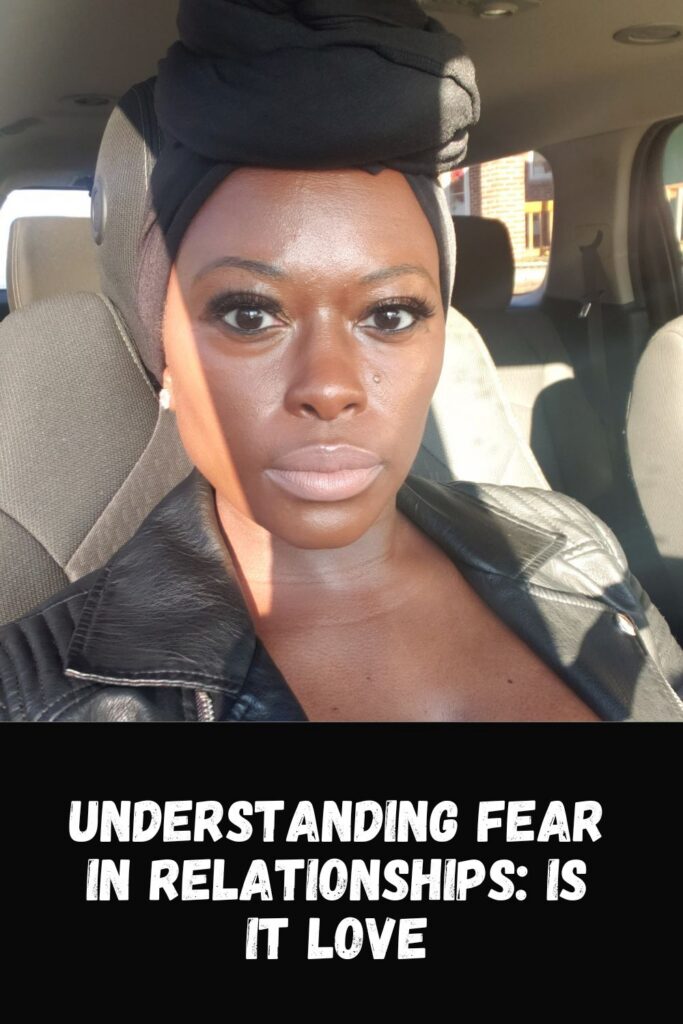
Understanding Fear in Relationships: Is It Love




Signs You’re Staying Out of Fear, Not Love
This content is shared for storytelling, educational, and entertainment purposes only and is not a substitute for professional counseling or therapy.
Fear is remarkably good at disguising itself as love. It borrows love’s language, mimics its intensity, and shows up in the body in similar ways — a tightness in the chest at the thought of losing someone, a pull to stay close, a resistance to change. This is exactly why so many people stay in relationships that no longer serve them without ever consciously deciding to: the fear feels enough like love that it never gets questioned.
Telling the two apart isn’t always intuitive, especially from inside the relationship. But there are honest, recognizable signs that distinguish a decision to stay rooted in love from a decision to stay rooted in fear — and getting clear on which one is actually driving things changes what happens next.
It’s worth saying plainly: needing security, stability, and companionship is not a character flaw, and wanting those things doesn’t automatically mean fear is running the show. Every healthy relationship provides some measure of safety. The distinction isn’t between wanting safety and not wanting it — it’s between a relationship that provides safety alongside genuine connection, and one where safety is the only thing left holding two people together.
Fear of Being Alone vs. Genuine Desire to Be With This Person
One of the clearest signals is what the relationship is actually being weighed against. If the honest comparison is “this relationship” versus “being single,” and being single feels unbearable regardless of who the partner is, that’s fear of being alone doing the work, not love for this specific person. Love is specific — it’s rooted in who someone actually is. Fear of being alone is not specific at all; it would attach to almost anyone who was willing to stay.
This particular fear often has roots that predate the current relationship entirely. For some people, being alone was genuinely unsafe at some point in their history — financially, emotionally, or otherwise — and the nervous system learned early that partnership equals survival. That history is real and deserves compassion, not dismissal. But a fear that made sense at twenty-two, or in a very different set of circumstances, doesn’t automatically still apply to the relationship in front of you today. Part of the work is separating the old, learned alarm from an accurate read of the current situation.
The Comfort of the Familiar, Even When It Hurts
There’s a specific and often overlooked version of fear-based staying that has less to do with the partner and more to do with the devil-you-know logic. A relationship that’s painful in familiar, predictable ways can feel safer than the unknown territory of starting over — new dynamics, new uncertainty, the discomfort of not knowing what comes next. The mind often treats predictability as safety, even when what’s predictable is actually harmful. This is part of why people sometimes stay in relationships that are clearly unhealthy by any outside measure: the specific shape of the pain is at least familiar, and familiar has a way of masquerading as safe.
Recognizing this pattern doesn’t mean every difficult relationship should end. It means being honest about whether “I know what to expect” is doing more work in the decision to stay than “this is genuinely good for me.”
Staying Because Leaving Feels Like Failure
For some people, the relationship itself has become secondary to what leaving would represent — admitting the relationship didn’t work, disappointing family who invested in the idea of this partnership, starting over at an age or life stage that feels daunting. None of these fears are irrational. But none of them are love either. They’re understandable, human fears about failure and starting over that have gotten tangled up with the relationship itself.
This particular fear often carries an unspoken audience — the people who will have opinions, the story that will need to be told at family gatherings, the sense of public verdict on a private decision. It’s worth separating what you actually want from what you’re afraid other people will think, because those are two different inputs that deserve to be weighed differently, not treated as the same consideration.
The Relief Test
A useful, if uncomfortable, exercise: imagine the relationship ending cleanly and painlessly tomorrow, with no logistics to sort out and no one to answer to about the decision. Notice the first honest emotional response, before the guilt or the second-guessing sets in. Is it grief, a genuine sense of loss for this specific person? Or is there a flicker of relief underneath the fear, however small? That first honest flicker tends to be more reliable information than the story being told consciously about why the relationship matters.
This exercise works precisely because it strips away the logistics that usually dominate the thinking around leaving — where you’d live, what happens to shared finances, how a breakup would be explained to family. Those logistics matter, and they’re not irrelevant to a real decision. But when they’re removed from the thought experiment entirely, even just for a moment, what’s left is closer to the emotional truth underneath all the practical noise. Many people are surprised by what surfaces when the logistics aren’t allowed to speak first.
Fear of Losing an Identity Built Around the Relationship
For relationships that have lasted a long time, or that started young, a particular kind of fear can develop around identity itself. Who am I if I’m not someone’s partner? Who am I outside of this specific role I’ve occupied for years? This fear is rarely about the partner directly — it’s about the disorientation of imagining a self that exists independently of the relationship, especially if a significant amount of identity, routine, and social life has been built around it.
This is worth naming specifically because it’s easy to mistake for love. It can feel like devotion to the relationship, when what’s actually happening is a fear of the identity vacuum that leaving would create. The relationship isn’t being protected out of love for the partner — it’s being protected because it’s currently load-bearing for a sense of self that hasn’t been built elsewhere yet. This is workable, but it requires being honest that it’s a different problem than “do I love this person,” and it often benefits from support in building an identity that doesn’t depend entirely on the relationship’s continuation.
Justifying the Relationship to Yourself More Than Enjoying It
Love doesn’t usually require constant internal justification. Fear-based staying often sounds like a running internal defense brief — reciting reasons the relationship is fine, reasons it’s not that bad, reasons other people have it worse. If more energy is going into convincing yourself to stay than into actually being present and connected within the relationship, that ratio is worth noticing.
This internal defense brief tends to have a particular tell: it activates most strongly right after a difficult moment in the relationship, not during the good moments. If the case for staying gets rehearsed and reinforced specifically in the aftermath of hurt, disappointment, or distance, that timing is itself information. Love doesn’t usually need convincing right after it’s been let down. Fear does.
The Practical Fears: Money, Housing, and Starting Over
It would be dishonest to leave out the very real, practical fears that keep people in relationships regardless of the emotional picture. Financial dependence, shared housing, custody considerations, immigration status tied to a partner, the sheer logistical weight of untangling a shared life — these are not irrational fears, and they deserve to be taken seriously rather than folded into a purely emotional framework. Sometimes staying, at least for a period of time, is a genuinely strategic decision made with clear eyes about practical constraints, not a failure of courage.
The distinction that matters here is between staying strategically, with a plan and a timeline, versus staying indefinitely because the practical fear has become an excuse that quietly outlives its original justification. A strategic pause has an endpoint or a set of conditions attached to it. An indefinite one, examined honestly, is often practical fear that stopped being reevaluated a long time ago.
Staying Because You’ve Already Invested So Much
This is one of the most common and most understandable fear-based reasons to stay, and it has a name outside of relationships too: the sunk cost fallacy. Years together, shared property, a shared social circle, children — all of it feels like reason enough to keep going, because so much has already been built. But time already spent doesn’t obligate more time going forward, and a relationship that isn’t working today doesn’t become worth continuing simply because of what it cost to get here.
This is genuinely one of the hardest fears to sit with honestly, because the investment is real and the grief over it would be real too. But the question worth asking isn’t whether the years mattered — they did. It’s whether continuing to invest more years is actually serving the life you want, or whether it’s simply protecting the years already spent from feeling wasted, which is a very different motivation dressed up to look the same.
What Genuine Love-Based Staying Tends to Feel Like Instead
Staying rooted in love tends to feel different in a specific way: it includes genuine curiosity about the person, not just tolerance of them. It includes moments of real ease alongside the hard ones, not just hard moments managed through gritted teeth. It includes a sense that the relationship, even while imperfect, is adding something rather than simply preventing a loss. None of this means a love-based relationship is conflict-free — it means the difficulty exists alongside genuine connection, rather than in place of it.
There’s also a forward-facing quality to love-based staying that’s worth naming: it tends to come with genuine hope about the relationship’s future, not just tolerance of its present. People staying out of love can usually describe, with some specificity, what they’re building toward together. People staying out of fear more often describe what they’re avoiding by not leaving — a noticeably different orientation, even when the words used sound similar on the surface.
How This Can Shift Over Time, in Either Direction
It’s worth saying that this isn’t necessarily a fixed diagnosis made once and settled forever. Relationships that started rooted in genuine love can drift into fear-based maintenance after a difficult stretch, particularly following a betrayal, a loss, or a long period of disconnection where the emotional foundation quietly eroded while the practical structure stayed intact. The reverse is also true — some relationships that began for less-than-ideal reasons, including fear, genuinely grow into something rooted in real connection over time, as two people actually build something together rather than simply avoiding being apart.
This is why a single check-in isn’t necessarily the end of the process. What matters more is being willing to ask the question again periodically, honestly, rather than answering it once and assuming the answer holds indefinitely regardless of what changes in the relationship afterward.
If You Recognize Fear in the Answer
Recognizing that fear, not love, is what’s keeping you somewhere doesn’t automatically mean the relationship needs to end today. It means the decision to stay deserves to be revisited consciously, with honesty about what’s actually driving it, rather than continuing on autopilot. Sometimes that honest look leads to real change within the relationship. Sometimes it leads to leaving. Either way, a decision made with clear eyes tends to serve you better than one made because leaving felt too frightening to properly consider.
Key Takeaways
- Fear and love can feel similar from inside a relationship, which is why fear-based staying often goes unquestioned for years.
- A key signal is specificity — love is rooted in who someone actually is, while fear of being alone would attach to almost anyone willing to stay.
- The relief test — imagining a clean, painless ending — often surfaces more honest information than the conscious story being told about staying.
- Justifying a relationship to yourself more than actually enjoying it is a sign the balance has shifted toward fear.
- Recognizing fear as the driver doesn’t mean the relationship must end — it means the decision to stay deserves to be made consciously, not by default.
Related Reading
This post pairs closely with Deciding to Walk Away: Relationship Tips for Clarity.
For the flip side of this same question, see The Difference Between Walking Away and Giving Up.
And for support in protecting your own clarity through the process, The Importance of Self-Preservation in Relationships is worth reading.
Listen: Surviving Heartbreak — Lessons From Infidelity
Sherley and Kira talk through what heartbreak actually teaches you about yourself, and how to tell the difference between staying for love and staying out of fear.
Listen: Surviving Heartbreak: Lessons from Infidelity
Sherley’s Show is learning and growing every single day. We aim to uplift all marginalized voices both on this podcast and in real life. Please note that we are always striving to change the problematic language that society has internalized in us. Thank you for your patience as we aim to strip certain phrases from our vocabulary.
Would you like to be a guest
Are you interested in getting your opinion out about a particular topic but don’t know how to do so? If so, here is an opportunity to do so to share your point of view, PLUS get your message and voice out there. It is always a great way to know about different perspectives and enrich ourselves through knowledge sharing.
Submit your relationship question.
Sherley’s Show provides an atmosphere where every woman is comfortable growing into their best self. Sherley’s Show is a no judgment podcast where we discuss how to rise strong out of all types of obstacles that come with relationships. Through personal life experiences and discussions ranging from infidelity, trust, forgiveness, sex, heartbreak, self love, therapy and more, we offer words of empowerment as you strive to build and maintain all of the relationships in your life. You may be going through something that is unique and difficult. Sharing your story gives others comfort and could also be helping someone else. Let them know they are not alone. Everyone has a story, do not let fear hold you back.
Disclosure: This post contains affiliate links, I will get a commission if you decide to make a purchase through any of my links, at no cost to you. Please read my disclosure for more info.

Want to launch a podcast?
FRee Resource!
Download Sherley’s FREE Bootcamp Podcast Launch Checklist! The no-fluff, step-by-step roadmap for busy women ready to finally launch the podcast they’ve been dreaming about.
At Sherley's Show, we believe that when women feel seen and supported, anything is possible. Whether you're tuning in for inspiration, education, or community—you belong here.



next

say goodbye to being the side chick
When you find yourself really settling with the reality that you are the side chick, when you find yourself tired of the games and/or the complacency, it’s time to ask yourself a few questions.
next

why is therapy important?
Solo therapy, partnered therapy, or group therapy... what exactly are the benefits? If you’re still on the fence about whether or not you should go and if therapy can really do anything for you... this post is for you.
next
CONNECT
elsewhere:

STAY AWHILE AND READ
THE BLOG

BINGE
THE PODCAST
The place where we chat about obstacles that come out of relationships and how to rise up from them. Self-love, marriage, infidelity, sex, heartbreak, and more.

HANG OUT ON

Comments +