
Unlocking Your Story: From Doubt to Empowerment




Your Story Doesn’t Have to Be Trauma: The Flight Attendant Story I Almost Didn’t Tell
Trauma-to-Profit™ doesn’t require trauma. Here’s the career story I could have built my platform on instead — and what it teaches about the Recognize pillar.
Every time I teach the Trauma-to-Profit™ methodology, I watch the same assumption show up on women’s faces almost immediately: this must mean I need a painful relationship story, a betrayal, a breakdown, something that hurt badly enough to count. I understand why that assumption forms — the name of the framework itself points toward trauma, and the story I’ve built my own platform on happens to be a relationship story. But I want to correct that assumption directly and permanently, because it has kept far too many capable women from starting: your story does not have to come from a traumatic place at all. It can come entirely from your expertise.
I want to prove that with my own life, using a story I did not choose to build Sherley’s Show around, even though it was sitting right there the whole time, just as legitimate a foundation as the one I actually picked.
The Story I Didn’t Tell
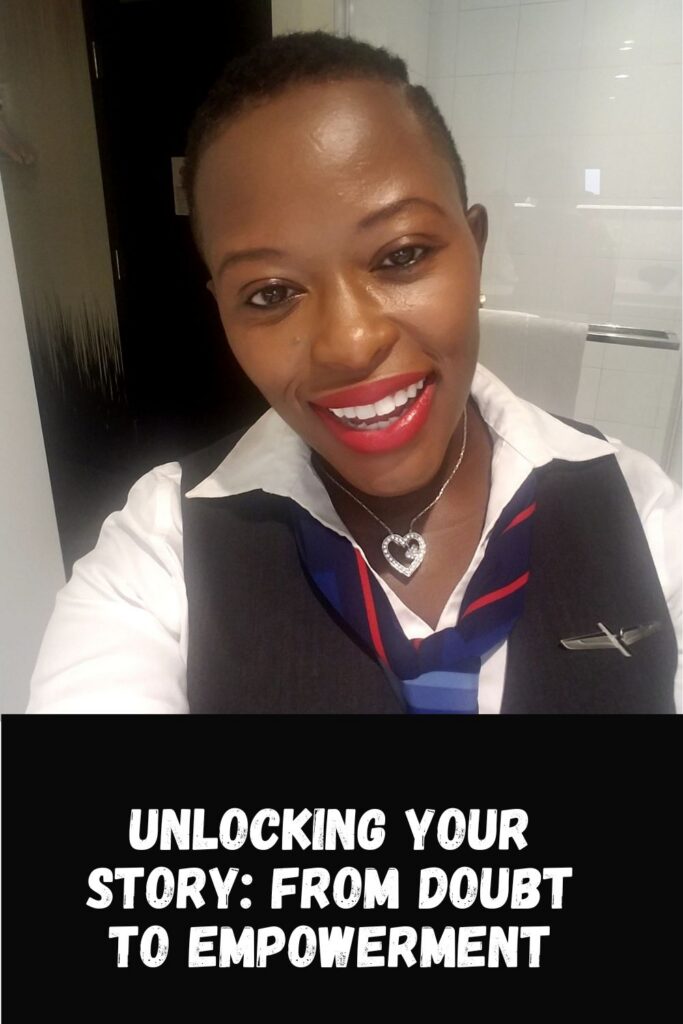
I have been flying for thirteen years now. What most people don’t know is how long I hesitated before I ever applied for the job at all, and why.
Becoming a flight attendant had interested me long before I ever submitted an application. But for years, I talked myself out of even trying, because I genuinely did not feel like I fit the criteria. I am a Black woman, and I wear my hair naturally. If you know anything about the history of this industry — the era of the stewardess, the appearance standards, the narrow, specific image the role was built around for decades — you know that most of the women who filled that role did not look like me. I internalized that history without ever being told it directly. I simply absorbed, over years, the quiet sense that this door probably wasn’t open to someone who looked like I did.
That belief kept me from applying for a long time. Not because I lacked the skills or the desire, but because I had already rejected myself before anyone else got the chance to.
The Moment on the Aircraft
The shift happened in an unremarkable moment. I was a passenger, sitting on a flight, watching the flight attendants move through the cabin — the way they worked, the way they carried themselves, the rhythm of the job I had quietly wanted for years. And somewhere in that observation, a thought rose up that I couldn’t talk myself back down from: apply. It is not going to hurt you to apply. The absolute worst outcome is that you get rejected, and you are already living without this job right now anyway. Rejection wouldn’t cost me anything I didn’t already not have.
That reframe — from “I probably won’t get this” to “the worst case is simply staying exactly where I already am” — is such a small shift in language, and it did an enormous amount of work. It didn’t erase the doubt. It just made the doubt small enough to move through instead of being stopped by it entirely.
The Rejection, and What I Did the Same Day
I applied to my first-choice company. I did not get the job. If this story followed the shape most of us expect, that rejection would have confirmed the old fear — proof that the door really wasn’t open to me after all, evidence I could have pointed to for years as the reason I never tried again.
That is not what happened. The same day I received that rejection letter, I went straight to the second company on my list and applied there too. Not after a season of processing the disappointment. Not after talking myself back into believing I deserved another shot. The same day. I want to be honest that I don’t fully know, even now, where that immediate persistence came from — some combination of stubbornness, faith, and simply having already done the harder work of applying once, which made a second application feel smaller by comparison. That second company is the one that said yes, and thirteen years later, I’m still flying.
Why I Didn’t Build My Platform Around This Story
I have lived many stories worth telling — this is one of several. I chose my infidelity story as the foundation of Sherley’s Show instead of this one, and I want to be transparent about why, because the reasoning matters as much as the story itself.
It came down to resonance and need. The infidelity story was the one I could feel, clearly, that other women were quietly carrying and had nowhere to bring. I sensed a community waiting for a path that didn’t exist yet — women who needed somewhere to go when they were standing exactly where I had once stood. That specific ache, and the specific gap in support around it, was what pulled me toward building an entire platform on that chapter rather than this one.
That doesn’t make the flight attendant story less true, less mine, or less valuable. It simply means it wasn’t the story with the most urgent audience waiting on the other side of it, at the time I was deciding where to plant my flag. Both stories were real options. I only had the capacity to build deeply around one.
Two Kinds of Stories, One Framework
This is the point I most want to land: Trauma-to-Profit™ was never built exclusively for pain. It was built for lived experience — and lived experience includes the doubt you overcame to enter a field that didn’t obviously welcome you, the expertise you built once you got there, and the specific perspective that only exists because of the barrier you had to move through to arrive. None of that requires a traumatic event. It requires a real, honestly examined chapter of your life that taught you something worth passing on.
A woman who spent fifteen years becoming excellent at a technical trade most people in her family had never even heard of has a story. A woman who changed careers three times before finding the one that fit has a story. A woman who simply built quiet, unglamorous mastery over years, with no dramatic turning point at all, still has a story. Trauma is one legitimate entry point into this framework. It was never the only one.
Which Pillar Does an Expertise-Based Story Actually Belong To
I want to work through this the way I’d want someone to work through it for their own story, because the answer isn’t a single clean label — it moves across a few pillars depending on which angle you’re standing in.
The anchor pillar for this particular story is Recognize. Pillar One asks you to identify your defining moments and extract the lesson without reliving the wound — and the moment on that aircraft, the decision to apply anyway, the same-day pivot to a second company after rejection, are exactly that kind of defining moment. What makes this a Recognize story specifically is the act of locating a formative experience and seeing it clearly as a strategic asset, which is precisely what I’m doing by naming this story at all, thirteen years later, as something worth building content around. Recognize doesn’t require the defining moment to be painful. It requires the moment to be true and formative — and a moment of overcoming self-doubt about whether you belonged somewhere absolutely qualifies.
Reframe is the strong secondary pillar here, and it’s worth naming why. Reframe is about turning your story into expertise — positioning your experience as the value your audience needs. If I wanted to build an entire piece of content around what thirteen years of flying actually taught me about de-escalation, communication under pressure, or serving people at their most anxious, that content would live primarily in Reframe, because it’s less about the origin moment and more about the professional mastery that followed it. This post you’re reading leans on Reframe too, in a smaller way, since I’m positioning the story as a teaching example rather than simply narrating it.
Rebuild shows up here as well, more quietly. Rebuild is about stepping into your identity as a voice of authority, closing the gap between who you were and who you’re becoming. The version of me sitting in that airplane seat, still unsure whether I belonged in that uniform, and the version of me now, thirteen years in, comfortable enough in that identity to teach other women how to find their own version of it — that’s Rebuild’s territory. It’s not the loudest pillar in this particular story, but it’s present underneath it.
If you’re trying to place your own expertise-based story, I’d use the same test: if the piece you want to write is mainly about noticing a formative moment and calling it valuable, that’s Recognize. If it’s mainly about teaching what your expertise actually is, now that you have it, that’s Reframe. If it’s mainly about the internal shift from doubting you belonged to knowing you do, that’s Rebuild. Most real stories touch more than one pillar. The pillar you lead with just depends on which angle you’re choosing to tell it from.
What This Means for Your Story
If you’ve been sitting on the sidelines of this work because you don’t have a relationship story, a loss, or a crisis you’re ready to share — hear this clearly: you don’t need one. You need a real, honestly examined chapter of your life, and expertise built against real resistance counts every bit as much as a healed wound does.
Ask yourself the same questions I’d ask about any story candidate: Is there a moment where you almost didn’t do the thing that ended up defining a decade of your life? Is there a barrier — internal or external — that you moved through anyway? Is there expertise you now hold that came from years most people never see, the unglamorous accumulation of skill and confidence that never made it into a highlight reel? That is Trauma-to-Profit™ material, every bit as much as a harder chapter would be.
A Practical Prompt If You Don’t Have a Trauma Story You Want to Use
Try this: write down three moments in your career or area of expertise where you almost didn’t continue — almost didn’t apply, almost didn’t take the harder assignment, almost didn’t believe you belonged in the room. For each one, write one sentence on what you did instead, and one sentence on what that choice taught you that you still carry today.
Whichever of the three has the clearest lesson, and the one you can still feel some charge around when you write about it, is very likely your Recognize moment — the same way my rejection letter and my same-day second application became mine. You don’t need a wound to have a beginning. You just need a moment that was true, and honest enough to teach someone else something real.
Key Takeaways
- Trauma-to-Profit™ was built for lived experience broadly, not trauma specifically — expertise built against real resistance is just as valid a foundation as a healed wound.
- A defining moment doesn’t need to be painful to qualify for the Recognize pillar. It needs to be true, formative, and clearly examined.
- This flight attendant story anchors in Recognize (locating the defining moment), but also touches Reframe (positioning the resulting expertise) and Rebuild (the identity shift from doubt to authority) — most real stories move across more than one pillar.
- Choosing which story to build a platform around often comes down to resonance and audience need, not which story is “more valid” — both trauma-based and expertise-based stories can be equally true and equally usable.
- A simple prompt for finding your own expertise-based Recognize moment: name a time you almost didn’t continue, what you did instead, and what that choice still teaches you today.
Call to Action
Start With Trauma-to-Profit™ (T2P™)
The five-pillar framework behind everything in this post. The free Introduction PDF launches August 1, 2026, and the complete T2P™ E-Book follows on October 1, 2026. Visit the page now to see the full framework and be notified the moment each one goes live.
Apply the Framework Inside FastTrack
FastTrack is the boutique 90-day podcast launch accelerator built entirely on the T2P™ methodology — 15 seats, three cohorts a year, application only. The waitlist is open now; Cohort 1 applications open February 1, 2027.
Get Personalized Clarity
If you want direct, one-on-one strategy before you commit to a bigger step, book a 60-minute 1:1 Consultation with Sherley — $297, one payment, no packages.
Grab the Podcasting E-Book
“Find Your Voice: The Woman Behind the Mic” is the 10,000-word, step-by-step roadmap for planning, recording, and launching your podcast — $67.
Reserve Your Seat at the Free Webinar
“Story to Show: Launch Your Podcast With Clarity, Strategy, and Confidence” is a live training on turning your story into authority using the T2P™ framework.
Listen to Sherley’s Show
Hear these ideas in conversation across all three formats — the Real Talk Series with Sherley and Kalief, Conversations with Sherley and Kira, and Interviews with guest experts.
Sources
Internal Sources
Transform Pain into Power: Unlock Your Business Potential
Build Authority With Your Story: Trauma-to-Profit™ Explained
Trauma-to-Profit™ Framework Overview
Sherley’s Show is learning and growing every single day. We aim to uplift all marginalized voices both on this podcast and in real life. Please note that we are always striving to change the problematic language that society has internalized in us. Thank you for your patience as we aim to strip certain phrases from our vocabulary.
Would you like to be a guest
Are you interested in getting your opinion out about a particular topic but don’t know how to do so? If so, here is an opportunity to do so to share your point of view, PLUS get your message and voice out there. It is always a great way to know about different perspectives and enrich ourselves through knowledge sharing.
Submit your relationship question.
Sherley’s Show provides an atmosphere where every woman is comfortable growing into their best self. Sherley’s Show is a no judgment podcast where we discuss how to rise strong out of all types of obstacles that come with relationships. Through personal life experiences and discussions ranging from infidelity, trust, forgiveness, sex, heartbreak, self love, therapy and more, we offer words of empowerment as you strive to build and maintain all of the relationships in your life. You may be going through something that is unique and difficult. Sharing your story gives others comfort and could also be helping someone else. Let them know they are not alone. Everyone has a story, do not let fear hold you back.
Disclosure: This post contains affiliate links, I will get a commission if you decide to make a purchase through any of my links, at no cost to you. Please read my disclosure for more info.

Want to launch a podcast?
FRee Resource!
Download Sherley’s FREE Bootcamp Podcast Launch Checklist! The no-fluff, step-by-step roadmap for busy women ready to finally launch the podcast they’ve been dreaming about.
At Sherley's Show, we believe that when women feel seen and supported, anything is possible. Whether you're tuning in for inspiration, education, or community—you belong here.



next

say goodbye to being the side chick
When you find yourself really settling with the reality that you are the side chick, when you find yourself tired of the games and/or the complacency, it’s time to ask yourself a few questions.
next

why is therapy important?
Solo therapy, partnered therapy, or group therapy... what exactly are the benefits? If you’re still on the fence about whether or not you should go and if therapy can really do anything for you... this post is for you.
next
CONNECT
elsewhere:

STAY AWHILE AND READ
THE BLOG

BINGE
THE PODCAST
The place where we chat about obstacles that come out of relationships and how to rise up from them. Self-love, marriage, infidelity, sex, heartbreak, and more.

HANG OUT ON

Comments +