
Why Small Cohorts Deliver Better Coaching




Why I Cap Cohorts Small
Disclaimer: Sherley Troutman is not a licensed business consultant, attorney, or financial advisor. The content in this article is for informational and educational purposes only, based on her personal experience building and running FastTrack. Please consult a qualified professional for advice specific to your business.
Every few months, someone asks me the same version of the same question: “Why don’t you just open FastTrack up to more people? You clearly have the demand.” It usually comes from a genuinely kind place — someone doing the math on revenue, or someone who got waitlisted and is frustrated they didn’t get a seat this round. I understand the instinct completely. I also will not be doing it. Here is the actual reasoning, not the marketing version of it.
Where This Philosophy Actually Comes From
I have sat in the other kind of program before — the kind where the group is large enough that you become one face among many, where the “coach” is really more of a host, and where the personal attention you were promised in the sales copy turns into a generic email blast by week three. I don’t say that to criticize anyone else’s business model; plenty of large programs deliver real value at scale, and that structure works for a lot of people. It didn’t work for me, and it isn’t what I wanted to build.
What I remember most from that experience is the specific feeling of raising my hand with a real, personal question and getting an answer that was clearly written for a hundred people at once. It wasn’t wrong. It just wasn’t for me. When I built FastTrack, I built it as the opposite of that feeling on purpose — a room small enough that nobody’s question gets a form-letter answer.

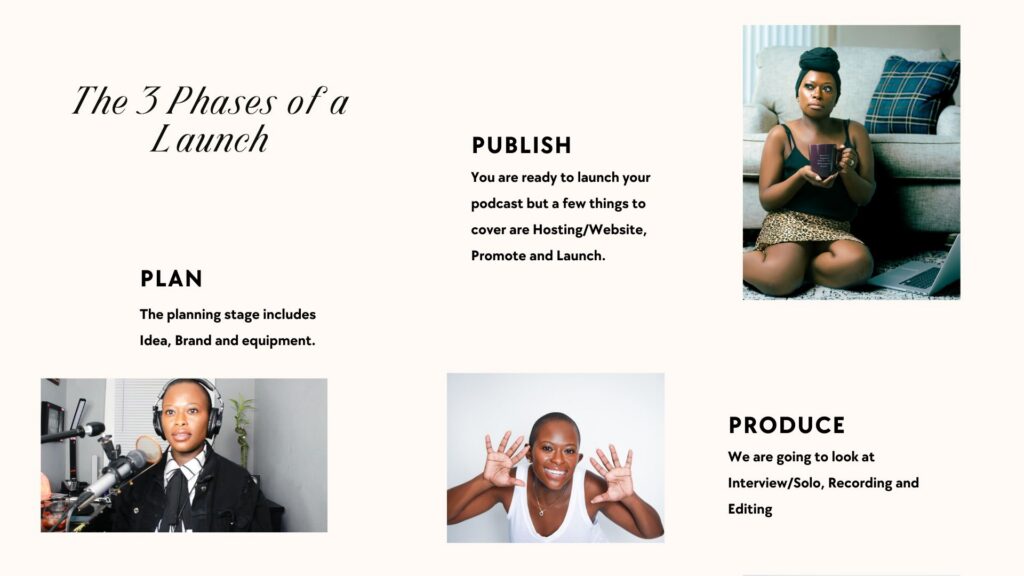
Grab the checklist featured above → Free checklist
Or see all free resources → Free Resources
The Math Everyone Assumes I Haven’t Done
I have done the math. Believe me, I have done the math more than once, usually right after watching a waitlist fill up faster than a cohort’s seats do. Doubling or tripling cohort size would mean more revenue per round, on paper. What it would also mean, in practice, is less of me in every room. Fewer minutes of direct attention per client. A 1:1 Strategy Session that starts feeling rushed instead of genuinely dedicated. A Group Mentorship Call where half the hot seats never get a turn because there simply isn’t time.
There’s a version of this business that chases the bigger number every round — more seats, more revenue, more headlines about growth. I understand why that version is tempting, and I understand why a lot of coaches make that choice. But revenue that comes at the cost of the actual coaching quality isn’t a win I’m interested in claiming. I would rather have fifteen women finish FastTrack having genuinely been coached than have fifty women finish having been, at best, well-organized.
Scaling a coaching program by adding bodies is the easiest lever to pull and, in my experience, the fastest way to quietly break the thing that made the program work in the first place. I am not interested in being the easiest lever to pull.
What Small Actually Protects
When people hear “15 seats,” they tend to assume it is about exclusivity — a velvet-rope feeling designed to make the program seem more desirable. That is not it, or at least it is not the primary reason. What a small cohort actually protects is something much less glamorous: the quality of the coaching itself.
Coaching is not content delivery. A pre-recorded course can serve a thousand people at once because the material doesn’t need to adapt to any one of them. Coaching is different by definition — it requires me to know your specific situation, your specific fears, your specific expertise, and to adjust my guidance to fit you rather than a generic version of “a woman starting a podcast.” That kind of attention has a hard ceiling. Past a certain headcount, I am no longer coaching individuals. I am managing a crowd. Those are not the same skill, and they do not produce the same outcome for the person who paid for the first one.
There is also the community itself to consider. Part of what makes the Week 6 Group Mentorship Call valuable is that everyone in that room is genuinely reachable — you know the other women’s names, their shows, their sticking points, by the time you get there. That familiarity is a direct function of the group staying small enough to actually become a group, rather than a large audience that happens to be watching the same Zoom call.
There’s a compounding effect to this too. In a room of fifteen, the questions one woman asks in the Group Mentorship Call end up answering something two or three other women hadn’t articulated yet themselves. That only works because the room is small enough for everyone to actually listen to everyone else, rather than tuning out until their own name gets called. Scale that room to sixty people and the hot-seat format stops functioning as coaching and starts functioning as spectator content — useful, maybe, but not the same thing.
The Trade-Off I’m Choosing, On Purpose
I want to be honest about what capping cohorts costs me, because pretending it’s free would be dishonest. It means turning away women who are genuinely ready and genuinely a good fit, simply because the room is full. It means slower revenue growth than a program that scales aggressively. It means more operational effort per client relative to the price point, not less. None of that is an accident I haven’t noticed — it’s a trade I make deliberately, every single cohort, because the alternative is a program that grows in headcount and shrinks in the exact thing that made someone want to apply in the first place.
I would rather run a smaller program extremely well than a larger program adequately. That is not a humility statement. It is a business decision about what I am actually good at delivering, and what I am not willing to dilute in order to serve more people on paper.
Why the Waitlist Exists Instead of Just More Seats
The honest answer to “why is there a waitlist instead of just opening more spots” is that the waitlist is the pressure-release valve for a decision I’m not willing to reverse. Demand exceeding fifteen seats isn’t a problem to be solved by adding seats — it’s confirmation that the thing being protected is worth protecting. The waitlist exists so that women who want in have a clear, fair path to the next cohort, rather than a program that quietly balloons past the point where I can still deliver on what it promises.
Being waitlisted isn’t a rejection of your readiness. Three cohorts a year, fifteen seats each, means forty-five women get this experience annually — a real number, just not an infinite one. If you’re on the waitlist, you are exactly where you need to be to get first access the moment applications open for the next round.
Why This Isn’t a Permanent Number, But It Is a Permanent Principle
Cohort sizes, pricing, and program structure are things I revisit as FastTrack evolves — those specifics are never locked in stone, and if you’re reading this months or years after I wrote it, the exact seat count on the sales page might look different than it did when this article went up. What will not change is the principle underneath the number: cohorts stay small enough that I can still know every woman in the room by name, still give real attention in the 1:1 session, still make the Group Mentorship Call feel like a room of peers instead of an audience.
If I ever adjust the seat count, it will be in service of that principle, not in spite of it. A smaller cohort at a different price point, or a different cadence, is still small on purpose. What I am protecting is the experience, not a specific digit on a page. If anything, the direction I’d move in over time is toward more concentrated attention per client, not less — because that is the part of this work I actually care about getting right, and the part that determines whether a woman finishes FastTrack with a launched show or with a workbook she never finished.
So if the number on the page changes between when I wrote this and when you’re reading it, don’t read that as a contradiction of anything said here. Read it as the same philosophy, recalibrated for wherever the program is in its own growth — still built around the belief that fewer people, coached well, beats more people, coached thinly.
Who This Actually Serves Well — And Who It Doesn’t
A small, application-only structure is not the right fit for everyone, and I would rather say that plainly than have someone apply with the wrong expectations. If what you want is the cheapest possible entry point into podcast education, a self-paced course or the eBook will serve you better and cost you far less. If what you want is guaranteed, deeply personal attention from someone who will actually learn your show and your goals across 90 days, a small cohort is the only structure that can honestly deliver that.
The women who get the most out of FastTrack tend to be the ones who value depth over volume in every other part of their life too — the ones who would rather have one strategy session that actually moves them than ten generic modules they skim through alone. If that’s you, the small room is a feature, not an inconvenience. If it isn’t, there’s no shame in that; it just means a different resource is the better starting point, and I would rather point you toward the right one than toward the one with the more expensive seat.
This is also why FastTrack is application-only rather than first-come-first-served. Fit matters more than urgency here. I would rather have a full conversation with a woman about where she is and what she needs before either of us commits ninety days to the process — and a small cohort is what makes that level of upfront care possible in the first place. It is the same principle running through the whole program, applied one step earlier than the seats themselves.
Key Takeaways
✓ Capping cohort size is a deliberate trade-off, not a marketing tactic — it protects the quality of 1:1 coaching over the revenue upside of a larger program.
✓ Coaching requires individual adaptation in a way pre-recorded content doesn’t; past a certain group size, that individual attention becomes structurally impossible to deliver.
✓ A small cohort also protects the community experience — familiarity between clients is a direct function of the group staying genuinely small.
✓ The specific seat count may evolve as the program does, but the underlying principle of intentional smallness will not.
✓ This structure isn’t the right fit for everyone — it serves women who value depth of attention over the lowest possible price point.
Curious If FastTrack Is the Right Fit for You
The resources below are exclusively for women who want to launch or grow a podcast as a real income stream.
→ Explore the Trauma-to-Profit™ Methodology FastTrack Is Built On
→ Not Sure Yet? Book a 1:1 Clarity Consultation
→ Get the eBook: Find Your Voice: The Woman Behind the Mic
→ Browse More Business & FastTrack Articles
Be Yourself. Voice Yourself. Love Yourself.
Sherley’s Show is learning and growing every single day. We aim to uplift all marginalized voices both on this podcast and in real life. Please note that we are always striving to change the problematic language that society has internalized in us. Thank you for your patience as we aim to strip certain phrases from our vocabulary.
Would you like to be a guest
Are you interested in getting your opinion out about a particular topic but don’t know how to do so? If so, here is an opportunity to do so to share your point of view, PLUS get your message and voice out there. It is always a great way to know about different perspectives and enrich ourselves through knowledge sharing.
Submit your relationship question.
Sherley’s Show provides an atmosphere where every woman is comfortable growing into their best self. Sherley’s Show is a no judgment podcast where we discuss how to rise strong out of all types of obstacles that come with relationships. Through personal life experiences and discussions ranging from infidelity, trust, forgiveness, sex, heartbreak, self love, therapy and more, we offer words of empowerment as you strive to build and maintain all of the relationships in your life. You may be going through something that is unique and difficult. Sharing your story gives others comfort and could also be helping someone else. Let them know they are not alone. Everyone has a story, do not let fear hold you back.
Disclosure: This post contains affiliate links, I will get a commission if you decide to make a purchase through any of my links, at no cost to you. Please read my disclosure for more info.

Want to launch a podcast?
FRee Resource!
Download Sherley’s FREE Bootcamp Podcast Launch Checklist! The no-fluff, step-by-step roadmap for busy women ready to finally launch the podcast they’ve been dreaming about.
At Sherley's Show, we believe that when women feel seen and supported, anything is possible. Whether you're tuning in for inspiration, education, or community—you belong here.



next

say goodbye to being the side chick
When you find yourself really settling with the reality that you are the side chick, when you find yourself tired of the games and/or the complacency, it’s time to ask yourself a few questions.
next

why is therapy important?
Solo therapy, partnered therapy, or group therapy... what exactly are the benefits? If you’re still on the fence about whether or not you should go and if therapy can really do anything for you... this post is for you.
next
CONNECT
elsewhere:

STAY AWHILE AND READ
THE BLOG

BINGE
THE PODCAST
The place where we chat about obstacles that come out of relationships and how to rise up from them. Self-love, marriage, infidelity, sex, heartbreak, and more.

HANG OUT ON

Comments +