
Essential Comparison of Podcast Hosting Platforms in 2026




Podcast Hosting Platforms in 2026: An Honest Comparison for New Podcasters
Disclaimer: Sherley Troutman is not a licensed business, financial, or legal advisor. The content in this article is for informational and educational purposes only, based on her personal experience coaching women through podcast launches and general industry research. Please consult a qualified professional for advice specific to your business.
Your podcast hosting platform is the piece of infrastructure that everything else sits on top of where your audio lives, how it gets distributed to Apple, Spotify, and everywhere else, and what your analytics dashboard actually shows you. It’s also one of the first real decisions a new podcaster has to make, and the options are genuinely confusing, because most platforms promise the same basic things on the surface. Here’s an honest, practical comparison of where things stand in 2026.
A quick note before diving in: pricing and features change often in this space, so treat the specifics below as a snapshot rather than something to check against six months from now. The underlying differences in who each platform actually serves best tend to be more stable than the exact dollar figures.
It’s also worth reframing what a hosting platform actually is before comparing options. Technically, you could host audio files on your own server and manage an RSS feed by hand but for the overwhelming majority of podcasters, that’s impractical and risky. A dedicated hosting platform exists to handle that infrastructure for you: uploading your episodes once and having them correctly distributed to every major app, keeping your feed compliant with each platform’s requirements, and centralizing your analytics in one place instead of five scattered dashboards.
If You’re Just Starting Out: Spotify for Creators
Spotify for Creators. formerly Spotify for Podcasters is genuinely free and remains one of the most beginner-friendly starting points available. It handles distribution, basic analytics, and even monetization through the Spotify Audience Network within one platform, with no upfront cost. As of early 2026, the threshold to qualify for its Partner Program monetization was lowered to roughly 1,000 engaged listeners and 2,000 consumption hours, which makes it a genuinely realistic first monetization path for a new show, not just a distant goal.
The trade-off is that Spotify for Creators distributes primarily to its own app rather than automatically pushing your RSS feed everywhere the way a dedicated host does. For a first show, or for testing whether podcasting is something you want to commit to before investing in a paid platform, that limitation is a reasonable one to accept temporarily.
It’s also worth being honest about who Spotify for Creators is a poor fit for: if reaching Apple Podcasts listeners matters to your growth strategy from day one and for many niche and business-focused shows, it does starting on a platform with limited cross-app distribution can mean rebuilding your feed and losing subscriber continuity sooner than you’d like. Weigh that against the zero-cost appeal honestly before committing.
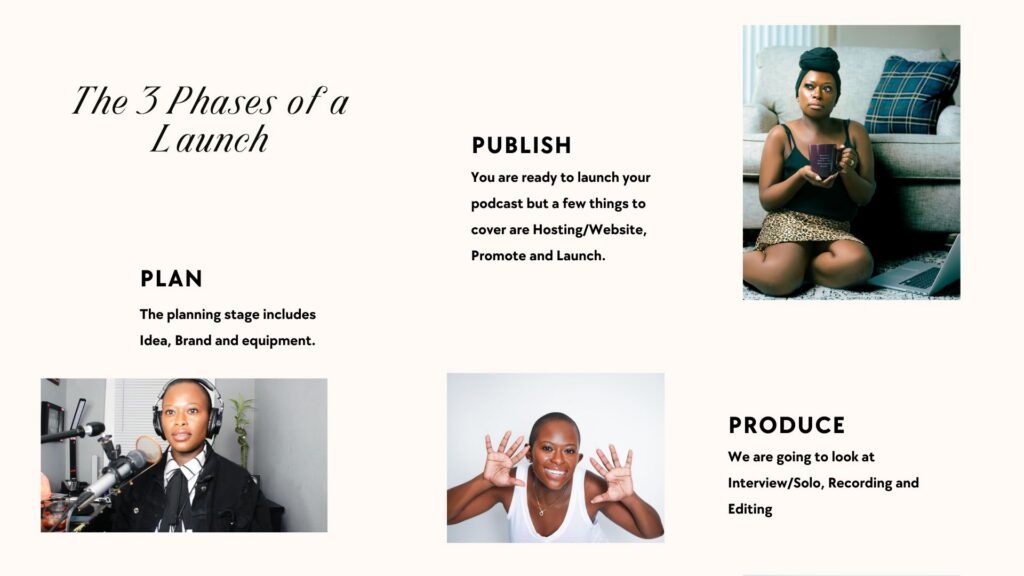
Grab the checklist featured above → Free checklist
Or see all free resources → Free Resources
If You Want Strong Analytics on a Budget: Buzzsprout
Buzzsprout has built its reputation on being approachable for first-time podcasters while still offering genuinely useful analytics and a simple, well-organized onboarding flow. It handles the essentials cleanly: RSS feed management, distribution to the major directories, and analytics that go a level deeper than the free options. Pricing is tied to how many hours of audio you upload per month, which is worth understanding upfront, since it means your cost can climb as your show scales in volume rather than staying flat.
Buzzsprout also includes a free tier that’s genuinely usable for testing the waters, which makes it a low-risk platform to start on even if you’re not fully committed yet. For a woman still deciding whether podcasting is the right platform for her the exact question our Clarity Consultation is built around a free-tier Buzzsprout account paired with a handful of trial episodes can be a useful, low-stakes way to test the format before committing further time or money.
If You Want an All-in-One, Growth-Focused Platform: Captivate or Transistor
Captivate positions itself specifically around growth built-in calls-to-action, team collaboration tools, and a lightweight website builder bundled into the platform, generally starting around $19 a month with unlimited podcasts and storage across every tier. It’s a reasonable choice for a solo creator who wants marketing features included rather than stitched together from separate tools.
Transistor serves a similar audience but leans further into professional and multi-show use, one account can host unlimited separate shows, which matters if you ever plan to run more than one podcast, a client show, or a small network. It also supports video podcast hosting, automatically generating an audio-only version for listeners who prefer that format, and distributing both versions across every platform that supports them. Transistor also starts around $19 a month with a free trial period.
Video is genuinely one of the fastest-growing formats in podcasting as of 2026, with more listeners discovering shows through YouTube and video-capable apps than in years past. If you can see yourself eventually wanting a video option — even if audio-only is your starting point choosing a platform that supports it natively from the beginning, like Transistor, avoids a more disruptive migration down the line.
If You Run Your Show Through WordPress: Blubrry
If your podcast website already runs on WordPress, Blubrry’s direct integration through its PowerPress plugin is worth strong consideration. It folds podcast hosting directly into your existing WordPress backend rather than requiring you to manage a separate platform and stitch the two together manually a meaningful convenience if your blog and podcast already live on the same site.
If You Want the Most Established, Proven Track Record: Libsyn
Libsyn is one of the original podcast hosting platforms, in continuous operation since 2004 and trusted by major shows for over two decades. That longevity translates into genuine reliability unlimited bandwidth on every plan, and a platform that has weathered two decades of shifts in the podcasting landscape without the instability that comes with newer, less-tested hosts. Pricing is storage-based rather than tied to upload hours or downloads, with tiers generally starting around $5 to $8 a month at the entry level and scaling up from there depending on how much new audio you upload monthly older, already-published episodes archive and don’t count against your limit.
Libsyn has also removed its previous 2,000-download minimum for its Automatic Ads program, meaning even a newer show can start earning through programmatic ads from day one rather than waiting to hit a volume threshold. The honest trade-off is a genuinely dated interface compared to newer, more design-forward platforms, and no built-in recording or editing tools Libsyn is purely a hosting and distribution platform, so you’ll need separate tools for the production side.
The Factor Most Comparisons Skip: Ownership and Portability
This is worth its own section rather than a footnote, because it’s genuinely one of the most consequential decisions in choosing a host, and it’s the one most beginner-focused comparisons gloss over in favor of flashier features like analytics dashboards or website builders. The real question is: if you decide to leave this platform two years from now, can you take your show your episodes, your subscriber base, your RSS feed with you cleanly, or does leaving mean starting over?
Libsyn is explicit about this: you always own your content and your show, they don’t claim ownership, and they don’t insert advertising into your content without your permission. RSS.com makes a similar direct commitment, stating plainly that your RSS feed belongs to you and that migrating away doesn’t mean losing your audience or starting from zero. This kind of explicit, stated ownership policy is worth actively looking for when comparing hosts, not assuming by default.
Free platforms are where this issue shows up most sharply. Migrating a show away from a free host like Spotify for Creators can be more complicated than migrating away from a dedicated paid host, and in some documented cases, podcasters have lost episodes or subscribers in the process, or had to effectively rebuild their show and audience from scratch on the new platform. That doesn’t mean a free platform is a bad place to start for testing whether podcasting is right for you, it can be exactly right but it does mean going in with clear eyes about what a future migration might cost you if your show grows into something you want more control over.
A simple, practical way to evaluate this before signing up with any host: search specifically for that platform’s stated policy on content ownership and RSS feed portability, and look for a host that lets you export your media files directly and control your own RSS feed redirect, rather than one that’s vague about what happens if you ever want to leave. A platform that makes this easy and says so plainly is signaling something real about how it treats podcasters not as users locked into its ecosystem, but as owners of their own work who happen to be using its infrastructure.
If You’re Building Toward a Network or Professional Operation: Simplecast
Simplecast is generally positioned toward more established shows and small networks, with monetization tools like AdsWizz integration available on its higher tiers. It’s less of a natural fit for a brand-new solo podcaster and more relevant once you’re managing multiple shows or actively pursuing ad-network-level monetization rather than direct sponsor relationships.
If you’re at the stage of comparing Simplecast against Transistor or Captivate, you’ve likely already outgrown the beginner tier entirely at that point, the deciding factor tends to come down to which specific monetization integrations and team workflow tools matter most for how your operation is actually structured, which is a conversation worth having directly with each platform’s sales team rather than settling purely on public feature comparisons.
What Actually Matters When You’re Choosing
Strip away the feature lists, and the decision usually comes down to a few real questions. How is pricing structured by storage, by upload hours, or by downloads and which of those will actually reflect how your show grows? Does the platform distribute automatically to every app your audience uses, or only to its own? Does the analytics dashboard show you the metrics that actually matter completion rate and engaged listeners, not just raw downloads or does it stop at surface-level numbers?
It’s also worth being honest that switching hosts later, while possible, is more disruptive than it sounds RSS feed migrations can affect your existing subscriber base and your Apple Podcasts review history if not handled carefully. That’s not a reason to over-agonize the decision at the start, since every major platform listed here handles a basic launch competently. It’s simply a reason to pick with your show’s likely direction over the next year or two in mind, rather than only what feels easiest this week.
For most women launching a first show with an eye toward eventually growing an audience and monetizing it seriously, a reasonable default is starting with a platform like Buzzsprout or Spotify for Creators for the first several months, and reassessing once you have real data about your show’s actual growth pattern and monthly volume. There’s no prize for picking the most advanced platform on day one if you’re not yet using most of what it offers.
One more practical note: whichever platform you choose, take the time during setup to fill out every metadata field it offers — category, subcategory, keywords, episode descriptions completely and accurately. This is a one-time task per episode that directly affects how discoverable your show is in Apple Podcasts and Spotify search results, and it’s the single most commonly skipped step among new podcasters rushing to get their first episode live.
Key Takeaways
✓ Spotify for Creators is free and beginner-friendly, with monetization now accessible at a lower threshold (roughly 1,000 engaged listeners) as of early 2026 — but it distributes primarily to its own app.
✓ Buzzsprout offers strong analytics at an approachable price for beginners, with pricing tied to monthly upload hours rather than downloads.
✓ Libsyn is one of the most established hosts (since 2004), with storage-based pricing and an explicit ownership policy — but a dated interface and no built-in recording tools.
✓ Ownership and portability deserve real weight in your decision: look for a host that states plainly you own your content and can migrate your RSS feed cleanly if you ever leave.
✓ Free platforms can make migration harder than paid, dedicated hosts — some podcasters have lost episodes or subscribers moving away from free hosts, so weigh that trade-off honestly before choosing.
Sources
Platform comparisons and 2026 pricing referenced from Transistor.fm, Riverside.com, CoHost Podcasting, and The Podcast Consultant hosting platform guides.
Libsyn features, pricing, and ownership policy referenced from Libsyn’s official Hosting Features page, Riverside’s 2026 Libsyn review, and CreatorStackClub’s 2026 Libsyn pricing breakdown.
Ownership and RSS portability details referenced from RSS.com’s hosting comparison guide and Spotify for Creators’ official switching/migration documentation.
Related Reading & Resources
→ Investing in Podcast Gear: Smart Choices for Beginners
→ How to Build an Engaged Email List for Your Podcast
→ 90-Day Podcast Launch: What to Expect
→ Get the eBook: Find Your Voice: The Woman Behind the Mic
→ Browse More Business Articles
Be Yourself. Voice Yourself. Love Yourself.
Sherley’s Show is learning and growing every single day. We aim to uplift all marginalized voices both on this podcast and in real life. Please note that we are always striving to change the problematic language that society has internalized in us. Thank you for your patience as we aim to strip certain phrases from our vocabulary.
Would you like to be a guest
Are you interested in getting your opinion out about a particular topic but don’t know how to do so? If so, here is an opportunity to do so to share your point of view, PLUS get your message and voice out there. It is always a great way to know about different perspectives and enrich ourselves through knowledge sharing.
Submit your relationship question.
Sherley’s Show provides an atmosphere where every woman is comfortable growing into their best self. Sherley’s Show is a no judgment podcast where we discuss how to rise strong out of all types of obstacles that come with relationships. Through personal life experiences and discussions ranging from infidelity, trust, forgiveness, sex, heartbreak, self love, therapy and more, we offer words of empowerment as you strive to build and maintain all of the relationships in your life. You may be going through something that is unique and difficult. Sharing your story gives others comfort and could also be helping someone else. Let them know they are not alone. Everyone has a story, do not let fear hold you back.
Disclosure: This post contains affiliate links, I will get a commission if you decide to make a purchase through any of my links, at no cost to you. Please read my disclosure for more info.

Want to launch a podcast?
FRee Resource!
Download Sherley’s FREE Bootcamp Podcast Launch Checklist! The no-fluff, step-by-step roadmap for busy women ready to finally launch the podcast they’ve been dreaming about.
At Sherley's Show, we believe that when women feel seen and supported, anything is possible. Whether you're tuning in for inspiration, education, or community—you belong here.



next

say goodbye to being the side chick
When you find yourself really settling with the reality that you are the side chick, when you find yourself tired of the games and/or the complacency, it’s time to ask yourself a few questions.
next

why is therapy important?
Solo therapy, partnered therapy, or group therapy... what exactly are the benefits? If you’re still on the fence about whether or not you should go and if therapy can really do anything for you... this post is for you.
next
CONNECT
elsewhere:

STAY AWHILE AND READ
THE BLOG

BINGE
THE PODCAST
The place where we chat about obstacles that come out of relationships and how to rise up from them. Self-love, marriage, infidelity, sex, heartbreak, and more.

HANG OUT ON

Comments +